All successful writers write every day, at least most every day, no matter how they’re feeling or what mood they’re in.
But serious writing goes beyond this. After all, if we expect to get published, we must sell our manuscripts, which means submitting them to magazine editors and book agents, depending on what we’ve written. Here I’ll share a tip for submitting articles and short stories to magazines. It’s called “The Rule of Ten.”
The Rule of Ten
For every ten manuscripts we have in circulation, at least one will get accepted for publication. After its acceptance, send out another one to keep ten making the rounds. For those that get rejected, send them out again to another magazine. The more manuscripts we have circulating, the greater our chances of one of them finding a publisher. This is the rule’s basic idea.
However, I do not recommend submitting articles and stories to multiple magazines at the same time. This is called simultaneous submission, and though some magazines accept simultaneous submissions, I’ve never done this. I think it limits a magazine article’s chances of acceptance. Why? Because most periodical publishers like the idea of being the only one to print your work. Authors can sell various rights to them—first rights, second rights, one-time rights, all rights, reprint rights, etc. I may get into those in a later post.
One other good thing about this rule is that it softens rejection. If an editor rejects a manuscript…hey, we know we have nine more being considered.
I like this Ray Bradbury quote, something he said years ago in Writer’s Digest: “Just write every day of your life. Read intensely. Then see what happens. Most of my friends who have been put on that diet have very pleasant careers.”
“Any man who keeps working is not a failure. He may not be a great writer, but if he applies the old-fashioned virtues of hard, constant labor, he’ll eventually make some kind of career for himself as a writer.” Ray Bradbury (1920-2012)
Photo by Alan Light
I’ve never been a fan of success seminars. For me at least, they’re a waste of money. Most attendees get excited and “pumped up,” ready to take on the world. Then, within days or weeks, this feeling abandons them and most return to their same old habits. I know, because that’s happened to me. It may not be true in all cases. However, I have a sneaking suspicion that in the majority of cases, it is.
The thing that’s helped me more than anything else in my writing career was what my father taught me: quitters never win. I’m thankful for this lesson. It’s seen me through many rough times in my life as well as in my writing.
To become a professional writer requires pit bull determination. So what if an editor or agent rejects our manuscript? That’s part of the business. Many famous writers experienced this: Isaac Asimov, Theodore “Dr Seuss” Geisel, Agatha Christie, Zane Grey, John Grisham, and Madeline L’Engle, to name a few.
Yet these authors and others, passionate about their craft, persevered. Whatever we do as writers, no matter how many times we get rejected—do not quit.
Let’s be honest. Rejection hurts. We pour our whole souls into a piece of writing, sweat over every word and phrase and clause and sentence and paragraph. Then we submit our story to an editor or agent. Weeks later, we receive a response: Thank you for considering us, but we cannot accept your story at this time because it does not meet our current needs. Ouch!
When we receive such responses, are we tempted to toss our hard work into the trash? Or delete it from our computer files? Or both? Don’t do it. Many of history’s greatest writers got them.
A Few Famous Writers and Their Rejections
John Grisham: His first book, A Time to Kill, was rejected 25 times before it found a home at Wynwood Press.
Madeline L’Engle: Her classic work, A Wrinkle in Time, won a Newbury Medal, Sequoyah Book Award, and Lewis Carroll Shelf Award, but publication didn’t come easily. After 26 rejections, Farrar, Strauss & Giroux published it.
Irving Stone’s bestseller, Lust for Life, suffered 16 rejections.
William Golding’s Lord of the Flies was rejected 20 times.
True, poor writing is one reason for rejections. Poor grammar, spelling errors, weak content and subject matter all lead to them. However, don’t take rejection personally. As we’ve seen from the brief list above, even the best written novels and stories get rejected. Editors and agents have other reasons for rejecting a manuscript, and these have nothing to do with the quality of an author’s writing.
Rejections are not a rejection of us. Harper Lee, author of the famous work To Kill a Mockingbird, once told Writer’s Digest magazine: “I would advise anyone who aspires to a writing career that before developing his talent that he would be wise to develop a thick hide.”
Other Reasons for Rejection
The publisher just purchased an article or book on the same topic.
The book’s subject isn’t marketable.
The writer didn’t follow the publisher’s guidelines.
The writer didn’t study the periodical publication or book publisher to determine its audience and the sort of things it needs.
The editor was sick, tired, or in a bad mood and thus, rejected everything that day.
Dust off your laptop, put fingers to keyboard, and go at it again and again and again.
Unfortunately, many young writers begin their careers dreaming of fame and fortune. Their book will become a bestseller, a movie, or maybe a play on Broadway. Alas, such things don’t happen for many writers. Most aren’t that well-known, but they are successful.
What do I mean by this? In writing terms, they have bylines, their names in print beneath the titles of their articles and stories in magazines, and on covers of books. Once beginning writers understand this, they’re less likely to give up. If a person possesses a small amount of talent, however, it can grow and flourish and he/she will enjoy seeing their names in print.
Now that I’ve defined success., look for future posts as I begin this new series.
Not all conflict has to be physical such as shown in this photo. But every scene must contain some kind of conflict. This photo shows the U.S. 23rd infantry in action in the Argonne Forest in World War One.
Scenes should be a mini-version of a novel. That is, they should have a beginning, a middle, and an end. The end of each scene should have a climax that hooks readers and leads them into the next scene.
Five Elements of a Scene
Point of View (POV): Write the same scene several times using different characters’ POVs to determine which POV is most effective. Once you make a determination, use that POV.
Purpose: A scene’s purpose should be to advance the plot or reveal something about a character. If a scene doesn’t do these things, get rid of it. Also, a scene must include action and begin in medias res (in the middle of things) and be able to stand alone.
In my Civil War novel Vengeance & Betrayal, one scene shows its hero, Danny, a ship’s boy serving officers in a naval vessel’s wardroom, getting mocked. The purpose for this scene? To show the prejudice of certain characters, because Danny is an escaped slave this ship rescued.
Conflict: Be sure every scene contains conflict, either internal or external, or both. The conflict must contribute to the plot or show us something about a character. Back to my hero, Danny.
When Danny is finally reunited with his wife, Nancy, after the battle of New Orleans, he discovers she’s betrayed him by marrying her master’s butler. Danny fights the butler and stalks off. This external conflict shows us Danny has a fierce temper, which further develops his character. Also, readers see his internalsuffering over Nancy’s betrayal. The reader is left to wonder: Will Danny forgive her for what she did?
Characters: How should readers feel about the characters in a scene? Should the reader be pulling for or against a character, sympathize with or loathe a character? Every character should evoke some kind of emotion in a reader.
Tension: Scenes should include tension. By the end of a scene, readers should be asking, “What will happen next?”
Sensory detail: Every scene should include sensory detail. Include as many of the five senses as possible. What a character sees, hears, touches, tastes, smells.
I hope everyone found this helpful. Meanwhile, keep on writing, friends!
True Grit. A classic Western novel by Charles Portis. Both movies, this one (1969) and its remake (2010), did an excellent job of staying true to Portis’s work.
If you’ve ever read the novels True Grit or The Wizard of Oz, or seen the movies based on them, you’re familiar with the hero’s journey plot structure. It’s sometimes referred to as monomyth and was described in Joseph Campbell’s book, The Hero with a Thousand Faces (1949). He studied stories and myths from throughout the world and from this, he discovered three common elements which he set forth in his book.
In The Writer’s Journey, Hollywood consultant Christopher Vogler wrote an updated version of this structure. Hollywood uses it a lot. We’ll follow Mister Vogler’s version in this post.
ACT I
Stage One: The Ordinary World
The hero lives an ordinary life in an ordinary world.
Stage Two: The Call to Adventure
The hero’s life gets disrupted when he/she is called to solve a problem, face a challenge, or go on an adventure. The stakes are high and the consequences serious if the hero doesn’t accept the call. Mattie Ross’s life is disrupted in True Grit when Tom Chaney kills her father. If she doesn’t get justice for him and find someone to help her get revenge, Chaney may kill again.
Stage Three: Refusal of the Call
For reasons the hero believes are valid, he/she either hesitates or refuses the call. In Rocky, when Apollo Creed challenges him to a championship bout, Rocky Balboa makes excuses and refuses. Later, however, he changes his mind and agrees to fight.
Stage Four: The Mentor
The hero meets a mentor, who is a teacher or guide. Deputy Marshal Rooster Cogburn becomes the mentor for young Mattie.
Stage Five: Crossing the Threshold
The hero sets out on an adventure. To Rooster’s and Texas Ranger LaBoeuf’s dismay, Mattie follows them when they try to leave Fort Smith without her to pursue her Chaney. Eventually, though grudgingly, they accept her. So, Mattie crosses the threshold and sets out on her adventure. She cannot return home until she brings Tom Chaney to justice.
Mattie Ross “crosses the threshold.” She follows Rooster and LeBoeuf and sets out on her adventure.
ACT II
Stage Six: Tests, Allies, and Enemies
The hero enters a new kind of world, encounters numerous conflicts and tests. These encounters help the hero grow and change. The hero meets villains and finds new friends. Mattie’s new friends become Rooster and Texas Ranger LaBoeuf. She also meets the outlaw gang which Chaney has joined.
Stage Seven: Approach to Inmost Cave
This is the story’s second threshold, and it’s a dangerous place. The approach is when the hero makes plans on how to deal with it. Mattie gets captured by Chaney; Rooster and LaBoeuf must help her escape.
Stage Eight: The Ordeal
Here, the suspense and tension are heightened. After Mattie kills Tom Chaney, her gun’s recoil kicks her into a pit full of rattlesnakes. Her arm is broken and a rattler bites her in the hand. Will she get rescued before she dies?
Stage Nine: Reward
LaBoeuf and Rooster rescue her. Her rescue is her reward.
Mattie approaches the “inmost cave.” She shoots and wounds Tom Chaney, but Chaney’s gang captures her within minutes.
ACT III
Stage Ten: The Road Back
The hero still has to get back to a normal life. Mattie, having been bitten by the snake, isn’t out of the woods yet. She needs medical attention, so Rooster carries her on his horse at a fast gallop back to Fort Smith.
Stage Eleven: Resurrection
In this stage, the hero faces a final challenge. If you read the book (I don’t recall this doctor’s scene in the movies), you’ll learn about Mattie’s final fight for her life. She’s in a stupor. The doctor at Fort Smith gives her morphine and amputates her arm. We see her amputated arm in the remake, as shown in the scene below. In John Wayne’s version, Mattie’s arm isn’t amputated. In this regard, the remake is truer to the book, though both versions stayed pretty true to the novel– a reason why I love both films!
Stage Twelve: Return With the Elixir
The hero returns to an ordinary life. Mattie survives her snakebite, never marries, but resumes a normal life.
Matiie has returned home and to a normal life. Years later, she meets two famous former outlaws–Cole Younger and Frank James, who are now part of a Wild West show.
Mister Vogler advises authors not to follow this structure “too precisely.” Vary the order of the stages and work in the story’s details. This story should also be written so seamlessly that readers don’t notice that this structure is being followed.
Bibliography
Vogler, Christopher. The Writer’s Journey: Mythic Structure for Writers, 2nd Edition, Studio City, CA., Michael Wiese Productions, First Printing October 1998.
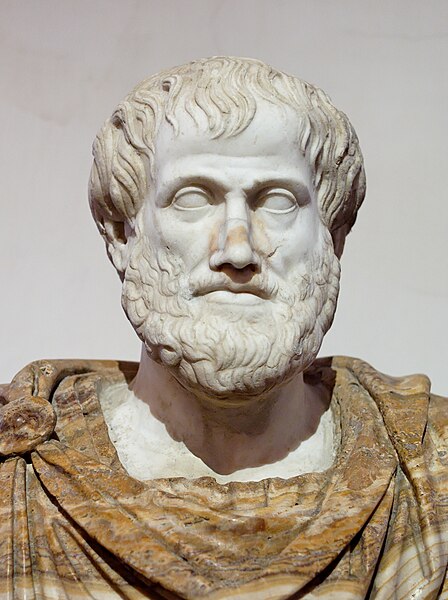
“A whole story is what has a beginning, a middle, and an end.” Aristotle, in Poetics
Plot structure is as old as old Aristotle. Although he wrote the above quote about drama, it also holds true for fiction. It’s the classic three-act structure many novelists follow; other authors put their own twists on it. Before experimenting, though, it’s important to understand how this formula works. Let’s look at Aristotle’s structure as though our characters are climbing a mountain.
Act One: The Beginning, or Setup
At the mountain’s base, we have the beginning. It introduces the setting, the hero and villain, and the tone. It immediately draws readers into the story, includes conflict and begins in medias res (Latin: in the middle of things). That is, in the middle of the conflict and action.
The hero must have an important goal or objective, and the villain must try to prevent the hero from realizing his goal. Also, readers should care about the characters and what happens to them.
An inciting incident disrupts the hero’s world, and he gets involved in its event. He starts “climbing the mountain,” for he cannot go back. This incident may not happen in the first scene or first chapter, but it must happen in Act One. As the main character struggles through it–“up the mountain”– he moves toward the middle of the story and into Act Two.
Act Two: The Middle, or Confrontation
The villain does everything he can think of to stop the hero from reaching his goal–the mountaintop. Yet our hero continues climbing and struggling against him and his obstacles. Each obstacle the hero encounters should be harder than the previous one, and the stakes higher, ramping up tension, with setbacks (stumbles down the mountain) and regrouping.
Another way to show conflict is internal — the hero’s inner battles that must be fought before reaching his goal. In C.S. Forester’s novel, Greyhound (original title, The Good Shepherd), an American destroyer captain, Commander George Krause, commands the naval escorts shepherding merchant vessels across the Atlantic during World War Two. Krause doesn’t just fight Nazi submarines, though. He also battles self-doubts, personal demons, and physical and mental weariness. Commander Krause’s internal and external conflicts (the battles with U-boats) keeps readers on the edge of their seats. Near the end of the book, Krause and his ships are low on fuel and ammunition. Will he and his ships survive the enemy’s wolfpack? This is the reader’s main concern.
As we see from this, Commander Krause’s stakes are high: life or death for him and his crew, the sailors in the other naval vessels he commands, and the lives of the merchant mariners he escorts. Also, England’s need for the supplies the merchant ships carry so it can keep fighting Hitler.
Are your hero’s stakes high enough? Will your hero be harmed in some way if his goal isn’t met? If not, the stakes aren’t serious enough.
Also, do we care about our hero? We care about Commander Krause for lots of reasons. He’s an honorable man, this is first trip across the Atlantic in command of a naval squadron, and he grieves over Evelyn, his wife who left him for another man. We want him to succeed.
Act Three: The End, or The Resolution
Alas, hero and villain go at each other on the mountaintop—the story’s climax. Conflicts come to a head and issues are resolved. Then the hero proceeds down an easy path with falling action to the mountain’s base as his life returns to normal. After a tense and exhausting journey fighting Nazi U-boats and protecting merchant ships, Commander Krause finally gets the sleep he desperately needs.
By the end of Act Three, the main character(s) should be changed, either in a positive or negative way. This is called the Character Arc. Author K.M. Weiland, in her excellent book Creating Character Arcs., mentions a third arc she calls the Flat Arc. We’ll discuss the Character Arc in another post at a later time.
Next week, we’ll look at a different plot structure.
Sometimes, when I stop for a passing train, I’m reminded of prepositional phrases. For me, boxcars are a metaphor for them. As the cars rattle past, I imagine a long sentence coupled together with one prepositional phrase after another. Of course, we need to use them, but if we have too many strung together like boxcars our prose suffers. It sounds choppy, even mechanical and forced, and makes for uninteresting reading.
What is a prepositional phrase? It’s a phrase that begins with a preposition (a word that shows movement or direction) and ends with a noun or pronoun.
A few examples: on, in, into, onto, of, at, etc. More can be found online or in a good grammar book.
Let’s look at a sentence to see what I mean.
Julie sat at her deskbeside a window and looked out it to see a swallow flapping in a nestin a treebeside a brook. (6 prepositional phrases/26 words)
at her desk
beside a window
out it
in a nest
in a tree
beside a brook
Revision:
Julie sat at her desk and looked out her window to see a swallow enjoying her treetop nest beside a brook. (3 prepositional phrases/21 words)
In this revision, after a little thought, I was able to reduce my prepositional phrases from six to three as well as make the sentence more concise by cutting out five words.
When to Keep Prepositional Phrases in Our Sentences
When they’re necessary for sentence clarity.
When we want to slow down our story’s pace
Rule of Thumb: Whenever we can revise to delete them, do so. Use them, but try to keep them to a minimum. Too many prepositional phrases strung together like boxcars on a train clutter our prose.
Try This Exercise
The sentence below has five prepositional phrases in italics. How many can you revise? I’d love to see your revisions in the comments.
Doris knocked on the door before she stepped into the house with a basket full of flowers to give to her grandmother.
I own hundreds of draft horses. I keep them in my stables. They’re so strong they can do the work of two, three, or even more…adjectives and adverbs. See, my draft horses are concrete nouns and dynamic action verbs, and my stables are my dictionary and thesaurus. They come whenever I ask them to, and they make my sentences stronger, more visual, and more concise. If I choose them wisely, they’ll always pull their weight.
Let’s look at some examples.
SENTENCE: The little dog ran very fast across the street.
First Revision: The Chihuahua ran very fast across the street.
Things to Notice
I capitalized Chihuahua. Why? Because Chihuahua is a geographical region in Mexico. When dog breeds have a geographical region as part of their breed designation, the breed is capitalized. On the other hand, a breed without a geographical region as part of their designation is not capitalized. An example of this would be border collie.
The world is full of little dogs, so the adjective little weakens the sentence. I solved thisissue by using a “drafthorse” noun—the concrete noun Chihuahua. Being this specific creates an image in readers’ minds and cuts the sentence down by one word.
Second Revision: The Chihuahua sprinted across the street.
Things to Notice
In the example sentence I used an adverb, very, to modify a general verb, ran.
To solve this issue and get rid of that tired old, overused and often unnecessary adverb, I used a strong, dynamic “draft horse” verb—sprinted.
By using strong concrete nouns and dynamic action verbs, then, we can cut the clutter of adjectives and adverbs. But are there times when we need to use these modifiers? Of course, though some writers may disagree. If they can help readers visualize the noun or verb, use them. Just be sure to get rid of those that aren’t needed.
When to Use Adjectives and Adverbs
A Few Examples
While I drove to Dallas, two black crows flew past my car.
Here, the adjective isn’t needed because all crows in the United States are black.
Theblack standard poodle darted across the street.
This adjective is fine because not all standard poodles are black. The adjective helps create a clear image in readers’ minds.
She whispered softly to me…
The adverb softly isn’t needed because all whispers are typically soft.
She whispered loudly to me.
The adverb loudly as used here is fine because whispers are, by definition, soft. So loud isn’t a way people typically whisper. Sometimes, though, people do whisper louder than usual. Thus, the adverb enhances the sound. However, there are also possible synonyms, such as stage whisper or audible whisper. Either of these synonyms would work as well.
When reviewing a manuscript, pay close attention to the adjectives and adverbs. Can they be deleted through the use of stronger nouns and verbs? If you cannot find stronger nouns and verbs to replace them, keep the modifiers. If you can find stronger nouns and verbs to replace them, get rid of the modifiers.
Through careful examination of our first drafts, we writers must keep alert for redundancies. Redundancies are words that serve no useful purpose toward sentence clarity. They can be repetitive or just hangers on like wedding cans on a bride and groom’s getaway car. They clutter our prose and can bore/irritate our readers. Whenever we spot them, delete them to strengthen our sentences.
If Jane pedaled to town, then all the way is understood, and thus it’s redundant.
Both Joe and Bill will go fishing tomorrow.
The word both isn’t needed because it’s understood.
So, as you revise, ask yourself this: Does each sentence I wrote need every word I used? Can I get rid of some words or phrases without affecting my sentences’ meanings? If you have such words or phrases, get rid of them. Here are a few to watch out for, though the list of redundant words is huge.
Addup
Let me add upthe price and I’ll give you the cost of the groceries.
(Why is up needed for greater sentence clarity? I cannot think of a reason.)
Ask a question
I want to ask everyone a question about that tractor.
(What else does a person ask besides a question?)
Actually
Actually, it’s true the dog bit my sister.
(It’s either true or not true, so actually isn’t needed.)
Followafter
Jim follows afterJoe in the lineup.
(If Jim follows, then after is understood.)
Past experience
Pastexperience proved to John that he couldn’t dance.
(If experience proved something to John, then past is understood.)
Veryold
My grandfather lived to be a veryold man.
(This word very, in numerous cases, isn’t needed. Either my grandfather was old or he wasn’t, no very about it.)












 The Author's Cove: John "Jack" Cunningham on Writing & History