How the Catholic Church Came into Existence, Part 1

Was the Apostle Peter the First Pope?

According to Roman Catholics, based upon Matthew 16:18, the Apostle Peter was the first pope. But was he? Letโ€™s examine this a little closer.

First, what does the word โ€œpopeโ€ mean? It comes from the Latin word papas. However, the term wasnโ€™t used until the 3rd century.

Matthew 16:13-20

In this passage, Jesus asks His disciples what people are saying about Him. Their answers? Elijah, Jeremiah, John the Baptist, etc. Then Jesus turns to them and says, โ€œBut who do you say that I am?โ€

Peter answers: โ€œYou are the Christ, the Son of the Living God.โ€

Jesus responds: โ€œโ€ฆ And I tell you, you are Peter, and on this rock I will build my church and the gates of hell shall not prevail against it.โ€

Jesus plays upon two words in the Greek. Peterโ€™s name, petros (pebble, or stone), and โ€œrock,” petra. What is the big rock (petra) Jesus is talking about? Three possibilities.

  1. Peterโ€™s confession that Jesus is the Christ (the Anointed One)
  2. Christโ€™s teachings
  3. Peter himself

Why “Rock ” Does Not Refer to Peter

  1. Although he was a spokesman for the apostles, we have no record that he exercised authority over them.
  2. Paul once rebuked Peter in public (Galatians 2:11-14). Certainly, then, Paul didnโ€™t recognize Peterโ€™s papal authority.
  3. Peter was a leader in the Jerusalem church, but other churches had leaders as well.
  4. At the Council of Jerusalem, Peter submitted to Jamesโ€™s decision regarding Gentiles in the church and circumcision (Acts 15:7-21).
  5. The apostles in Jerusalem sent Peter into Samaria (Acts 8:14) to preach the Gospel. If he had ultimate authority over the church, he would have done the sending out.
  6. No Biblical record exists of Peter ever going to Rome.  Weโ€™ll examine this in the next post, due out after Christmas.

Who Founded the Church in Rome?

Short Answer: No one knows for sure. Although Peter played a role in founding the Jerusalem church, James, the brother of Jesus, served as its leader. According to the book of Acts, Peter ministered to the Jews in Palestine.

What about Paul? No, he didnโ€™t establish the Roman church either. In Acts 18:2, we read that he met a Jewish couple, Aquila and Priscilla, who were believers. Along with other Jews, theyโ€™d been kicked out of Rome by the Emperor Claudius in 49 A.D. At this point in history, Christianity was still considered a Jewish sect. Thus, a Roman church probably existed before Paul visited it.

The Church’s Foundation

The church is built upon the apostlesโ€™ and prophetsโ€™ foundation: their teachings and doctrine, with Jesus Christ Himself as the cornerstone. The cornerstone binds all the other stones in a building. Without it, the building canโ€™t stand straight and true. Itโ€™s the most important stone, as itโ€™s where a stone buildingโ€™s construction starts.

When we want a sure spiritual foundation, we must build it upon Christ, not Peter. Peter himself wrote that Christ is the churchโ€™s foundation: 1 Peter 2:6-8.

Bibliography

Cairns, Earle E. Christianity Through the Centuries. Revised Edition. Grand Rapids, Michigan: Zondervan Publishing House, 1967

Hinson, E. Glenn, The Early Church: Origins to the Dawn of the Middle Ages. Nashville, TN: Abingdon Press, 1996.

Engelbrecht, Edward A., and Laura L. Lane, eds. The Church from Age to Age: A History from Galilee to Global Christianity. St. Louis: Concordia Publishing House, 2011.

Wilkins, Michael J. โ€œMatthew.โ€ In ESV Study Bible, edited by Lane T. Dennis and Wayne Grudem, page 1999. Wheaton, IL: Crossway, 2008.



The Creek War(1813-1814), Part One: Background to Conflict

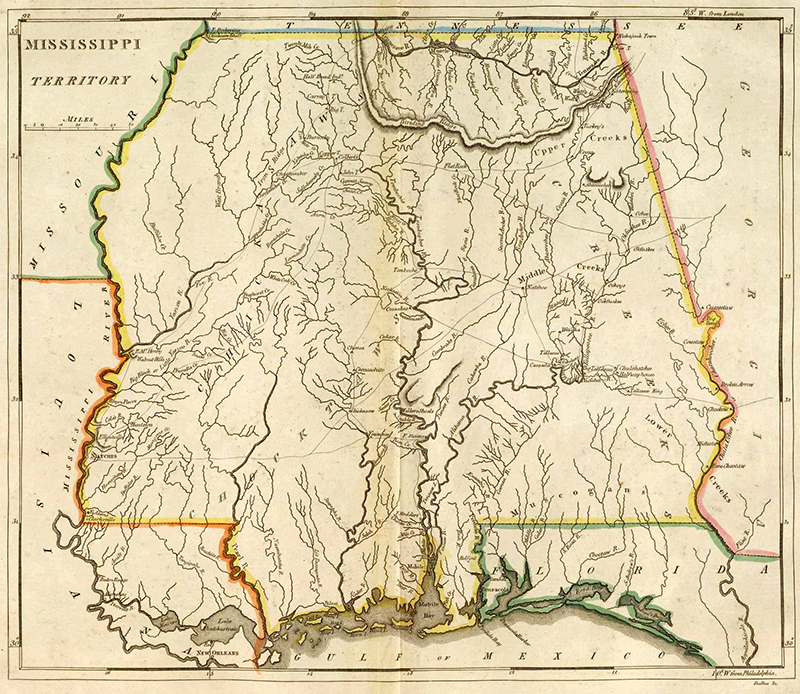
Today, I begin a series on the Creek War (1813-1814). Most of this war was fought in Alabama when it was still part of the Mississippi Territory, and it was part of the much larger War of 1812, as Britain and Spain were allies of the Red Stick Creeks. I’ll also share some videos along the way that will go into more detail on the subjects covered. I’ll continue sharing writing tips in other blogs, but this series ties into my novel coming out, hopefully, next year. Its working title is Circuit Riders: A Story of the Creek War.

The Geographical Setting and Settlements

Before we discuss the Creek War, it’s helpful to briefly establish some background to this conflict.

During and immediately after the American Revolution, many settlers who sided with the British (Tories) left their homes in the former colonies and migrated to Alabama, settling in the Tensaw-Tombigbee valleys just north of Mobile. Many married Indian women and became rich through trade and other means. Their offspring were called mรฉtis, French for mixed blood. Originally, France ruled Mobile, but the British took over after the French and Indian War.

In 1780 Spain, an American ally during the Revolution, captured Mobile. Some Spaniards then moved up the Tombigbee River and built a fort on a limestone bluff overlooking the river that would later become Fort St. Stephens.

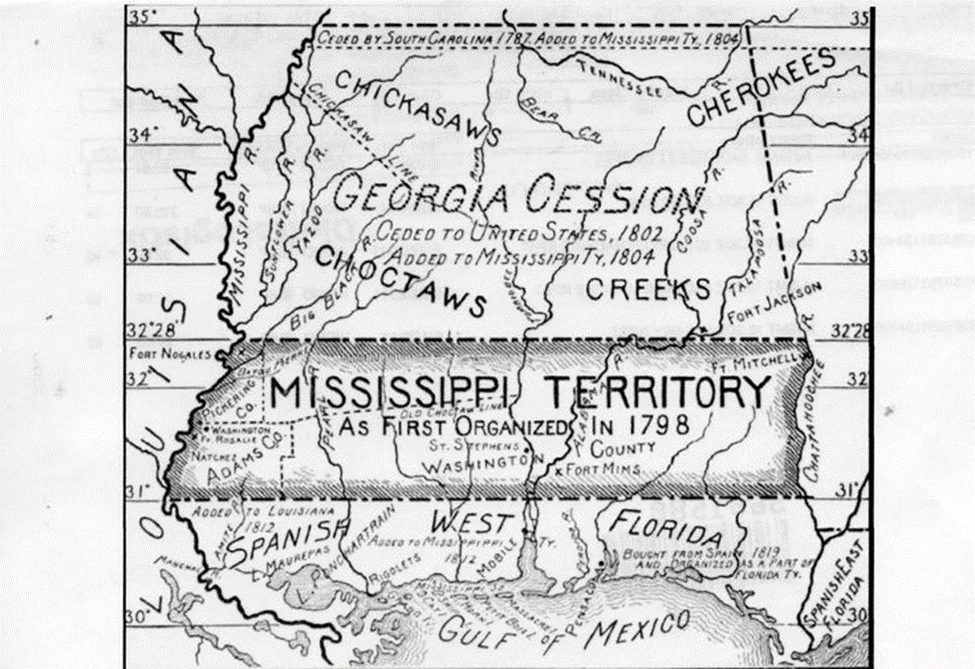
Under the Treaty of Paris (1783) at the end of the Revolution, Spain was granted all of Louisiana as well as territory along the Gulf of Mexico, called East and West Florida. In 1798, Congress established the 31st parallel as the boundary between Spain and the United States and created the Mississippi Territory. It later expanded to the 32nd parallel (1802) when Georgia ceded lands to the federal government. The map below shows what the Territory, a vast region spreading from the Chattahoochee River to the Mississippi River, looked like in 1813, at the time of the Creek War.

In 1799, the federal government built Fort Stoddert on the Mobile River, and in April 1813 the American general, James Wilkinson, captured Mobile without a shot fired.

American pioneers who weren’t Tories, along with their slaves and cattle, began moving into Alabama and Mississippi country in the early 1800s.

The Tribes

Four tribes lived in the Mississippi Territory during this era: the Choctaws, the Chickasaws, the Cherokees, and the Creeks. With the exception of the Pueblos in present-day New Mexico, these tribes were more culturally advanced than all the other tribes north of Mexico.

The Creeks were a matrilineal society, which meant a childโ€™s inheritance was passed through the mother. Women managed households and farmed. Men hunted and fought wars. Often, chiefs and headmen consulted their women when decisions had to be made on issues that concerned their towns. However, when it came to war, chiefs made the decisions.

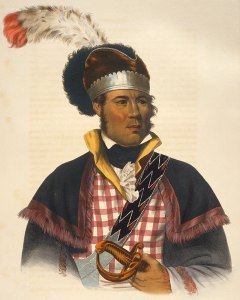
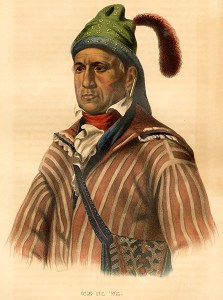
Because their society was matrilineal, a white man who’d married a Creek woman was considered Creek. Two of the Creek Warโ€™s most prominent Creek leaders were cousins who fought on opposite sides, William Weatherford and William McIntosh, but weโ€™ll get into that later.

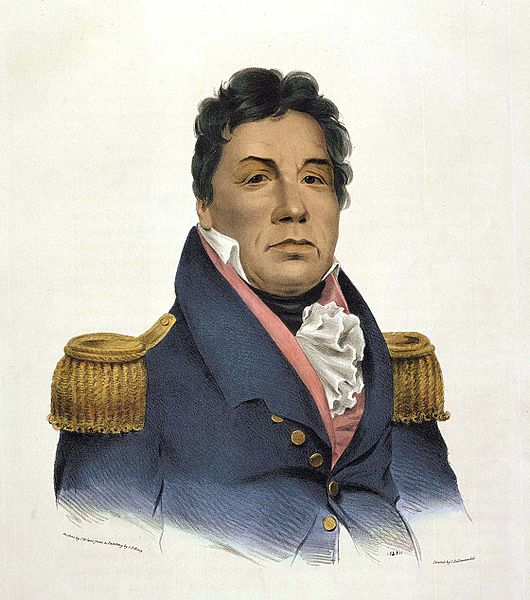
The Choctaws, Chickasaws, and Cherokees were also matrilineal. Most of the members of these tribes supported the settlers. One Choctaw leader weโ€™ll be discussing later is Pushmataha, a highly respected chief.

Next week we’ll look at two major leaders of the Red Sticks.


Sources


McMillan, Malcolm C. The Land Called Alabama, Austin, TX:: Steck-Vaughn Company 1968.

Waselkov, Gregory A. A Conquering Spirit: Fort Mims and the Redstick War of 1813-1814, Tuscaloosa, AL: The University of Alabama Press, 2006


Benjamin Hawkins, Agent to the Southeast Tribes

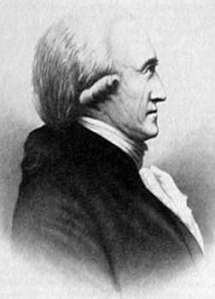
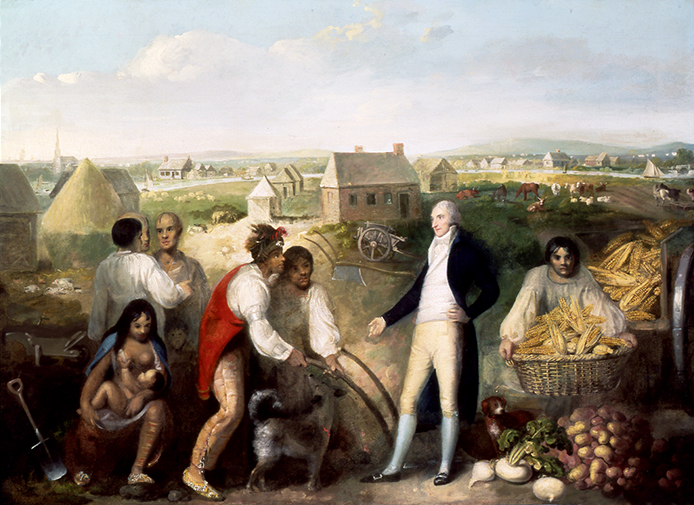
Benjamin Hawkins, 1754-1816

Born into a wealthy North Carolina family in 1754, Benjamin Hawkins later attended the College of New Jersey (modern-day Princeton) where he studied French. During the American Revolution, knowledge of this language served him well as George Washingtonโ€™s translator until Lafayette arrived to perform that duty.

In 1778, he served in North Carolinaโ€™s House of Representatives. Between 1783-84, and in 1787, he was a delegate to the Continental Congress. In 1789, as one of 271 North Carolina delegates to the Fayetteville Convention, he voted to ratify the United States Constitution.

When he won an election to the United States Senate in 1789, he helped negotiate treaties with the Cherokees and Creeks, two of the Civilized Tribes in Americaโ€™s southeastern region. President Washington appointed him General Superintendent of Indian Affairs, serving the tribes south of the Ohio River, in 1796.

To carry out his new responsibilities, Hawkins moved to Georgia and settled on the Flint River. For many years, he lived with a woman named Susan Lavina Downs and finally married her near the end of his life. Some historians believe she was Creek, though there is some disagreement on this. Together, they had seven childrenโ€”six daughters and one son. During his time as an agent, he learned the Creeksโ€™ language and became a respected member of their tribe.

When Hawkins received his appointment the deerskin economy of the Indians was coming to an end. He sought to โ€œcivilizeโ€ the Creeks by persuading them to turn to farming and cattle herding. However, these tribes were already farmers, so he encouraged them to learn how to use white menโ€™s farming tools, such as plows, and white menโ€™s methods of raising crops, including such commodities as cotton. He likewise wanted the women to learn how to use spinning wheels and do other things white women did. He was, in essence, trying to make them American in the hope that theyโ€™d eventually give up their culture and give their land to the white man.

THE CREEK WAR (1813-1814)

When the Creek War broke out he helped organize Creeks who supported the white settlers against those who did not (Red Sticks). He was also present at the signing of the Treaty of Fort Jackson in present-day Wetumpka, Alabama, which ended the conflict.

In 1816, Benjamin Hawkins died.

Sources

Ethridge, Robbie. โ€œBenjamin Hawkins.โ€ New Georgia Encyclopedia, last modified July 15, 2020. https://www.georgiaencyclopedia.org/articles/history-archaeology/benjamin-hawkins-1754-1816/

Foster, H. Thomas II.  โ€œBenjamin Hawkins.โ€ Encyclopedia of Alabama. Last modified, February 15, 2024. Hawkins, Benjamin – Encyclopedia of Alabama

โ€œBenjamin Hawkinsโ€ Wikipedia. Benjamin Hawkins – Wikipedia

The Important Roles of Choctaw Women

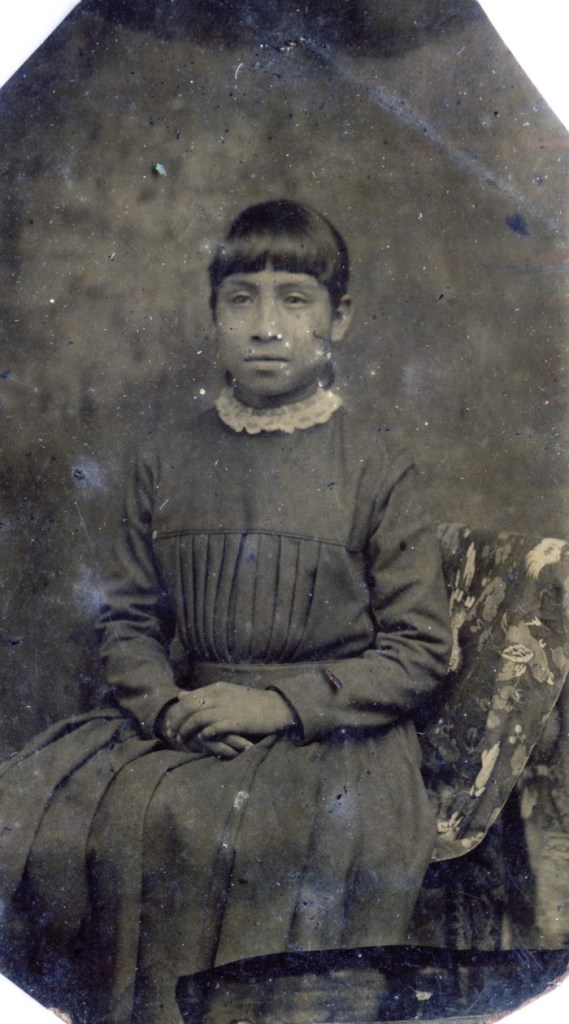
Unidentified Choctaw girl, on a tintype. Oklahoma Historical Society.

The Choctaws, like the Creeks, Cherokees, and Chickasaw tribes, are matrilineal in nature. This means that a childโ€™s inheritance passes through the mother instead of the father. Before Andrew Jacksonโ€™s Indian Removal Act (1830) exiled Choctaws and other Alabama tribes to Oklahoma, the Choctaws lived in southeastern Mississippi and southwestern Alabama. Today, some Choctaws remain in Mississippi.

The men and women had separate, distinct roles in their culture, and the women were the heads of households.

Choctaw Women’s Roles

Childbirth

Pregnant Choctaw women were deeply honored in Choctaw society, for childbirth was their most important contribution to it. When they went into labor they would go to a secluded place where, without any assistance, their child would be born. Although husbands werenโ€™t allowed to be present anywhere near her during this time lest harm befall him or the child, they did fast for their wives.

Farmed, Cooked, and Stored Food

If one visited a Choctaw village before the 18th century, he/she would see three types of farms.

First Type: A garden, planted in March, beside individual familiesโ€™ houses.

Second Type: A communal farm. Here, crops were planted in May. Women worked together while tending its crops.

Third Type: Pumpkin and melon patches.

As the centuries rolled into the 1700s, the Choctaw started adopting the White manโ€™s style of farming by learning to use plows and raising their crops as an individual family instead of as a community.

What sort of crops did they grow, cook, and store? Corn was a staple. Also squash, watermelons, and sunflowers, just to mention a few.

Made Clothing

Women tanned the hides of animals, such as deer, to make clothes for themselves and their family members. They also used fabric made from such things as buffalo wool and milkweed.

Before the White man came they wore wraparound dresses, skirts, and blouses made of these animal skins and fabrics. With the coming of the White man, they eventually moved away from this and wore cotton clothes.

Sources

โ€œTraditional Agriculture,โ€ Choctaw Nation Culture, May & June 2012, 2012.05-0 Agriculture.pdf (choctawnationculture.com)

โ€œTraditional Dress,โ€ Choctaw Nation of Oklahoma, Traditional Dress (choctawnation.com), 2024

โ€œWomenโ€”the Givers and Supporters of Life,โ€ Choctaw Nation Culture, 2011.05 women – the givers and supporters of life.pdf (choctawnationculture.com)

Creek Villages

Creeks
Creek villages
Creek Indian villages
Upper Creeks
Lower Creeks
Upper Creek Indians
Lower Creek Indians
Muscogee
Muscogee Creeks
Muscogee homes
Muscogee Creek Indian homes
Muscogee Creek Indian houses
Creek Indian houses

In the years before the Creek War (1813-1814) the Creek Confederacyโ€™s towns (talwa) stood along rivers and creeks in east-central Alabama and southwestern Georgia. Divided into three districts, its people called themselves Muscogee. When the white man arrived, the white man called them Creeks for the many rivers and streams on which they lived. To further distinguish them geographically, settlers and traders referred to them as Upper and Lower Creeks.

CREEK DISTRICTS

Georgia: Lower Creeks

Ochese (Coweta): Chattahoochee River Basin and Flint River

Alabama: Upper Creeks

  • Tallapoosa: lower Tallapoosa River
  • Abeika: Upper Tallapoosa and Coosa Rivers

The Town

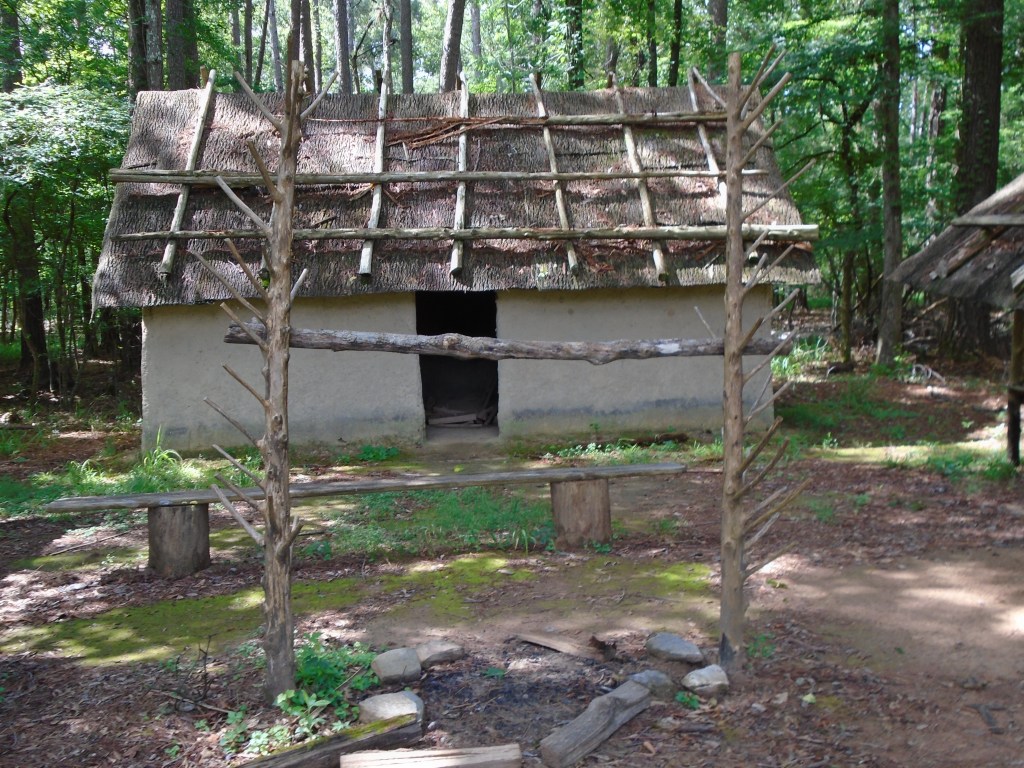
A Creek village consisted of summer and winter houses built around a rectangular field, like a plaza. Below are photos of reconstructed examples of both a winter and a summer Creek house, which I took during a visit to the Fort Toulouse-Fort Jackson Park in Wetumpka, Alabama. Wetumpka is the Creek word for “tumbling water”, named for a waterfall on the Coosa River.

This is a Creek winter house built on upright poles, its walls plastered with mud and its roof thatched. These roofs also had a hole in them for smoke to pass through.

This is a Creek summer house.

During the winter, councils met in a thatched round building called a rotunda. In warm seasons, they held councils beneath arbors.

These village also had a game field for playing chunkey, a game I described in a previous post.

Red Towns/White Towns

Before their homeland was colonized, the Creeks separated their towns into red and white. In the red towns, they held war ceremonies and in the white towns, peace ceremonies.

William Bartram’s Diagram

William Bartram (1739-1823) was a famous botanist who explored Alabama, recording his observations in a journal. He gave us a diagram of a Creek village, which I show below.

A. The rotunda

B. The town square

C. The chunkey field

Surrounding structures–Creek houses

Sources

โ€œThe Muscogee Creekโ€”1600-1840,โ€ National Park Service, Last updated May 24,2021. The Muscogee Creek – 1600 – 1840 – Little River Canyon National Preserve (U.S. National Park Service) (nps.gov).

Hahn, Stephen C. โ€œCreeks in Alabama,โ€ Encyclopedia of Alabama, March 8, 2007, Last updated February 22, 2024, Creeks in Alabama – Encyclopedia of Alabama.

โ€œHistory,โ€ Fort Toulouse-Fort Jackson, Friends of the Fort Foundation, Last Accessed March 14, 2024. History | Fort Toulouse – Fort Jackson | Wetumpka, AL (fttoulousejackson.org).

Lewis, J.D. โ€œThe Native Americans, Creek Indians,โ€ Carolina, 2007. Carolina – The Native Americans – The Creek Indians (carolana.com).

Reverend Thomas Ken, Author of “The Doxology”

Thomas Ken (1637-1711). He was an Anglican minister and a hymn writer. God used him to write what we know today as “The Doxology.”

The Story Behind “The Doxology”

After his parents died, Thomas Ken was raised by his half-sister and attended Winchester College. Once he was ordained as an Anglican minister, he returned to Winchester where he served as its chaplain.

Here at this school, to encourage the students’ devotions (Winchester was an all-male college), he wrote three hymns. One hymn he wrote was to be sung in private when the student awakened, the second hymn at bedtime, and the third hymn at midnight. These hymns had as many as thirteen stanzas.

By 1680, Ken had become an Anglican bishop and chaplain to promiscuous King Charles II. An unpleasant time for him. When the king asked him to house one of his mistresses, Ken refused and rebuked the king: “Not for the king’s kingdom,” he said. Naturally, Charles got very angry, but Ken was a bold man who wouldn’t compromise his faith.

Later, during the reign of King James II, he suffered imprisonment in the Tower of London for his Protestant faith. After his release, he eventually retired and died on March 11, 1711.

The Doxology

When Ken was buried, his friends and family sang the last line of each of his three hymns. These stanzas became “The Doxology.” Many Protestant churches sing these words today. Its words are a praise to the Lord, expressing love and devotion and thanksgiving.

One Interesting Story

During America’s bloody Civil War, Union soldiers were being marched back to a Confederate prison. A Baptist minister, concerned about the prison’s horrible conditions and what these prisoners faced, began singing “The Doxology” as a way of encouraging them. The soldiers joined in and by the time they were back inside it, they had confidence that the Lord would take care of them.

Sources

Powell, Luke. “Praise God From Whom All Blessings Flow.” Story Behind the Hymn, Lyrics and Performance. https://www.youtube.com/watch?v=JtgJF0BBUxE

“Thomas Ken, The Doxology Hymn Story with Lyrics” https://www.youtube.com/watch?v=HxXMKYHMVC4

“Thomas Ken.” https://en.wikipedia.org/wiki/Thomas_Ken

Native American War Clubs

Native American gunstock club.

What is a War Club?

Native American tribes used war clubs in close-in, hand-to-hand
fighting. These could be fatal at close range.

Description of War Clubs

War clubsโ€™ lengths varied, as well as their style and construction. Some had a spiked ball at the end, the spikes being made of metal, stone or bone. Others had sharp stone edges. Another style was made of a jawbone, either from a buffalo or a horse. And some clubs, such as a tomahawk, could be thrown.

In the early 1800s, the Southeastern Creek tribe made war clubs from white oak or hackleberry, usually between two and three feet long. Because they resembled the shape of a gun, they were called the โ€œGunstock Club.โ€ A steel or iron blade was added where a gunโ€™s lock would be. One hard whack on the head with this club could easily kill a man.

The Red War Club

During the Creek War (1813-1814) in Alabama, the Creek faction that opposed the settlers was called Red Sticks because their war clubs were painted red. To paint them this color, dyes were used from one of the following:

  • The pokeberry plant’s red juice
  • The puccoon plant’s root
  • A soft red stone found in Alabama

SOURCES

โ€œFacts and Information about Native American War Clubs.โ€ The American History.org  Last accessed February 29, 2023. A look at the Native American War Clubs Native Americans (theamericanhistory.org)

Halbert, Henry S. โ€œThe Creek Red Stick.โ€ Alabama Historical Reporter 2, May 1884.

Moore, Ethan. โ€œCherokees of the Creek War (1813-1814).โ€ National Park Service, Published August 2017. Cherokee of the Creek War (1813 – 1814) (U.S. National Park Service) (nps.gov)

โ€œRed Sticks.โ€ Wikipedia. Last accessed February 29, 2023. Red Sticks – Wikipedia

Waselkov, Gregory A. A Conquering Spirit. Tuscaloosa, AL: The University of Alabama Press, 2006

Yost, Russell.  โ€œCreek Tribe Weapons.โ€ The History Junkie. Published August 11, 2022. Last modified October 30, 2023. Accessed February 29, 2023, Creek Tribe Weapons – The History Junkie

Victorian Bathing Machines

The bathing machine is believed by many to have been invented in 1750 by a Quaker named Benjamin Beale. Before the Victorian era, men and women swam and bathed in the nude. This wasn’t a pastime for them, however. People in the 18th and 19th centuries bathed for their health.

A Brief Description

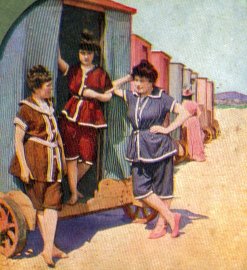
A bathing machine was a small wooden house, or shed, raised high on large wheels. It had entrances front and backโ€”either doors or canvas curtains. Also, it had steps. During the nineteenth century, its popularity grew. These small structures were often seen on American, British, and Mexican beaches. As seen in the photo below, Queen Victoria had her own personal bathing machine.

Queen Victoria’s Bathing Machine. Photo Credit: By grumpylumixuser, CC BY 3.0, https://commons.wikimedia.org/w/index.php?curid=54984764

Why They Were Invented

During the Victorian Era, mixed bathing was considered immoral. Men and women swimmers had separate beaches, or if not, they had separate sections of the same beach.

So, the bathing machine was primarily invented for women. Modesty was the rule of the era for females, and these machines gave them the privacy they needed to change out of their street clothes into their swimming costumes.

Victorian women, however, had to bathe in dresses, a cumbersome experience for them and a reason why so few of them could swim. Early swimwear consisted of ankle-length wool or flannel dresses. Like our fashions today, ladiesโ€™ swimwear changed over the decades.

“Mermaids at Brighton,” by William Heath, 1829

How Bathing Machines Worked

First, a lady would walk up high steps into the machine and through a door(or canvas cover). Inside, sheโ€™d likely find a bench to sit on and a special compartment for her clothes. Sheโ€™d get out of her day dress, which sheโ€™d store in the compartment, then change into her swimming outfit. In the later 1800s, a swimming dress was typically shorter than her street dress. It also consisted of pantaloons, shoes, a swimming cap, and stockings.

After she changed, either a horse or a person would roll the machine into the sea. Then, sheโ€™d exit another door (or canvas cover) and enter the water. She’d splash around and bathe, perhaps jump a few waves while holding onto a rope attached to a buoy. When she wanted to return to shore, sheโ€™d raise a flag on the machineโ€™s peaked roof to signal her intent. Then, either a horse or a person would draw her back onto the beach while she, inside the machine, changed back into her street clothes.

On their beaches, men sometimes used these machines as well.

In 1862, Britain passed a law that male and female bathers had to stay separate from each other by at least 60 feet. If a lady didn’t have a bathing outfit, she would be provided with one, and drawers would be loaned to men who wanted to bathe.

“Bathing Machine Gals, 1902”


Ladies Who Couldnโ€™t Swim

For ladies who couldnโ€™t swim in this era, they could still enjoy a refreshing dip with the help of a dipper, a strong woman whoโ€™d escort them out of the machine, into the water and dunk them.

In my current work-in-progress, I feature a bathing machine in one of my scenes. The girl you will see in this short video shows us a swimming costume that was popular in the 1870s, my current WIP’s era.

“Bringing History to Life, 1872 bathing suit’, by Ninonella

Sources

Lucy Davidson. โ€œWhat was a Victorian Bathing Machine?โ€ HistoryHit, March 2, 2022,  What Was a Victorian Bathing Machine? | History Hit

Liz T. โ€œThe Evolution of Womenโ€™s Swimwear from the 1700s to Today,โ€ Glitz. Glam, and Rebellion. June 8, 2020, The Evolution of Women’s Swimwear from the 1700s to Today โ€“ Glitz Glam and Rebellion

—- โ€œHow did a Victorian Bathing Machine Work?โ€ Shutterbulky. Credited to Vintage Everyday, How did a Victorian bathing machines work? Amazing facts with 25 photos – ShutterBulky

Vic, “Benjamin Beale’s Invention for the Bathing Machine,” Jane Austin’s World, August 10, 2009, https://janeaustensworld.com/2009/08/10/benjamin-beale-bathing-machines/

Literary Missionaries

Three Frustrations Authors Suffer

Photo by Andrea Piacquadio on Pexels.com

As I sit here today at my laptop, Iโ€™m frustrated. Why? Writer’s block. My โ€œidea wellโ€ has run dry. Hey! A thought just occurred. Why not write about some of the frustrations we face along our literary journey. All right, then. Letโ€™s begin.

Rejections

Serious writers understand that rejection comes with the territory. An oft-repeated clichรฉ heard at conferences goes like this: โ€œNot everyone will like our baby,โ€ that is, โ€œNot everyone will like our book.โ€ It doesnโ€™t necessarily mean our writingโ€™s bad. It may mean our book isnโ€™t for everyone, not even for some agents and publishers. Those of us who are called to write wonโ€™t let rejection destroy our dreams. Instead, weโ€™ll persevere in our craft.

Finding Ideas

An affliction that affects most writers at some point or other in their careers is writerโ€™s block. That is, their well of ideas runs dry, as shown in my blogโ€™s introductory paragraph. How do we refill it? Here are three ways to consider.

  • Read. Spend lots of time reading. When we read, kernels of thoughts enter our minds which sometimes spread into ideas for articles, nonfiction books, short stories and novels. Donโ€™t just read in our genres. In fact, read everything we can get our hands on. Approach reading as part of our workโ€”because it is.
  • Pictures, photos, etc. When I was in the sixth grade, my teacher had what she called a โ€œwriting table.โ€ Lots of pictures were on it, some cut out of magazines. Sheโ€™d give those of us who wanted to do so a chance to pick out a picture and write about it. I remember cutting out an advertisementโ€”the photo of a cow standing in front of a commercial airliner. I probably used this table more than my classmates. By studying pictures closely, we may be prompted to write something that inspires us.
  • Experience Life. I love to travel and explore new places. Often, these provide ideas for me as well. When your idea well dries up, consider going to a place youโ€™ve never been before. Take a few days off to walk around and explore it. Who knows? That place may be an excellent setting for a new story.

Finding Time

Truthfully, itโ€™s usually not a matter of โ€œnot having time.โ€ Itโ€™s a matter of โ€œmaking time,โ€ and serious writers make time if only thirty minutes or less a day. Of course, sometimes things happen out of our control and our schedule is so full we truly donโ€™t have time to write. That said, truly โ€œnot having timeโ€ should be the exception to our schedules, not the rule. Make writing a habit. Get up earlier than usual, or go to be later than usual if need be. Practice becoming a writer who takes his/her craft seriously. Donโ€™t let anything discourage you in your literary calling.

Literary Missionaries

Photo by Pixabay on Pexels.com

Chunkey, Anyone? Another Popular Native American Sport

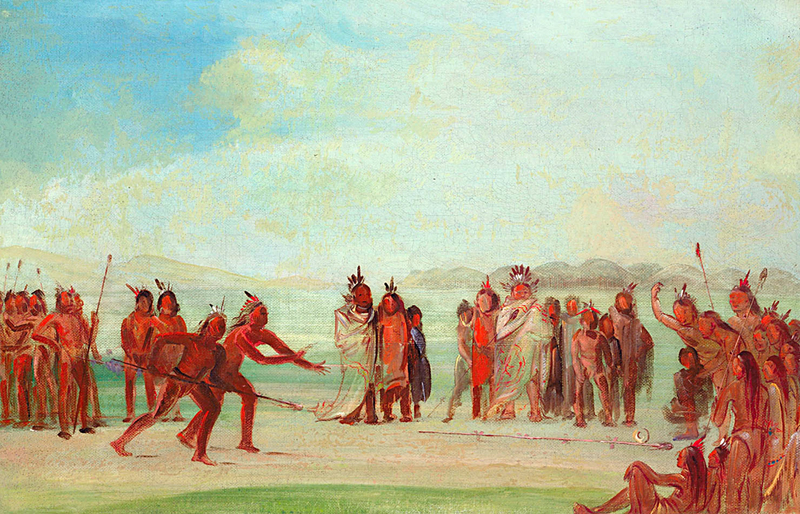
Painting by George Caitlin. Mandans playing Chunkey

Chunkey, an ancient Native American sport, is enjoyable for everyone. Also, itโ€™s easy to play. The game goes back at least as far as the 7th century A.D.

Much like stickball, Native American tribes, particularly those in Americaโ€™s Southeast, played this game to settle disputes. They took this game seriously and even played it to gamble. Quite a few players lost everything in their wagers, sometimes with even more tragic consequences such as suicides. Today, itโ€™s usually played for fun.

Below is a basic overview of the game. The Native Americans then and now play different variations of the game and have different methods of scoring.

Playing Field

  • In previous centuries, the tribes played it on a hard surface, such as packed clay.
  • Nowadays, it’s played on grass.

Equipment Needed to Play

  • Hickory or popular spears that are eight to ten feet long. These are called chunkey (pronounced ‘tchung-kee).
  • Round chunkey stone, sometimes with a hole in it. These were often made of sandstone, clay or granite.

How the Game is Played

  • A player rolls the chunkey stone across the playing field underhanded, like a bowling ball.
  • Players with spears hurl them at the stone. The player whose spear came closest to the stone scores a point.

Famous American painter and artistic chronicler of the West witnessed this game, as seen in his painting at the beginning of this post, He recorded what he saw in writing as well.

The game of Tchung-kee [is] a beautiful athletic exercise, which the Mandan seem to be almost unceasingly practicing whilst the weather is fair, and they have nothing else of moment to demand their attention. This game is decidedly their favourite amusement, and is played near to the village on a pavement of clay, which has been used for that purpose until it has become as smooth and hard as a floor. … The play commences with two (one from each party), who start off upon a trot, abreast of each other, and one of them rolls in advance of them, on the pavement, a little ring of two or three inches in diameter, cut out of a stone; and each one follows it up with his ‘tchung-kee’ (a stick of six feet in length, with little bits of leather projecting from its sides of an inch or more in length), which he throws before him as he runs, sliding it along upon the ground after the ring, endeavouring to place it in such a position when it stops, that the ring may fall upon it, and receive one of the little projections of leather through it.

โ€”โ€ŠGeorge Catlin, 1832

Sources

Lindsey Bark, โ€œChunkey: A Game of Stones,โ€ Cherokee Phoenix, August 27, 2020, Chunkey: A Game of Stones | Culture | cherokeephoenix.org

Anne Gregory, Chunkey, Cahokia, and Indigenous Conflict Resolutionย (Thesis), Scholarโ€™s Bank, University of Oregon, September 25, 2020, Chunkey, Cahokia, and Indigenous Conflict Resolution (uoregon.edu)

E. Metcalf, โ€œChunkey: More Than Just a Game,โ€ Real Archaeology(blog),November 5, 2023, Chunkey: More Then Just a Game | Real Archaeology (vassar.edu)

Being Professional


Blog Writer
With todayโ€™s technology, itโ€™s become easier for wannabe writers to see their work published. Indeed, thousands of books are out there clamoring for readersโ€™ attention. The ease with which publication has become, though, presents its own issues for self-published authors.

We must understand that professional writing demands more than just sitting down at our laptops, whipping out a manuscript, and then self-publishing it. It goes well beyond that first draft, second draft, even third draft. It takes long hours of hard work and revision till we’ve finally polished our prose.

Just as we canโ€™t repair a car if we donโ€™t understand how its engine works, so we canโ€™t engage in effective revision and polish if we donโ€™t understand what makes good writing work. Effective writing entails numerous elements, and each element requires constant practice. For serious authors, writing is a daily discipline. Professional writers don’t wait for the inspiration bug to hit them. Professional writers write!ย 

Do we want our self-published books to stand out among all the other indie books on the market? Do we want to be taken seriously as authors? Do we want to sell our books? If so, we must approach our craft the same way all serious writers approach itโ€” through disciplined study, practice, and, of course, writing on a regular basis.ย 

.

Stickball, A Native American Sport

In this excerpt from my work-in-progress, tentatively titled Ruffians, Redsticks and Circuit Riders, I describe a popular game played by two Choctaw villages. Stickball was also called โ€œlittle war.โ€ The Southeastern tribes in the early 1800s and earlier played it to settle disputes with other villages in a peaceful manner. These tribes still play it today. Lacrosse traces its origin to this sport.

Unlike our modern times, though, early stickball games had few rulesโ€”players could tackle each other, whack each other with their two-feet long hickory sticks, and similar things. Hundreds, even thousands, of men on both sides participated in the contest.

The players would fashion a rawhide cup at the end of their hickory sticks. The ball, also made of hide, was stuffed with deer hair. Sometimes, even, a rock. This game was so rough, players got injured. The object of the game was to fling the ball against a goal, such as shown in my excerpt. If the ball struck it, a point was scored.

During the 19th century, the United States government tried to ban the game. Today, it thrives among these tribes from the American Southeast: Chickasaw, Cherokee, Choctaw, Creek, and Seminole. They even have tournaments, notably the World Series of Stickball, held in Mississippi.

Recently, as part of my research, I visited the Poarch Creek reservation in Poarch, Alabama and spoke with the Creek curator of its museum. She told me her people, at least those living in Alabama, play stickball just for fun and the women are allowed to play with the men.  However, they do have a rule, she saidโ€”the male players are not allowed to hit the women players. The game remains rough even today.

Here’s a video of a recent World Series of Stickball Tournament held in Mississippi.

Sources

โ€œChoctaw Nation Sends Three Teams to Stickball World Series,โ€ Choctaw Nation of Oklahoma, July 12, 2022, accessed 10/24/2023 Choctaw Nation Sends Three Teams to Stickball World Series

Browne, Eric E. โ€œGames of the Southeastern Indians,โ€ Encyclopedia of Alabama. Last updated March 27, 2023, Alabama Humanities Alliance 2023.

Griffin, Benjamin W. McIntosh and Weatherford, Creek Leaders, Tuscaloosa and London: The University of Alabama Press, 1988.

Speaking Event

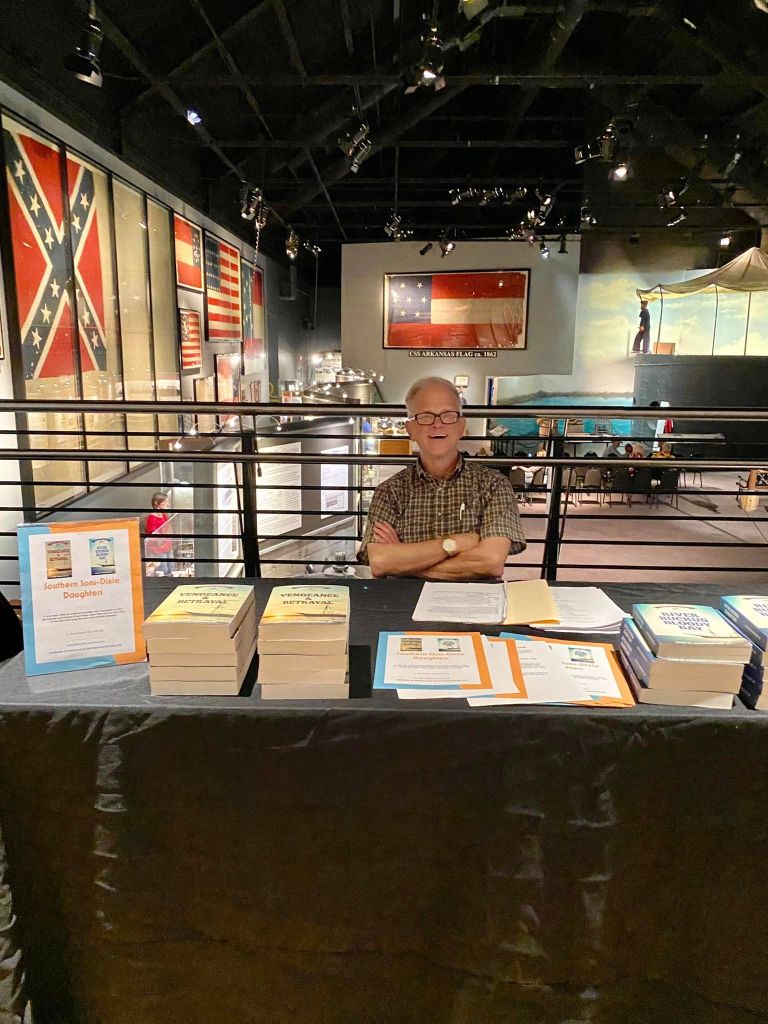
This past Saturday, I had the privilege of giving a lecture and doing a book signing at the National Civil War Naval Museum, located at Port Columbus, Georgia. It is a fantastic museum, and I highly recommend it to all Civil War buffs., especially those interested in the conflict’s naval history. I spoke on the battle of Mobile Bay. All photo credits belong to Terri Miller. Thank you, Terri.

Behind us is the USS Hartford, the flagship of Admiral David G. Farragut. You can walk inside it and see how the various compartments were arranged and how they were furnished.

If you’re ever in Columbus, Georgia, this museum is well worth a visit and very easy to find — just off Highway 280.

Watch Out! I See Mary Jane!

Photo by Vanessa Georgiou on Pexels.com

During your writing, have you ever stumbled upon Mary Jane? Who is she? Why, sheโ€™s an absolutely beautiful character (forgive the unnecessary adverb). Everything about her is flawless โ€“ her hair, her makeup, her clothes. Sheโ€™s so smart, she never makes a mistake. Because sheโ€™s the epitome of perfection, she always gets along with other characters. Why, she has the answers for every situation.  I suggest we all watch out for her. Whyโ€™s that? Itโ€™s simply this. Mary Janes are so perfect, readers cannot identify with them and, worst of all, theyโ€™re boring.

A Few Tips on How to Avoid Mary Janes

Give Characters Weaknesses/Flaws/Fears

One of my favorite authors is C.S. Forrester. In his series about the fictional Napoleonic War naval hero, Horatio Hornblower, Hornblower sometimes gets seasick. This adds to his humanity. One wouldnโ€™t expect a naval hero to get seasick, but Captain Hornblower does. Although Iโ€™ve never been seasick because I grew up on the Gulf Coast and did lots of saltwater fishing in my younger years, my friends who do get seasick can identify with him.

Let Our Characters Make Mistakes

If theyโ€™re our storyโ€™s protagonist, mistakes go a long way toward gaining reader sympathy for him/her. If theyโ€™re the villain, readers will rejoice at the villainโ€™s error.

Hercule Poirot may be one of the mystery genreโ€™s greatest detectives. Want to know how he died in Agatha Christieโ€™s last Poirot novel, Curtain? He made a mistake many people, unfortunately, make. He died of a heart attack because he didnโ€™t take his heart medicine

Give Our Character a Unique Physical Appearance

Photo by Sixyfifty on Pexels.com

A character may walk with a limp due to an old injury. Or, perhaps, heโ€™s missing a finger from a chainsaw accident.

Mary Janes may wear petite size dresses and always promenade in designer clothes. However, although a more believable female character may wear a size petite dress in our story, she might also wear lots of frumpy clothes and battered tennis shoes.

A Final Word

Itโ€™s important to spend quality time thinking about our characters. Make an outline of their strengths and weaknesses and portray them as original, and believable, as we can.

Photo by Vanessa Georgiou on Pexels.com

And hey, watch out for Mary Jane! She lurks everywhere within manuscripts and in the pages of certain books.

The Discipline of Writing

The trade of authorship is a violent, and indestructible obsession– George Sand, penname of Amantine Aurore Lucile Dupin (1804-1876), French novelist.

When I was a youngster my sister, who is five years older than me, wanted to learn how to play the piano. So, my parents bought her an upright. At around the age of nine, she began taking lessons. Me? I got tired of hearing her practice her scales and songs. She did this most every weekday. All the way through her senior year in high school, she continued playing and practicing.  Because of her discipline and hard work, she became an excellent pianist.

Likewise, we writers require self-discipline if we want to improve. This is true in every art form.

Sadly, Iโ€™ve known talented people whoโ€™ve lacked the discipline to do much, if anything, with their literary gifts. After all, we donโ€™t have a boss leaning over our shoulder screaming, โ€œWrite! Write!โ€ Self-discipline is a must if we want to get better. If we donโ€™t have the โ€œreally want toโ€ we donโ€™t have the โ€œreally must doโ€ in order to succeed.

Five Marks of a Self-disciplined Writer

  1. Self-disciplined writers approach their craft like a regular job –because it is. They โ€œclock in and clock outโ€ on a regular schedule, even on days when they donโ€™t feel like writing. Ever worked a regular nine-to-five job when you didnโ€™t want to but had to? Thatโ€™s what self-disciplined writers do, even if for an hour or two a day.
  2. Self-disciplined writers persevere despite disappointments, such as when an editor rejects a manuscript.
  3. Self-disciplined writers cut out distractions. Some write well in noisy environments while others, such as me, donโ€™t. Whatever environment a self-disciplined writer chooses, he/she focuses totally on their work.
  4. Self-disciplined writers live a balanced life. They know when to say no to certain activities without feeling guilty and when to say yes. Iโ€™ve learned from experience that not everyone will understand when I say no, but Iโ€™ve also learned to accept that fact. Most non-writers donโ€™t understand serious writers, anyway.
  5. Self-disciplined writers are driven. They donโ€™t just want to write, they have to write. True writers write because they have no choice.

To quote the Roman poet Juvenal (c. 70-c. 150): Writing is the incurable itch that possess many.

The Creek War (1813-1814), Part Thirteen, Jackson Struggles

After his November victories, Andrew Jackson fought a battle–to keep his army intact. Many of his men’s enlistments had either expired or were about to expire, so they wanted to return home. He pleaded with them, threatened them, and assured them they’d get the needed supplies.

Albert J. Pickett writes: Since the battle of Talladega, Jackson had encountered innumerable difficulties and mortifications, owing to the failure of contractors and the mutiny of his troops, who were finally reduced to one hundred men by the expiration of their times of service.

Finally, he headed his army north, toward another supply base that was situated on the Tennessee River. Coming south, however, on the same road, were the supply wagons they’d been waiting for. After they met, Jackson returned to Fort Strother, warning his men that he’d shoot any, and all, deserters.

Upon the arrival of eight hundred reinforcements in early January, and upon hearing a rumor about a British plan to land troops in Spanish West Florida, Jackson set out again. Before he could defeat the British, he needed to eliminate the Red Sticks. And, he was determined to do just that.

Albert J. Pickett writes: Well understanding the character of minute men like these, who must constantly be employed, Jackson immediately marched them across the Coosa to the late battleground of Talladega, where he was joined by two hundred Cherokees and Creeks, who evinced great alarm at the weakness which the command presented.

Battle of Emukfau Creek

On January 16, Jackson camped at a Hillabee village. The next day, his army followed trails that indicated a large force ahead of him, toward the Tallapoosa River and the hostile village of Tohopeka. He halted on the twenty-first, on Emukfau Creek, to reconnoiter.

Albert J. Pickett writes: Before dark his (Jackson’s) encampment was formed, his army thrown into a hollow square, his pickets and spies sent out, his sentinels doubled, and fires lighted some distance outside of the lines … at the hour of eleven the spies reported a large encampment three miles distant, where the savages were whooping and dancing, and, being apprised of the approach of the Americans, were sending off their women and children.

The next day, close to sunrise, one thousand Red Sticks commanded by Peter McQueen attacked Jackson’s camp. For a half hour, they fought, General Coffee and his troopers leading the charge, chasing them for two miles. Although Coffee intended to burn the Red Sticks’ camp, he found it too strongly fortified, so he retreated to bring up the artillery–a six-pounder cannon.

Suddenly, McQueen launched another attack from all sides. More fierce fighting ensued, the hostiles withdrew and despite McQueen’s pleas, they refused to attack a third time.

Albert J. Pickett writes: The brave Creeks had now been repulsed in every attempt, but they exhibited a ferocity and courage which commanded the serious consideration of Jackson, whose force was weaker than he desired …..

The next day, Jackson buried his dead then marched back toward Fort Strother, his wounded carried on litters made of deer hide.

Fight at Enitachopca Creek

During his march back to Fort Strother, Jackson engaged in another battle on January 24 when he tried to cross Enitachopca Creek. His wounded and soldiers in the advance guard made it across safely, but then, the Red Sticks attacked. Jackson’s rear guard panicked before the painted warriors. A fierce struggle for Jackson’s artillery ensued.

Albert J. Pickett writes: Discovering that, in separating the gun from the limbers, the rammer and pricker had been left tied to the latter … while Indian bullets rattled like hail around them, Constantine Perkins and Craven Jackson, two of the gunners, supplied the deficiency. Perkins took off his bayonet and rammed the cartridge home with his musket, and Jackson, drawing his ramrod, employed it as a pricker, priming with a musket cartridge. The six-pounder was thus twice charged, pouring grape among the savages, then only a few yards distant … after the second fire, the little artillery company furiously charged on the assailants, who became more cautious in their approaches ….

Finally repelling the enemy and saving the cannon, Jackson’s men, at last, reached Fort Strother. The general allowed the sixty volunteers who’d participated to go back to Huntsville, in north Alabama, for an honorable discharge.

Jackson would soon receive reinforcements from the commander of the Sixth Military District, Major General Thomas Pinckney, and Tennessee’s governor, Blount. Among these men was Sam Houston, who’d later become famous in the Texas Revolution. With these men, Jackson prepared to fight his final and most decisive battle at Horseshoe Bend.

Sources

Bunn, Mike and Clay Williams. Battle for the Southern Frontier: The Creek War and the War of 1812. Fourth Printing. Charleston, SC: The History Press, 2013.

Pickett, Albert J. The History of Alabama. Republished by Birmingham Book & Magazine Co. of Birmingham, Alabama, 1962. Copyright 1878 by Mrs. Sarah S. Pickett.

The Creek War (1813-1814): Part Twelve, The Holy Ground

General Claiborneโ€™s Offensive Begins

On a high limestone bluff overlooking the Alabama River, two hundred cabins and eighty wigwams provided a refuge for the Red Sticks after the Fort Mims massacre as well as a headquarters for Chief William Weatherford and other chiefs. In the center of the town stood a pole from which hundreds of scalps hung, trophies from Fort Mimsโ€™s dead.

Surrounded by the river, two creeks, a swamp and forests, not a single road or path led into it. Called Ecunchate (Ikanachaki) in the Creek language and the Holy Ground in the Americansโ€™ English, Josiah Francis and his prophets did incantations over it, putting a magical barrier around it, they believed. They claimed it would protect them from every white man who dared set foot on its sacred soil. If only for a few months, the Holy Ground was a haven for them. It would soon become General Ferdinand Claiborneโ€™s objective when he launched his offensive to avenge the massacre.

Holy Ground Battlefield Park, photo by Rivers Langley

When General Thomas Flournoy, commander of the Mississippi Territoryโ€™s Seventh Military District, ordered General Claiborne to march up the Alabama River to Weatherfordโ€™s Bluff, named for William Weatherfordโ€™s father Charles, Claiborneโ€™s offensive started.

On November 17, Claiborne arrived at the bluff then crossed the Alabama on rafts, built another stockade (Fort Claiborne), and awaited reinforcements from Generals Floyd and Jackson. A small detachment of Choctaws under Pushmataha, whoโ€™d been given the rank of lieutenant colonel, accompanied him.

When Colonel Gilbert Russellโ€™s Third U.S. Regiment arrived, Claiborne sought General Flournoyโ€™s permission to advance against the Holy Ground. Although eager to attack it, many of his officers, respectfully, signed a petition in protest. The reasons they cited: no winter clothes, no shoes, no blankets, no roads. Eventually, however, Claiborne persuaded them to his way of thinking.

Sam Moniac, Weatherfordโ€™s brother-in-law whoโ€™d whacked Josiah Francis with Francisโ€™s warclub months earlier, served as Claiborneโ€™s guide. Due to Moniacโ€™s service during the Creek War his son, David, would be accepted into West Point and become one of its first minority graduates.

On December 13, Claiborne resumed his march for eighty miles, built another stockade, and on December 22 headed deeper into the Creek nation. Upon spotting Claiborneโ€™s army, Weatherford hastened back to the Holy Ground to prepare for the pending attack.  Francis and some other Creeks fled at the news, reducing the number of Creeks and escaped slaves to defend the town.

The Battle of the Holy Ground

General Claiborne’s Tactics

Claiborne planned a three-pronged attack, each column with a different objective, and he sent a fourth force across the river to cut off the Red Sticksโ€™ retreat. Of these three columns, only the right column under Colonel Joseph Carson engaged in major fighting. He was ordered to cross Holy Ground Creek and then attack the Holy Groundโ€™s upper town. The left column, under Major Benjamin Smoot, had the objective of capturing the Holy Groundโ€™s lower town while General Claiborne and Colonel Russell held the center in reserve. Major Casselโ€™s men, the fourth force, was assigned the job of cutting off the Red Sticksโ€™ retreat.

William Weatherford’s Tactics

When Josiah Francis ran away, Weatherford assumed command. First, he ordered that the women and children be taken across the river in canoes to the safety of the thick woods. Many prophets argued with him and protested, insisting their magic barrier would protect them. Fortunately, Weatherford asserted his authority and got his way, and the noncombatants were rushed to safety.

Next, since he anticipated an attack would come across Holy Ground Creek, he set up an ambush. Warriors with rifles, he posted behind a stream bank while others hid behind a fallen tree to await the Americans. A third body of men, wielding bows and arrows, he placed in the rear.

William Weatherford Becomes a Legend

Colonel Carsonโ€™s troops made the major attack across Holy Ground Creek. At first, due to the Red Sticksโ€™ withering barrage and stiff resistance, their advance was slow. Men fought from behind trees and stumps, arrows flew high and beyond them to no effect. When the troops finally flanked the Red Sticks, the warriors beat a retreat back toward their town, many having fallen to the soldiersโ€™ bullets.

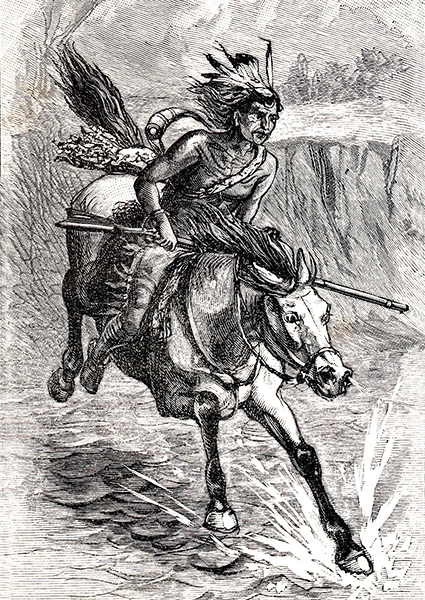
Weatherford raced to his swift steed Arrow, mounted him and found himself facing Carsonโ€™s men practically alone. Surrounded. No escape. He was going to be captured. He galloped to the riverbank, to a bluff about fifteen feet high. Pretty long way down into the river. Could he make it? He had no choice. It was either leaping into it or else being captured or killed.

He turned Arrow back and moved quickly up a hollow to give his powerful horse a good running start. Then he galloped back down and leaped off the bluff, diving into the river. Arrow surfaced and swam to the other side amidst musket balls splashing around them. Both Weatherford and Arrow made it to shore, out of the range of Carsonโ€™s troops, unhurt.

Claiborneโ€™s army spent a cold Christmas Eve camped on Weatherfordโ€™s plantation, in his cornfield, dining on boiled acorns and parched cornโ€”all the food they had. By January 14, the generalโ€™s army had dwindled to sixty volunteers, for the other soldiersโ€™ enlistments had expired. In Weatherford’s house, a letter from the Spanish governor of Pensacola was found, congratulating him on the victory at Fort Mims and a suggestion that he attack Mobile — clear evidence of Spain’s role in the war. What this governor did not know, however, is that Weatherford could neither read nor write because he’d had no desire to ever learn.

Did Weatherford and Arrow Really Make Their Legendary Leap?

Some people have questioned whether Weatherford and Arrow actually made their famous leap. No historian has been able to disprove it and according to Benjamin W. Griffith, Jr., in his book McIntosh and Weatherford, Creek Indian Leaders, the consensus among eyewitnesses, such as Sam Moniac and Sam Dale, and most of those who knew Weatherford is that a leap did occur. Because this feat moved William Weatherford into Alabama legend, some accounts have exaggerated certain aspects of it, such as the height from which he and Arrow jumped. According to the Encyclopedia of Alabama, fifteen feet is about the true height.

Sources

Griffith, Benjamin W. Jr. McIntosh and Weatherford, Creek Indian Leaders, Tuscaloosa and London: The University of Alabama Press, 1988.

Pickett, Albert J. The History of Alabama. Republished by Birmingham Book & Magazine Co. of Birmingham, Alabama, 1962. Copyright 1878 by Mrs. Sarah S. Pickett.

Waselkov, Gregory A. A Conquering Spirit: Fort Mims and the Redstick War of 1813-1814. Tuscaloosa: University of Alabama Press, 2006.


SETTINGS, REAL AND FICTIONAL

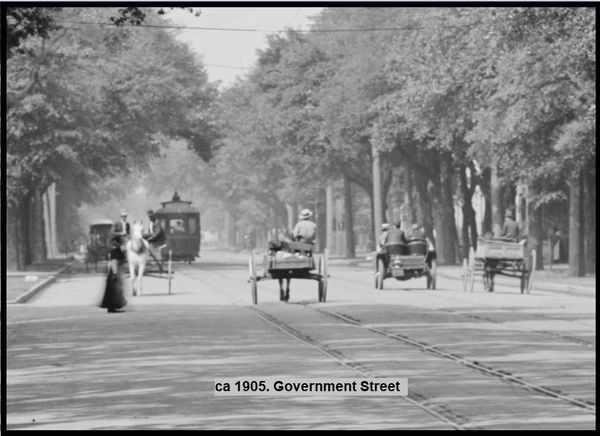
Government Street is one of the oldest streets in Mobile and a main artery going through its downtown section.

REAL SETTINGS/FICTIONAL NAMES

  1. William Faulkner: In many of his works, Faulkner set his tales in fictional Yoknapatawpha County, inspired by the Mississippi county, Lafayette, in which he lived.
  2. Winston Groom: One of Winston Groomโ€™s early works, Gone the Sun, is partially set in the town of Bienville. However, having grown up in Mobile the same as he did, and in the same era, it was obvious to me that his fictional Bienville isโ€” actually โ€“ Mobile!

So, Faulkner and Groom show us that itโ€™s perfectly fine to use a real setting but give it a different name. This allows writers lots of freedomโ€”where their characters go, where events happen, and the types of characters they use. ย 

REAL CITIES/REAL NAMES

  1. Research: If a writer knows his/her setting well, he or she doesnโ€™t have to do lots of research. However, detailed research is essential if stories have a real setting with which writers aren’t familiar. That said, itโ€™s also permissible to create fictional neighborhoods and streets in real places.
  2. Readers: Real settings help writers create places readers recognize. For example, Andy Andrewsโ€™s book, The Heart Mender, is set in Gulf Shores, Alabama, located along a peninsula at the mouth of Mobile Bay. I instantly recognized the places in his book, for Iโ€™ve visited them many a time. It is a popular tourist resort these days. Because it was so well written and recognizable, it drew me deep into his story, a true story he wrote using fiction techniques.

FICTIONAL SETTINGS

  1. Fictional settings: Creating these is great fun! It releases a writer’s imagination!
  2. Research Again: If a fictional town is set in a real place, writers need to be sure the topography, vegetation, wildlife, and similar things are accurate.

A GENTLE WARNING

Lawsuits. If we use real people in our stories and portray them in a negative way, or if weโ€™re critical of a real place such as a library or restaurant, we could be asking for a lawsuit. In my opinion, itโ€™s safer legally to keep as much as possible fictional, even in real settings. Take Sherlock Holmesโ€™s fictional address, for exampleโ€”221B Baker Street. Although Baker Street does exist in London, and in Sir Arthur Conan Doyleโ€™s day, the street didnโ€™t go that far.

What are your thoughts on this subject?

The Creek War (1813-1814): Part Eleven, Battle of Autossee

While Generals Andrew Jackson and Ferdinand Claiborne were on the march in November of 1813 messengers from Coweta, a Lower Creek town on the Chattahoochee River, brought word to General John Floyd that Peter McQueenโ€™s Red Sticks were besieging it. Through them, Chief William McIntosh and other chiefs asked him for help.

With a force of 950 militia, Floyd marched toward Coweta via the Federal Road. Arriving at the Chattahoochee, he learned the siege had been lifted and Peter McQueenโ€™s warriors had fallen back to the village of Autossee, on the Tallapoosa River. After he built Fort Michell (near present-day Phenix City, Alabama) as a supply base, he continued into Alabama. Joined by friendly Creeks commanded by Chief William McIntosh, his army marched toward Autossee.  Alabamaโ€™s first recorded Jewish settler, Abraham Mordecai, served as their guide. Historian Albert J. Pickett described the event:

Brigadier General John Floyd crossed the Ocmulgee, Flint and Chattahoochie, and advanced near the Tallapoosa with an army of nine hundred and fifty militia and four hundred friendly Indians โ€ฆ

Though Floyd intended to surround the town, daybreak revealed a different situation which caused him to change his plan. What was it he saw? Another Red Stick camp about five hundred yards downstream from Autossee. Pickett continues:

It was now necessary to change the plan of attack, by advancing three companies of infantry to the lower town, accompanied by Merriweatherโ€™s rifles, and two troops of light dragoons commanded by Captains Irwin and Steele. The remainder of the army marched upon the upper town, and soon the battle became general. The Indians at first advanced โ€ฆ but the fire from the artillery, with the charge of bayonets, drove them into the out-houses and thickets, in the rear of the town. Many concealed themselves in caves cut in the bluff of the river, here thickly covered with cane.

Floyd sent McIntoshโ€™s warriors to cross over to the Tallapoosaโ€™s west side to cut off the Red Stick retreat, but frigid weather and high waters prevented them from doing it, so McIntosh posted his men on Calabee Creek to achieve his goal. McIntoshโ€™s warriors fought well. By nine oโ€™clock in the morning, the Red Sticks had abandoned the field, their homes set ablaze and the friendly Creeks pillaged the town. Peter McQueen wasnโ€™t present at this fight. He’d left with his warriors before the battle.

Floyd suffered a wound in his kneecap, and nine of his men were killed. Three others died later from wounds. Somewhere from one hundred to three hundred Red Sticks were killed. The battle was bloodier than expected and he suffered from a shortage of supplies,, so Floyd retreated to his base at Fort Mitchell to regroup.

.

Bibliography

Griffith, Benjamin W. Jr. McIntosh & Weatherford, Creek Indian Leaders. Tuscaloosa, AL: The University of Alabama Press, 1988.

Pickett, Albert J. The History of Alabama. Republished by Birmingham Book & Magazine Co. of Birmingham, Alabama, 1962. Copyright 1878 by Mrs. Sarah S. Pickett.

Wilson, Claire M. โ€œBattle of Autossee,โ€ Encyclopedia of Alabama. Updated October 8, 2014.

The Creek War (1813-1814): Part Ten, Another Massacre and a River Fight

Hillabee Massacre

It was a good thing for Jackson that he didnโ€™t wait for reinforcements from General John Cocke, because they never would’ve arrived.

General James White, under Cockeโ€™s command, marched toward Jacksonโ€™s army to reinforce him prior to the battle of  Talladega, till Cocke recalled him to rejoin his East Tennessee army. Likely, Cocke, jealous of Jackson, feared losing his independent command to that fiery general.

What soon followed as a consequence? Another massacre, but not by Indians this time but by General Whiteโ€™s men. Today itโ€™s known as the Hillabee Massacre.

The Hillabee Creeks were ready to surrender to Andrew Jackson, but on November 18 things changed when Cockeโ€™s men attacked a Hillabee village, killing sixty Creeks, not all of them warriors, and taking two-hundred-fifty prisoners. โ€œNot a drop of Tennessee blood was spilt,โ€ historian Albert J. Pickett wrote in his famous work, The History of Alabama. โ€œThe other Hillabee towns, viewing this as flagrant treachery on the part of Jackson, became the most relentless enemies of the Americans, and afterwards fought them with fiendish desperation.โ€[1]

Needless to say, this tragic event outraged Andrew Jackson.

The Canoe Fight

Another incident, though of no strategic importance, brought fame to its participants: Sam Dale, Jeremiah Austill, James Smith, and a free black man named Caesar. This incident occurred during raids by  General Claiborneโ€™s militia when he assumed the offensive against the Red Sticks. On November 12, eighty militiamen under the command of Captain Sam Dale went on a scouting mission across the Alabama River. Dale, along with Jeremiah Austill, James Smith, and Caesar, were among the last to cross it.

However, as they crossed in a dugout, they spotted a canoe loaded with Indians so they gave chase and overtook the enemy. Shots were fired. While Caesar held the two boats together, a brief, fierce fight ensuedโ€” paddles, war clubs, knives, and bayonets swung and stabbed at each other. Two Indians dove overboard and escaped, eight were killed. This incident made Dale and his men legends in Alabama.  


[1] Pickett, Albert J. The History of Alabama. Republished by Birmingham Book & Magazine Co. of Birmingham, Alabama, 1962. Copyright 1878 by Mrs. Sarah S. Pickett.

Sources

Bunn, Mike and Clay Williams. Battle for the Southern Frontier: The Creek War and the War of 1812. Fourth Printing. Charleston, SC: The History Press, 2013.

McMillan, Malcolm C. The Land Called Alabama, Austin, TX:: Steck-Vaughn Company 1968.

Pickett, Albert J. The History of Alabama. Republished by Birmingham Book & Magazine Co. of Birmingham, Alabama, 1962. Copyright 1878 by Mrs. Sarah S. Pickett.

Waselkov, Gregory A. A Conquering Spirit: Fort Mims and the Redstick War of 1813-1814, Tuscaloosa, AL: The University of Alabama Press, 2006.

Thomas Jefferson’s Literary Advice

The most valuable of talents is never using two words when one will do. โ€“ Thomas Jefferson

An Example: The Declaration of Independence, First Paragraph

The unanimous Declaration of the thirteen united States of America, When in the Course of human events, it becomes necessary for one people to dissolve the political bands which have connected them with another, and to assume among the powers of the earth, the separate and equal station to which the Laws of Nature and of Nature’s God entitle them, a decent respect to the opinions of mankind requires that they should declare the causes which impel them to the separation.

Granted, Jefferson’s sentence is longer that those most twenty-first century authors write. Itโ€™s eighty-one words. Despite its length, though, every word is strong and counts toward clarity. The sentence length is just part of his literary style. Thatโ€™s what being concise means: using strong words that make it easy for readers to understand a writerโ€™s message. In other wordsโ€”CLARITY.

Modern writers do well to abide by Jefferson’s sound advice. For tips on how to do this, visit my blog series, “Cut the Clutter.”

https://wordpress.com/post/theauthorscove.com/2248

https://wordpress.com/post/theauthorscove.com/2195

https://wordpress.com/post/theauthorscove.com/2248

https://wordpress.com/post/theauthorscove.com/2286

The Creek War (1813-1814): Part Nine, Fort Mims Aftermath/Andrew Jackson Gets Involved

During the massacre at Fort Mims, Chief William McIntosh wasnโ€™t idle. The Indian agent to the Creeks, Benjamin Hawkins, sent him to the northern part of Alabama to recruit Cherokees to join the war. McIntosh succeeded in his task.

One consequence of the massacre at Fort Mims was that the Choctaw chief, Pushmataha, traveled to Mobile with George Gaines from St. Stephens, where he offered his warriors to General Thomas Flournoy, commander of the Seventh Military District. At first, Flournoy refused the chiefโ€™s offer. Enraged, Pushmataha headed back to St. Stephens with Gaines when a courier overtook them on the road and said the general had changed his mind. At a council, Pushmataha gave an impassioned speech to some five thousand braves.  Heโ€™d lost many friends at Fort Mims. He said they needed to avenge their deaths. Almost all of them responded in the affirmative โ€“ war! So now, the Americans had another ally.

ANDREW JACKSON GETS INVOLVED

Credit: Harris Brisbane Dick Fund, 1964

When word of the massacre reached Nashville, demands for vengeance spread throughout Tennessee. The month before, the federal government had authorized the governors of Tennessee and Georgia to raise troops to fight the Red Sticks, and the Nashville Courier used Fort Mims as a reason to โ€œexterminate the Creek nation.โ€ Soon, four armies took to the field.

Armies and Commanders

Andrew Jackson: West Tennessee // John Cocke:: East Tennessee

John Floyd: Georgia// Ferdinand Claiborne:   U.S. Army regulars & militiamen

Allies: Friendly Creeks, Choctaws, and Cherokees

Jackson Marches South

One of Jacksonโ€™s closest friends was John Coffee, in command of his cavalry. In October Colonel Coffeeโ€™s men rode to Huntsville, in north Alabama. A few days later, Major General Jackson and his militia joined him. They built two supply depots, one of them at the end of the fifty-mile road they cut in six days. Then Jackson continued his march south, determined to destroy every Red Stick village he encountered and cut a highway through their country clear down to Mobile.

For a time, his march stopped on the Coosa River, where he built Fort Strother. Upon learning of a nearby Red Stick town, Tallushatchee, he dispatched Coffee and their Cherokee allies to destroy it. To distinguish themselves from the Red Sticks, the Cherokees wore white feathers and deer tails on their heads. The future hero of the Alamo, Davy Crockett, also participated in this battle.

In the predawn hours of November 3, Coffeeโ€™s nine hundred troopers and the Cherokees advanced on Tallushatchee within a mile, and then surrounded it. Detachments of scouts were sent in to draw the Red Sticks out.

The Red Sticks took the bait and charged out of their village, where Coffeeโ€™s men caught them in a crossfire. Remembering this fight, Crockett reported that he and others chased forty-six warriors into a house. He wrote: โ€œWe shot them like dogs, and then set the house on fire, and burned it up with the forty-six warriors in it.โ€

Within a mere half hour, 186 Indians were killed, including women and children.

Coffee regretted the deaths of the women and their children, saying in his report that killing them had been an accident due to the warriors fleeing into their homes.

A few days later, Jackson received word from a friendly chief that Weatherfordโ€™s 1,000 warriors had surrounded, and was besieging, the village of Talladega some thirty miles from Fort Strother. To slip through Weatherfordโ€™s lines, the chief had disguised himself as a hogโ€”put on hogskin, grunted, and walked on his hands and feet in the evening till he made it through the Red Sticksโ€™ camps.

When Jackson learned of this threat to Talladega he, due to his sick and wounded which had depleted his force, first wanted to be reinforced by John Cockeโ€™s men but then decided he couldnโ€™t wait. So, while leaving a token force to guard Fort Strother, Jackson marched to Talladegaโ€™s rescue and defeated Weatherford in a decisive victory using Coffeeโ€™s tactics. Jackson’s men also captured a Spanish flag at Talladega–evidence of Spain’s alliance with England in supporting the Red Sticks, some seven hundred of whom escaped Jackson’s army. So, the fighting continued.

After this battle, Jackson spent the winter doing battle on a different front: the hunger his troops suffered, many of them now mutinous, and a massacre led by General Cockeโ€™s men that made life ever more difficult for him.

Bibliography

Bunn, Mike and Clay Williams. Battle for the Southern Frontier: The Creek War and the War of 1812. First Printing. Charleston: The History Press, 2008.
Griffith, Benjamin W. Jr. McIntosh and Weatherford, Creek Indian Leaders, Tuscaloosa and London: The University of Alabama Press, 1988.

Benefits of a Five Second Courtesy

“Ready.” James looked at his stopwatch then glanced up at Harold and raised his finger. “Get set. Go!”

“Thank you,” Harold said, grinning.

“Ah, now that wasn’t so hard was it., Harold?”

“Nah! It took less than five seconds to say it.”

James put his arm around his friend’s shoulders and steered him toward the snack bar. “Exactly.”

Obviously, James believes saying “thank you” is important. And he’s right! Those two little words carry lots of power. What makes them so powerful?

  1. They express appreciation for whoever we’re thanking and tells them we don’t take them for granted. This feeling of worth is a good motivator for a person to continue doing good deeds for others.
  2. From a business perspective, it can also open doors for wonderful opportunities which may not have opened otherwise. Saying “thank you” is so rare these days, those who say it stand out from the crowd. People remember the “thankers” easier than they do the ungrateful.
  3. Saying “thank you” helps people live happier lives. When we speak these words, we’re focused on others instead of ourselves. Cultivate a habit of gratitude. According to scientific research, those who say “thank you” have better mental and physical health.

So, thank you for reading this short blog. Remember, words of gratitude only takes five seconds.

https://www.forbes.com/sites/amymorin/2014/11/23/7-scientifically-proven-benefits-of-gratitude-that-will-motivate-you-to-give-thanks-year-round/?sh=532d05ac183c

The Creek War (1813-1814): Part Eight, Fort Sinquefield

Josiah Francis self-portrait, 1815

Like Fort Mims, Fort Sinquefield was a hastily built stockade on an acre of land with just one blockhouse. Unlike Fort Mims, just a few families sought refuge in it when the war broke out. Two of these families โ€“ the Ranson Kimbell and Abner James families โ€“ left the fort after the Fort Mims massacre in the mistaken (and fatal) belief that the Red Stick threat had ended.

On the afternoon of September 1, a party of Red Sticks attacked Ranson Kimbellโ€™s home where these families had relocated. With the exception of Abner Jamesโ€™s daughter Sarah Merrill and her infant son, all who were present were killed. Other family members avoided death because they werenโ€™t present during the attack. Although Sarah was scalped and left for dead and her son severely injured, she managed to make it back to the fort with him, survived her scalping and her son eventually survived his wounds.

The next day, September 2, some ladies went to a spring about three hundred yards from the stockade to wash clothes when, suddenly, Josiah Francis and one hundred whooping, painted warriors rushed them and the fort. Had it not been for Isaac Haydenโ€™s hunting dogs, all of these ladies might have been killed. When he turned his hounds loose, they sprinted out the fortโ€™s gate and into the attacking Red Sticks, which bought time for them to flee back into the fort. Only one lady was killed in this episode.

With its gate closed, Fort Sinquefieldโ€™s residents put up a stout and effective defense. After a two-hour battle, they repulsed the Red Sticks with only one man killed.

Young Jeremiah Austill, whoโ€™d soon gain a measure of fame, was sent to General Claiborneโ€™s headquarters at Mount Vernon to deliver a report of the victory.

Bibliography

Bunn, Mike, โ€œFort Sinquefield,โ€ Encyclopedia of Alabama. Updated September 26, 2018. Fort Sinquefield | Encyclopedia of Alabama

Bunn, Mike and Clay Williams. Battle for the Southern Frontier: The Creek War and the War of 1812. First Printing. Charleston: The History Press, 2008.

Halbert, Henry S. and Timothy H. Ball. The Creek War of 1813 and 1814. Chicago: Donohue and Henneberry, 1895.


Crutch Words

We writers all have little words we tend to overuse. In literary lingo, these are called crutch words. They’re trite, uninteresting, and are usually the first words that come to mind in a rough draft. Although writing them in a rough draft is fine we must, in our revision, try to limit their use. I’ve listed a few here to watch out for, but it is far from exhaustive,

A Few Crutch Words

all

grin

begin

grin

have/had

heart

honestly

just

know

laugh

look

nod

see

smile

stomach

walk

smile

The Creek War (1813-1814), Part Seven, Massacre at Fort Mims

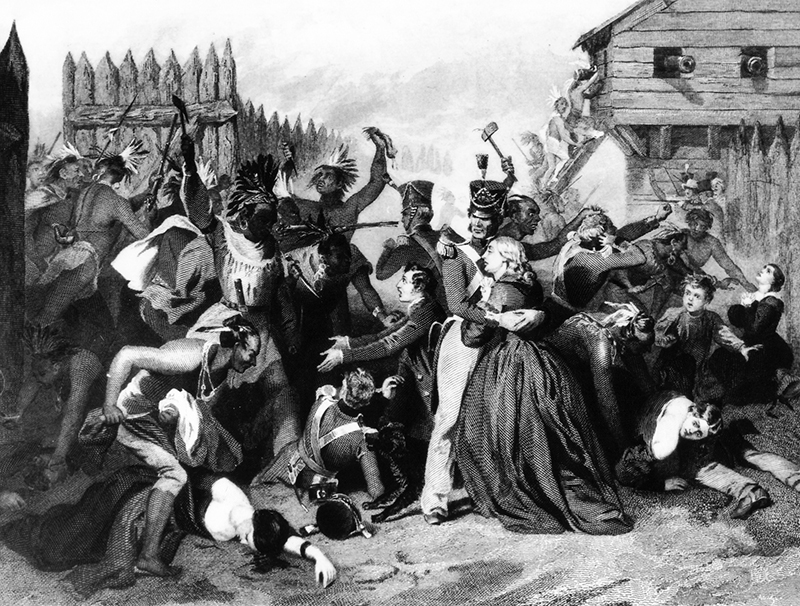
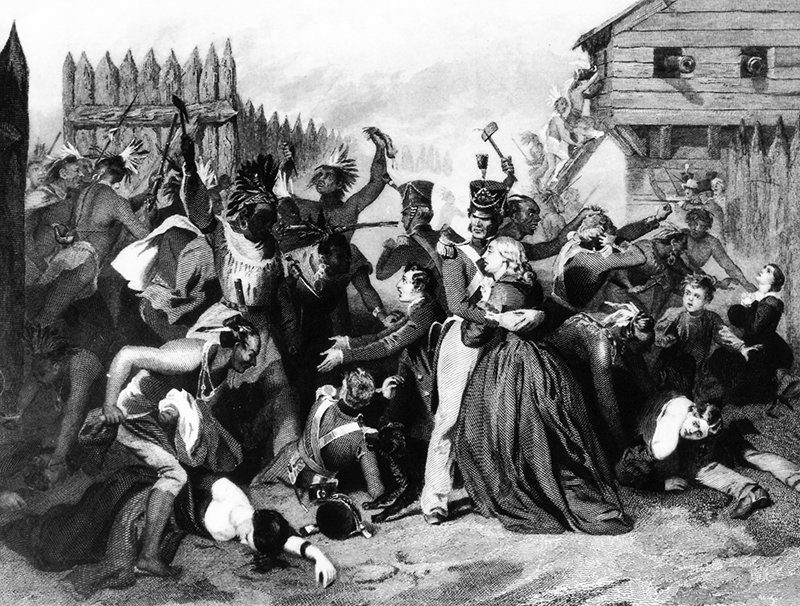
1858 Engraving of the Fort Mims massacre. Doy Leale McCall Rare Book and Manuscript Library.

When I first saw this picture in a 4th-grade history textbook, it sparked my interest in this conflict. So, I’ve had an interest in it for a very long time

On August 29, 1813, two slaves owned by Josiah Fletcher were dispatched from Fort Mims to check on Samuel Mimsโ€™s cattle, but they werenโ€™t gone long. They ran back to the fort and reported seeing Indians. However, when Major Beasley sent out a patrol to investigate, none were found. Consequently, he whipped one of the slaves for giving a false alarm.

The next morning, a similar thing happened. Fletcher’s slave, the one whoโ€™d been whipped, was sent out with another slave to check on the cattle. But instead, Fletcherโ€™s slave went to nearby Fort Pierce, two miles southeast of Fort Mims and closer to Mobile. The other slave returned and said heโ€™d seen Indians too.

Soon after this James Cornells, a mรฉtis, galloped into the fort alerting the garrison that the Creeks were on their way. Beasley, according to Cornells after the war, was drunk and said, โ€œYou saw red cows, man.โ€

At noon, Weatherfordโ€™s warriors attacked from the north, south, and east. They poured through the east gate, killing Beasley when he vainly tried shutting it. A militia company, guarding the gate, was wiped out.

Warriors from the northern sector rushed through the open west gate but encountered a locked inner gate. Upon capturing its guardhouse, they scaled the pickets and occupied the blockhouse.

From the south, warriors dominated the southern picketsโ€™ rifle holes, felling one person after another.  

Along the northern sector, however, Captain Dixon Bailey, the garrisonโ€™s most competent officer, put up a stout defense. None of his picketsโ€™ loopholes were captured, and his men were well-disciplined.

Then, suddenly, the Creeks retreated because some of their prophets, whoโ€™d boasted that no bullet could kill them, had indeed been killed. During this lull, Weatherfordโ€™s warriors conferred at a nearby house regarding their next move. In the meantime, Captain Bailey took command of the fort.

At the Red Stick conference, Weatherford advised against a renewed attack, but no one listened. So he and his slaves rode to his half-brother David Tate’s house not far from the tragic scene. Heโ€™d had enough of the fighting and bloodshed for the day. No one listened to him. Women and children had been killed. He knew what would come next. He hated it.

About an hour after their withdrawal, the Indians resumed their attack, slaughtering and scalping, and burning Mimsโ€™ house and surrounding buildings. When it was all over, 250 people inside the fort were killed and about 100 were captured.

A few defenders, however, managed to escape the carnage. Some went to Fort Stoddert. One of them, a slave named Hester, found a canoe on the Tensaw River. Despite being shot, she managed to row to the fort, the first person to bring news of the disaster.

This massacre led Andrew Jackson, up in Tennessee, to get involved. Weโ€™ll discuss his role in a later post.  

Sources

Bunn, Mike and Clay Williams. Battle for the Southern Frontier: The Creek War and the War of 1812. Fourth Printing. Charleston, SC: The History Press, 2013.

Waselkov, Gregory A. โ€œFort Mims Battle and Massacre,โ€ updated January 11, 2018, Fort Mims Battle and Massacre | Encyclopedia of Alabama.

Waselkov, Gregory A. A Conquering Spirit: Fort Mims and the Redstick War of 1813-1814, Tuscaloosa, AL: The University of Alabama Press, 2006.

Stop, Look and Listen

Photo by Pixabay on Pexels.com

Many writers tend to be introverted, but I donโ€™t know if a person can say that about me. Well, maybe to a certain degree when Iโ€™m in strange crowds, but I reckon Iโ€™m actually somewhere between the two extremes. After all, I often got in trouble in school for being the class clown, even though nobody, especially teachers, thought I was funny.

As writers, however, we need to be willing to crawl out of our literary shells from time to time and get around people. Early in my career, I often visited shopping malls. There, Iโ€™d sit on a bench, observe and listen to shoppers. I’d even have a notebook with me on occasion and took notes. Some may consider this a waste of time. Even strange. It wasnโ€™t. I was studying people โ€“ how they walked, how they talked, their body language, and their reactions to different situations. It came in handy later on when I began writing fiction.

How does studying people come in handy? Letโ€™s look at one example. If we observe how a person gets angry, we can then use the way he/she demonstrated anger for one of our storyโ€™s angry characters. Not everyone yells when theyโ€™re angry, not everyone stomps their foot, and so on. Everyone is unique and thus, everyone shows his/her emotion in different ways. So, observation is one way we learn to improve our craft.

Listening is also important, especially for dialogue.  In addition to reading, study dialogue in movies and television. Movie scripts are, after all, primarily speech. Just as in novels, good dialogue is one of the hallmarks of a good movie or television show.

Of course, when weโ€™re around people we can learn dialogue by engaging them in conversation. What are some unique expressions people use? Do they talk fast, speak slowly or use clipped sentences? Try to imitate these and other patterns in your charactersโ€™ dialogue. Also, observe peoples’ body language. Our stories will be all the better for it.

So take time to get out among the crowds. Take time to stop, look, and listen.

The Creek War(1813-1814), Part Six, Prelude to a Massacre

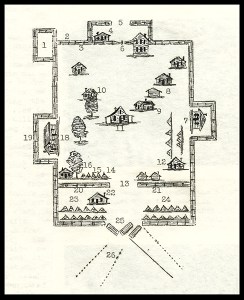
This diagram of Fort Mims is called the Claiborne Map, but in truth, we don’t know who drew it. It was probably drawn by one of General Claiborne’s men who came to bury the dead after the massacre.

The Settlers

When Samuel Mims moved to the Tensaw Region in 1780, in what would become the Mississippi Territory, he settled near Lake Tensaw just north of Spanish-held Mobile. Here he built his wealth. By 1811, he owned lots of land and cattle and a profitable ferry that crossed the Alabama River. In addition to this, he owned and sold slaves. Befitting a man of his means, his house was an expensive, one-story frame structure with ten outbuildingsโ€”not the more common log houses most pioneers lived in.

When hostilities broke out at Burnt Corn Creek, Territorial Governor David Holmes ordered General Ferdinand Claiborneโ€™s Mississippi Territorial Volunteers to the Tensaw and Tombigbee settlements.

The settlers, though, weeks before the battle, had already begun building stockades. In total, there were fifteen. After he arrived at Fort Stoddert, General Claiborne reduced this number to five and put Major Daniel Beasley in command of Fort Mims, the largest of them. Its timber pickets (sharpened stakes) enclosed Mimsโ€™ house on 1ยผ acre of land. Settlers poured into it and nearby Fort Pierce. So crowded had Fort Mims become, and so close to swamps, that disease afflicted many of its inhabitants.

Prior to the Creek War Beasley had served in the Mississippi Territorial Legislature (1811-1812), and had also served as a sheriff and a justice of the peace. But he had a drinking problem too โ€“ a poor choice of a commander on Claiborneโ€™s part.

After an inspection on August 7, General Claiborne ordered Beasley to build two more blockhouses in addition to the one already partially built and to strengthen the fort in other ways.  Beasley failed to do this, grew complacent because of numerous false reports about Red Sticks lurking nearby, and doubted heโ€™d be attacked. He even left the main gate wide open. Over a period of time sand (or more likely clay) built up around the gate, so hard and thick, that it couldnโ€™t be moved. This would play a major role in the fortโ€™s demise.

The Red Sticks

In late August, after many days of hard rain, Red Stick war parties assembled on Flat Creek on the Alabama River under the overall command of William Weatherford. One thousand strong and coming from thirteen towns, the chiefs and prophets had asked him to lead the attack on Fort Mims because it had been his idea.

A small part of this army, under command of the prophet Josiah Francis, broke away from Weatherfordโ€™s force and headed to another fort, Fort Sinquefield.

Weatherford, with seven hundred warriors, proceeded to Fort Mims. On the evening of August 29, they camped near it undiscovered. With two other warriors, he scouted it out in the evening, sneaking right up to its pickets undetected. He heard the people inside it carrying on as usual. He noticed that the picketsโ€™ rifle holes were made about four feet from the ground, which made them easy to capture. And its gate was wide open. Weatherford was convinced that no one inside expected a thing. Tomorrow, August 30, catching the fort by surprise was certain.

Upon his return to camp, itโ€™s believed that he told his warriors to spare the women and children, but instead, capture them and make them slaves. โ€œOnly kill warriors,โ€ he is said to have told them, referring to the white and mรฉtis males.

Sadly, tragically, no one would heed his words.

Sources

Bunn, Mike and Clay Williams. Battle for the Southern Frontier: The Creek War and the War of 1812. Fourth Printing. Charleston, SC: The History Press, 2013.

Waselkov, Gregory A. A Conquering Spirit: Fort Mims and the Redstick War of 1813-1814, Tuscaloosa, AL: The University of Alabama Press, 2006

NEXT WEEK: The Massacre at Fort Mims


The Creek War (1813-1814), Part Five: Burnt Corn Creek, The First Battle

Reenactors “fighting” the Battle of Burnt Corn Creek, not far from the site of the actual battle. Photo by author.

In the spring of 1813, the Creeksโ€™ civil war was drawing to a close with the Red Sticks on the verge of winning. Meanwhile, the United States was fighting Great Britain a second time and Britain’s ally, Spain, threatened settlers from West Florida. Though Mobile was now in American hands, the Spanish still held Pensacola as West Florida’s capital. Along the Tensaw, Alabama and Tombigbee Rivers, settlers began building stockades.

The Red Sticks, encouraged by their prophets and the earthโ€™s tremors Tecumseh had prophesied would hit their land,[1] raided the farms of those who opposed them. A party of hostiles under the leadership of Peter McQueen, head warrior of Tallassee, headed for Pensacola, the second such party that went to that town. On the way, when McQueenโ€™s warriors burned plantations owned by mรฉtis planters Sam Moniac and James Cornells, word spread like a forest fireโ€”the Red Sticks were going to get ammunition from the Spaniards to fight them!  

Colonel James Caller, commander of the regionโ€™s territorial militia, called his men to action. Six companies of riflemen and Captain Dixon Baileyโ€™s thirty mรฉtis from the Tensaw, a total of 180 militiamen, marched to find the enemy.

On July 26, they encountered McQueenโ€™s men returning from Pensacola with their packhorses.  At eleven oโ€™clock, during the Creeksโ€™ meal, Caller mounted a surprise attack.

McQueenโ€™s warriors fled across Burnt Corn Creek into a marsh, but then counterattacked while the militiamen plundered what theyโ€™d captured. The undisciplined volunteers scattered. Not long after this, they disbanded.

Not many casualties to report in this brief battle but because of Burnt Corn Creek, panicked settlers fled into their stockades. One of these was built on an acre of land around the home of Samuel Mims. His fort, aptly named Fort Mims, would go down in history as one of Americaโ€™s bloodiest massacres โ€ฆ and the bloodiest one in Americaโ€™s Old Southwest.

Sources

Bunn, Mike and Clay Williams. Battle for the Southern Frontier: The Creek War and the War of 1812. Fourth Printing. Charleston, SC: The History Press, 2013.

Waselkov, Gregory A. A Conquering Spirit: Fort Mims and the Redstick War of 1813-1814, Tuscaloosa, AL: The University of Alabama Press, 2006


[1] This was the New Madrid earthquake that hit New Madrid, Missouri in December 1811. It was a coincidence, and it frightened settlers and Indians alike. Tecumseh also prophesied about a comet, something he knew would come because British scientists in Canada had told him he and others would see it. It came over Alabama in September of 1811.

KEEP YOUR DISTANCE. NO! GET CLOSE: Some thoughts on Narrative Distance

When beginning writers first learn the rule โ€œshow, donโ€™t tell,โ€ many make the mistake of never using the device of โ€œtelling.โ€ Both techniques are important and have their purpose, but they arenโ€™t set in granite. Tied into these guidelines is another technique useful in fiction and nonfiction alike, that of narrative distance.

Definition

Narrative distance is how far a writer is from the story. Writers can give readers both a wide view and a closeup view. Riding on a country lane, for example, a person may see farms and crops and barns and animals โ€“ thatโ€™s the wide view. For a closeup, writers will visit the farm and describe details about it and the farmer.

Fiction and Nonfiction Narrative Distance

Nonfiction

Wide-angle: An overview or synopsis of the topic.

Closeup: Delving into the specifics of the topic.

Fiction

Wide-angle:     Describing a scene or setting in an objective manner.

Closeup:          Showing a characterโ€™s emotions, motivations, personalities, etc.

Fiction and Nonfiction

Wide-angle telling is a great way to give readers a break and, although constant telling is boring, constant closeup showing is exhausting. Thatโ€™s why we writers need to keep our writing balanced between the two.

So, what about your current work in progress? Is it well-balanced?

The Creek War (1813-1814), Part Four: Causes of the Creek War

The causes of Alabamaโ€™s Creek War are complex. It started as a civil war between the Lower Creeks, who lived close to the white settlements, many of whom had adopted the white manโ€™s ways, and the Upper Creeks, who lived in a region around and near present-day Montgomery, Alabama and wanted to keep their traditional ways. Inevitably, though, the settlers got drawn into this conflict.

In this blog, Iโ€™ll try to keep the reasons as simple and concise as possible.

Westward Movement

After the American Revolution, settlers began moving into Alabama country. Many settled in the Tombigbee-Tensaw River Region just north of Spanish Mobile. These settlements put pressure on the Indians and their way of life. Indians ceded some of their lands to the settlers by treaty, but the settlers wanted more, whereas the Indians depended on the land for survival, such as deer hunting and trading deerskins.

Benjamin Hawkins

Benjamin Hawkins and the Creek Indians, circa 1805 oil on canvas, 35 7/8 x 49 7/8 inches Greenville County Museum of Art, Greenville S.C.

As the Indian agent to the Creeks during this era, Benjamin Hawkins sought to assimilate them into white culture. Though some did assimilate, others refused. This furthered the division between the tribal bands. 

The Federal Road

In late 1811, the Federal government opened a road through Creek country. It began at Milledgeville, Georgia and was built down to Fort Stoddert, on the Mobile River, with New Orleans its intended destination. Originally, it had been a post road that, in the Treaty of Washington (1805), the government had obtained permission to build. However, it was widened for military purposes in 1811 as another war with Great Britain grew imminent. This road expedited the influx of thousands of settlers into Alabama, increasing the strain between the Creek factions.

Tecumseh

Tecumseh, a Shawnee chief who had familial ties in Alabama, visited the area in 1811 to form a pan-Indian alliance against the settlers. Though he failed to persuade the Choctaws and Chickasaws, he succeeded with many of the Upper Creeks.

At the Upper Creek capital, Tuckabatchee (near present-day Tallassee, Alabama), he gave an impassioned speech, prophesied about an earthquake and a comet and left a prophet there, Seekaboo, to train other prophets.

After he left for home, in Ohio, the earthquake and comet came to pass. This frightened and convinced many to follow their prophets and go to war. The earthquakeโ€™s epicenter was New Madrid, Missouri, the largest quake in U.S. history. It was so powerful and huge, Alabama felt its tremors. This earthquake, though, happened by chance. Regarding the comet, British scientists in Canada had told Tecumseh they expected one to pass over.

The warriors who followed the prophets and fought the settlers would become known as the Red Sticks for their red warclubs. Red was the color of war. Twenty-nine towns sided with the Red Sticks. Five towns, under the leadership of William McIntosh and Chief Big Warrior, sided with the settlers.

The War of 1812

While the British impressed sailors off American ships into their Navy and threatened the United States from Canada, Spain, a British ally, threatened settlers in the Old Southwest. Tecumseh allied himself with the British, and the Red Sticks allied themselves with Spain. When some journeyed to Spanish West Floridaโ€™s capital, Pensacola, it would be the spark that caused settlers to, at last, get involved in the conflict. But, before the war started, the Red Sticks had already killed a few settlers.

Next Week, War Begins: The Battle of Burnt Corn Creek

Sources

Bunn, Mike and Clay Williams. Battle for the Southern Frontier: The Creek War and the War of 1812. Fourth Printing. Charleston, SC: The History Press, 2013.

McMillan, Malcolm C. The Land Called Alabama, Austin, TX:: Steck-Vaughn Company 1968.

Southerland, Henry DeLeon Jr, and Jerry Elijah Brown. The Federal Road through Georgia, the Creek Nation, and Alabama, 1806-1836. Tuscaloosa and London: The University of Alabama Press, 1989.

The Creek War(1813-1814), Part Three: Leaders of the Settlers

William McIntosh

When Captain William McIntosh, a Loyalist, rode into Georgiaโ€™s Lower Creek Territory to escape the wrath of Savannahโ€™s Patriots during Americaโ€™s Revolution, he met and married a prominent Creek woman named Senoya. Senoya, from the tribeโ€™s high-status Wind Clan, gave birth to the younger William McIntosh around 1775. Destined to become a leader in the war against the Red Sticks, young William learned to read and write. Also, he spoke fluent English.

He gained prominence in his own right and formed various alliances with important people such as Indian agents like Benjamin Hawkins and deerskin traders. His influence among his people grew wider and stronger. He owned a plantation, traded in slaves, and kept an inn for weary travelers.

Among his own people, he soon became controversial. He gladly signed treaties with the white man and ceded lands to them. He became chief of Coweta and the leader of the law mendersโ€”the Creek police. These warriors enforced the Creek National Councilโ€™s laws and carried out sentences. In the past, before the National Council was established, Creek towns executed their own justice on criminals. He would play an important role in the warโ€™s last big battle, at Horseshoe Bend.

In 1825, McIntosh was murdered by his own people, but that is a story for a later post.

Ferdinand L. Claiborne

Ferdinand L. Claiborne, born into a prominent family from Sussex County, Virginia, served as a junior officer under General Anthony Wayne in the Old Northwest Territory (Ohio and Great Lakes region) during the Indian war there. At the Battle of Fallen Timbers (August 20, 1794), he earned a promotion to lieutenant. After the war, he returned east where he became an Army recruiter and in 1802, he resigned from the service with the rank of captain.

His brother, William C.C. Claiborne, was governor of the Mississippi Territory, so he moved to Natchez, the territoryโ€™s capital. Here, he became a planter. In 1805, he joined the territorial militia as a major. As a colonel serving under General James Wilkinson, he participated in the first arrest of Aaron Burr, but Burr was released on bond and when he didnโ€™t respond to a summons he was arrested again.

When the Creek War began, Claiborne commanded the territorial militia. Headquartered at Fort Stoddert on the Mobile River in 1813, he commanded this region when Weatherfordโ€™s Red Sticks attacked nearby Fort Mims. He also led the warโ€™s first offensive, an invasion of the Upper Creek Nation, defeating the Red Sticks at the Battle of the Holy Ground in present-day Lowndes County, Alabama.

His poor health forced him to return to Natchez, where he died in 1815. I couldn’t find any picture of him.

Pushmataha

In the early 1800s the Choctaw nation consisted of three geographical districts. To the northeast: the Ahepyt, or Potato Eaters District. To the west: Okla Falaya, or Long People District. And in the nationโ€™s southern region: Okla Hannali, or Six Towns District. Within each of these districts were Choctaw towns and villages, most of them in present-day Mississippi.

Pushmataha, greatest of all Choctaw chiefs, led the Six Towns. Although not much is known about his ancestry and childhood, historians generally agree that he was born in 1764 in what is now Macon, Mississippi. He gained a reputation as a brave warrior and great fighter against other tribes, which led to him becoming the principal chief of Six Towns in 1800. However, he never fought the white man.

When the Shawnee leader Tecumseh visited the Mississippi Territory in 1811 to form an alliance with the Old Northwestโ€™s tribes against the white settlers, he tried to get the Choctaws to join it. Although Tecumseh was a great orator, he met his match with Pushmatahaโ€™s eloquence and persuasiveness. The chieftain followed Tecumseh to different Choctaw towns and spoke against him at council meetings. In the end, the Choctaws made Tecumseh leave their nation. Tecumseh then went to the Creeks, many of whom listened to his words.

With the American military rank of lieutenant colonel, and later brigadier general, Pushmataha fought in twenty-four battles, some of them under Andrew Jackson. He died in 1824 and is one of only two Native Americans buried in Washington, D.C.โ€™s Congressional Cemetery.

Andrew Jackson

Andrew Jackson led the Tennessee militia during the Creek War and broke the back of Red Stick power at the famous Battle of Horseshoe Bend. This victory vaulted him to national prominence and eventually, the White House. Also participating in this battle were two future heroes of the Texas Revolution, Sam Houston and David Crockett.

At Fort Jackson, in present-day Wetumpka, Alabama, he received the surrender of the Red Stick leaders, including William Weatherford.

A Devotional: Be Careful Whom You Follow

Photo by Matt Weissinger on Pexels.com

My brother-in-law’s white pickup roared ahead, leading me toward his cotton farm on a warm summer day. Though I’d never driven there before, following him was easy, that is, until we reached the traffic light on the edge of town.

Seconds after he passed beneath its green light, it flicked to red. I braked and waited, and assured myself that I’d catch up. But by the time it changed to green, he’d sped well out of sight. I clenched my steering wheel tighter. Narrow country road stretched for miles ahead. There were no trucks, no cars–nothing. I had no idea where I was. “Great. Now what am I going to do?” I muttered.

I suddenly breathed easier–I saw it– a distant white pickup racing past trees and cotton fields. I accelerated; the truck accelerated. I gained more speed; so did the truck. I fumed. Why is he going so fast? I can’t afford a speeding ticket. We’re only going to a picnic.

At an intersection, the pickup made a sharp left turn. My thoughts froze and my spirits sagged. I’d never been here before, not even with my sister. My gas gauge’s needle was approaching empty. I slowed., noticed a nice neighborhood on my left, and turned down a street where I parked.

Slumped against my steering wheel, I berated myself. I’d followed the wrong white pickup. The only thing I could figure was that while I waited at the red light, that white truck had turned in front of me from a side road. And while it looked like my brother-in-law’s vehicle, it wasn’t. I’d failed to keep close to him.

I called my sister on my cell phone. “Lynn, I have no idea what happened.”

“Where are you?” she said, her voice frantic. “We’re all waiting for you.”

“I’m fine. I just have no idea where I am.” I gave her the name of the street I’d turned onto and a brief description of what had happened.

“I’ll send Myles to get you.”

“Thanks.” Sighing, I clicked off my phone.

Minutes later, my nephew Myles arrived in his truck and led me in the right direction. While I followed him, my thoughts wandered back to Paul’s warning about false teachers and how that wrong white truck reminded me of them. Paul called them “false apostles, deceitful workers, masquerading as apostles of Christ” (2 Corinthians 11:13). On the outside, they look and sound like true Christians, but they preach another Jesus, a different gospel from the true one, and lead others astray.

I’d better be more careful, I thought, as I turned onto my brother-in-law’s property. As I got out of my car, I determined to walk even closer with my Savior, to be more diligent in prayer, Bible study, and obedience. I didn’t want a false teacher leading me astray as that white pickup had.

Originally published in Live: A Weekly Journal of Practical Christian Living, June 4, 2017, Gospel Publishing House, Springfield, Missouri.

Copyright 2017 Jack Cunningham

The Creek War(1813-1814), Part Two: Leaders, The Red Sticks

Let’s take a brief look at six major figures involved in the Creek War: Chief William Weatherford, Chief Menawa, Chief William McIntosh, Generals Ferdinand Claiborne and Andrew Jackson and Chief Pushmataha.

In this post, we’ll look at two Red Stick leaders. Red Sticks were those Creeks who opposed the settlers, so-called for their red warclubs, a deadly weapon. Red was the color of war in Creek society.

Red Sticks

William Weatherford

In 1780 Charles Weatherford, a Scotsman and Loyalist to Britain, rode into Alabama with his friend Samuel Mims to escape the violence and bloodshed of Americaโ€™s revolution against Great Britain. Eventually, Sam Mims headed south, toward the Tensaw River and Spanish Mobile while Charles continued west to the Creek town of Coosada on the Alabama River, not far from present-day Wetumpka and Montgomery, Alabama. Here, in either 1780 or 1781, he married Sehoy, a wealthy Creek woman of the Wind clan. In 1781, Sehoy gave birth to a son who would become a legendโ€”William Weatherford.

Nine clans (families) comprised Creek society, with the most powerful and privileged clan being Sehoyโ€™s. Charles established a plantation, was a slave owner and slave trader, and also traded in cattle and deerskins. William Weatherford inherited this wealth.

As he grew to adulthood, Weatherford gained a reputation as a good leader as well as an excellent athlete. He was friendly to all who visited him, white men and Indian. In fact, though raised as a Creek, he dressed like a white man and adopted many of the white manโ€™s ways.

Before the war, he advised his people to stay neutral because he knew the Creeks couldnโ€™t win. Most of his relatives sided with the settlers, so why did he choose the Red Sticksโ€™ side? His descendants say he joined to limit violence and save lives. Others say he was devoted to the cause. Two conflicting stories have tried to explain his decision.

Story Number One

Weatherford was returning home with his brother-in-law Sam Moniac after trading cattle when he found his wife and children being held by the Red Sticks. Their leaders, the prophet Josiah Francis and Chief Peter McQueen, told them theyโ€™d kill them in front of their families if they didnโ€™t join their cause.

Moniac seized Francisโ€™s warclub and whacked him on the head, stunning him long enough to gallop away. Weatherford, after warning them their fight was lost before it began, joined them because, as he was reputed to have said, โ€œyou are my people.โ€

Story Number Two

He returned from Pensacola and found that his family had been taken to a Red Stick village, so he went there with the intent of sneaking them out if an opportunity arose. That opportunity never came, the warโ€™s first battle was fought and everyone assumed heโ€™d become their leader. Thus, he joined them because he saw no other way out.

A Little-Known Fact

Gregory Waselkov, in his recent work A Conquering Spirit, writes that when Weatherford and Moniac drove their cattle to a Choctaw town, Weatherford held a โ€œsecret interviewโ€ with the townโ€™s leader and tried to persuade him to fight in the coming war, but the Choctaw refused. Waselkov, then, is one historian who believes Weatherford was totally devoted to the Red Sticksโ€™ cause.

Creek House, Fort Toulouse State Park, Wetumpka, Alabama Photo by Author

Whatever the truth, Weatherford would play a major role in the Creek Warโ€™s early battles and would lead one of the bloodiest massacres in American history, at a stockade built around Sam Mimsโ€™s house on the Tensaw.

Because of Fort Mims, Weatherfordโ€™s life was in constant danger from settlers whoโ€™d lost loved ones there. Till the day he died in 1824, he suffered from nightmares about the event but thanks to his familyโ€™s prominence, he was able to stay in Alabama and prosper as a plantation owner in Baldwin County, thus avoiding the infamous Trail of Tears.


Chief Menawa

Circa 1765, Menawa was born to a Creek woman and a Scottish father in the Creek town of Okfuskee. The name given him in his youth was Hothlepoya, โ€œCrazy War Hunter,โ€ for his raids and exploits in Tennessee where he stole American horses. These exploits made him famous.

In 1811, he became the second chief of Okfuskee. He acquired wealth through trade, cattle and hog raising, and trading horses. During the Creek War, he lost his wealth but his political prominence and influence within the tribe continued. He died in 1836 on the Trail of Tears.

Sources

Griffith, Benjamin W. Jr. McIntosh and Weatherford, Creek Indian Leaders, Tuscaloosa and London: The University of Alabama Press, 1988.

Halbert, Henry S. and Timothy H. Ball. The Creek War of 1813 and 1814. 1895. Reprint edited by Frank L. Owsley Jr. Tuscaloosa: University of Alabama Press, 1995.

Waselkov, Gregory A. A Conquering Spirit: Fort Mims and the Redstick War of 1813-1814. Tuscaloosa: University of Alabama Press, 2006.

Links

โ€œMenawa,โ€™ American Battlefield Trust, https://www.battlefields.org/learn/biographies/menawa

Kathryn Braund,โ€œMenawa,โ€œ Encyclopedia of Alabama, updated May 16, 2019, http://encyclopediaofalabama.org/article/h-3594

Use a Juxtaposition

โ€œIt was the best of times, it was the worst of times, it was the age of wisdom, it was the age of foolishness, it was the epoch of belief, it was the epoch of incredulity, it was the season of Light, it was the season of Darkness, it was the spring of hope, it was the winter of despair, we had everything before us, we had nothing before usโ€ฆโ€ Charles Dickens, A Tale of Two Cities.

In this famous opening line to Dickensโ€™s classic, we find that he used a literary device called juxtaposition. For example: best of time/worst of times, wisdom/foolishness, belief/incredulity, etc.

Juxtaposition uses opposites, or near opposites, to create special effects and evoke emotions in readers. We find this technique not just in writing, but in other art forms as well.  In writing, this technique can be used in both fiction and nonfiction, and poets use it a lot too.

How to Use Juxtaposition in Literature

Use it in sentences, such as Dickens used in the above example.

Use it with characters. For example, let one character be a constant worrier during a time of crisis and juxtapose him with a character whoโ€™s calm during this same crisis. In Mark Twainโ€™s classic, The Prince and the Pauper, two lifestyles are contrastedโ€”poor Tom Cantyโ€™s and wealthy Prince Edwardโ€™s. When we make our characters unique, it makes it easier to juxtapose them in different settings and situations.

Use it in settings. For maximum effect, donโ€™t make the setting predictable. If Tom is in love with Carol and plans to propose to her, put them in an unpredictable place where he does this. Perhaps theyโ€™re attending a professional boxing match, and he proposes to Carol there. Fighting contrasted with romance. The boxing could be a metaphor, or foreshadowing, of future conflict in their marriage.

Using juxtapositions must be intentional, so they require some thought, but if used well, theyโ€™ll enhance your writing.

Experimental Fiction

James Joyce (1882-1941)

Three Identifiers of Experimental Fiction

Experimental fiction breaks the rules of genre fiction. Often, it doesnโ€™t have a beginning or an end, or it may go in circles and barely have a plot. ย It can be long or it can be short. It goes however and wherever it wants to go, and ends wherever and whenever it wants to end.

Experimental fiction is hard to read. If you want a nice, quick read when you go to the park or the beach, I highly suggest you donโ€™t take an experimental novel with you.

Experimental fiction experiments with language. Authors use various literary techniques, often in the same book. They may put a new definition on a word, make up a word and even use poetry.

Experimental Fiction Tips

  1. Know the rules of good writing: grammar, punctuation, and spelling.
  2. Know the principles of good storytelling in the traditional sense, such as when to show and when to tell, dialogue and characterization, etc.
  3. Donโ€™t break the rules just for the sake of breaking them. Be able to justify your decisions in experimenting.

A Few Famous Experimental Novels

James Joyce, Ulysses

Kurt Vonnegut, Slaughterhouse-Five

Henry James, The Other House

Daniel Keyes, Flowers for Algernon

George Orwell, Animal Farm and 1984

If you want to write experimental fiction, know the rules before you break them and be able to explain why. Also, donโ€™t forget to revise and produce the best work you can. Who buys literary fiction these days? Submitting your work to literary magazines is the best way to begin.

Publishers Who Prey, Part Three: How I Do It

The term, โ€œself-publishing,โ€ says how I do it. I am the publisher, which means I have total control of my work, which means I go through many of the same steps traditional publishers do.

My Nine Steps to Self-publishing

Step One       

I buy my International Standard Book Number (ISBN) from bowker.com. ISBNs are your bookโ€™s unique identifying number. They help buyers identify you as the author and enable places such as libraries to order your book. Bowker is the only legitimate company in the United States where these important numbers can be purchased.                        

Some self-publishers, such as Amazon KDP, will provide an ISBN for you for free. However, if Amazon provides the number, authors arenโ€™t allowed to have their own imprint, but Amazon does give authors the option to use their own ISBN and imprint when they publish their books.   

Step Two

I write my book and revise and revise and revise till Iโ€™m happy with it. In other words, I strive to write the best book I can.

Step Three

I submit my work to beta readers, those readers who read objectively and offer sound advice. Iโ€™ve written a blog about beta readers that discusses how to find the right one. Visit it at: https://wordpress.com/post/theauthorscove.com/2050

Step Four

I hire a professional freelance editor to review my book and offer suggestions for improvement. Because each genre has its own rules, it’s important to find one who is knowledgeable about your genre and era. In historical fiction, for example, lots of narrative exposition is more acceptable than in other genres, such as thrillers.

Photo by Shamia Casiano on Pexels.com

Step Five

Taking the editorโ€™s advice into consideration and using whatโ€™s helpful, I make more changes. Since weโ€™re all human, itโ€™s easy to overlook things such as punctuation and spelling errors, so I proofread again.

Step Six

I hire a good cover designer. Some of the companies I mentioned in my previous post do cover designs, but I hire my own because covers are hugely important. Theyโ€™re the readerโ€™s first impression of your book. A good cover encourages readers to look inside your book and perhaps even buy it.

I also hire a professional to format my book. A short while back, I did something Iโ€™ve never done before. I took a book Iโ€™d purchased back to the bookstore for a refund. I bought it because it dealt with a subject I had an interest in. I returned it because the formatting was bad, which led me to believe the author was an amateur. The writing wasnโ€™t that great either.

For any who may be interested, my cover designer and the one who formats my books can be found at this website: www.teddiblack.com. I have used Teddi and Megan for many years.

Step Seven

Once step six is done, I proofread again, make suggestions for changes to my formatter and when  Iโ€™m happy with the result, I upload my book on Amazon  KDP.

Step Eight

After the book is published, I record it in my Bowker account beside the ISBN number Iโ€™d purchased.      

Step Nine

I send two copies of my book to the Copyright Office. Why? Because itโ€™s the law. The Copyright Office gives authors three months to do this.

Although itโ€™s not required, I register my book with the Copyright Office. According to copyright law, once a work is in fixed form itโ€™s automatically copyrighted. Registration just gives the work a little more legal protection and more money if the author sues someone who plagiarized him.

Well, folks, this is how I do it. Till next week, yโ€™all.

Publishers Who Prey, Part Two: How to Spot Predators

Although this list of red flags isnโ€™t exhaustive, if you spot any of them during your search for a publisher, watch out!

Photo by Pixabay on Pexels.com

Red Flags

  • Predators charge exorbitant fees. As indicated in last weekโ€™s post, authors should not have to pay fees to publishers or agents, except for necessary things such as postage. Authors who fall victim to these predators pay thousands of dollars for their bookโ€™s publication. On the other hand, legitimate publishers and agents earn their money by taking a cut of an author’s royalties. This is explained in their contracts.
  • Predators promise to edit and proofread an authorโ€™s manuscript. Well, their editing is often shoddy, as is the proofreading, and this can embarrass authors once their book is in print.
  • Predators promise high royalties (such as 70%) and say theyโ€™ll put your book in bookstores. Theyโ€™ll put it on their websiteโ€™s online bookstore and on other online bookstores, but no brick-and-mortar store will carry their books. Why? Because nine times out of ten, the writing is poor. These predators accept practically every manuscript that crosses their desks. Itโ€™s how they make moneyโ€”from authors, not from the reading public. They can promise high royalties because few readers will buy their books.
  • Predators promise to make an authorโ€™s book a bestseller. How many wannabes have fallen for this line? I shudder to think of a number. The fact is, no one can make this promise, not even a traditional publisher. Lots of factors must fall into place for it to become a bestseller. If a publisher promises thisโ€” beware!
  • โ€œPublisher looking for authors.โ€ Wow, this sort of predatory advertising is a dead giveawayโ€”predators hunting for victims. Actually, itโ€™s authors who look for publishers, not the other way around.
  • Predators promise to get your work registered with the copyright office. This isnโ€™t a false promise. Iโ€™m sure they do this. Hey! Iโ€™ve registered my work with the copyright office too. Itโ€™s super-easy to do, yet it sounds complicated to inexperienced writers.

Some Legit Self-Publishers

There are legitimate self-publishing companies out there. Below, I’ve listed a few, but once again, it’s not exhaustive. Iโ€™ve only listed those Iโ€™ve had experience with and/or those I know something about.

  • Book Baby:  Book Baby does charge authors, but its prices are not exorbitant. It has a very good reputation in the self-publishing industry.
  • Amazon KDP: Amazon doesnโ€™t charge authors to publish its books. Iโ€™ve used it for all of my self-published works.
  • Barnes & Noble Press: This press is relatively new. An earlier version of this was Barnes & Noble Nook, which was similar to Amazon Kindle.
  • Kobo:  It publishes ebooks.
  • IngramSpark: Although this company is primarily a book distributor, authors also use it to publish books. A cost is involved but again, itโ€™s not exorbitant. The owner of a  local independent bookstore in my hometown told me she orders all of her books from IngramSpark. Itโ€™s great to use if you want your book in a brick-and-mortar store.
  • Draft2digital: This company will format and update an author’s manuscript for free. It makes its money in a manner similar to traditional publishers, that is, when a book sells it takes 10 % of the book’s retail price.

Be sure to research a company before spending your hard-earned money.

A Tip for Finding a Literary Agent

Be sure the agent is a member of AALA (American Association of Literary Agents), which used to be called AAR (Agents and Authors Representatives). The AALA is like the Better Business Bureau of literary agents in that it requires them to abide by certain ethical standards. For more information, hereโ€™s a good link: https://nelsonagency.com/2021/03/one-easy-way-to-verify-if-an-agent-is-legit/

Next Week: Self-publishing: How I Do It

Publishers Who Prey, Part One: Don’t Be a Victim

Photo by Tara Winstead on Pexels.com

When I began writing for publication, in the mid-1980s, serious authors (myself included) frowned upon self-publishing. Ah, but times have changed! In todayโ€™s literary world, many traditional authors have also self (indie)-published. Writersโ€™ magazines sponsor indie contests, awards are given for indie books, and so on. No longer is it frowned upon, at least not like it was in the old typewriter days.

I applaud indie publishing. Itโ€™s opened numerous doors for authors such as me, and itโ€™s great for those whoโ€™ve learned how to write and produce quality books. These authors take the time and effort required to study and learn the craft, and they work hard to make their books the best they can be.

However, self-publishing has a downside. What is it? Scams. Thanks to modern technology, they inundate the internet. Nowadays, most anyone can write and publish a book. Scam artists touting themselves as publishers and/or agents prey on eager, inexperienced authors whoโ€™ve longed to see their books in print. In short, these authors become victims.

Many wannabe writers think all they have to do is put words and sentences together. They donโ€™t revise, because they havenโ€™t studied the craft to know what to look for. They donโ€™t edit and proofread, because they donโ€™t know how, nor do they hire those who know how to do it. They just want a book out there. The quality of their writing is of no concern. They pay these scam artist publishers lots of moneyโ€”in the thousands of dollarsโ€”and often endure emotional pain in the aftermath of publication. Weโ€™ll go into more detail on this in next weekโ€™s post.

For now, letโ€™s learn the basic difference between vanity publishing and self-publishing.

Vanity Publishers

  1. Vanity publishers publish books in a manner similar to traditional publishers, yet unlike traditional publishers, they accept most every manuscript that crosses their desks regardless of its literary quality.
  2. Vanity publishers make money from the exorbitant fees they charge authors. Traditional publishers take a percentage of authorsโ€™ royalties, which they specify in their contracts. Traditional publishers do not charge fees.

Self-Publishers, aka Indie Publishers

  • From cover design, interior format and back copy to finished book, self-publishers have total control of their book, even in regards to pricing.
  • Self-publishers do spend money for their bookโ€™s production, but they hire qualified people to do this work. Traditional publishers have their own people they pay to do similar things: proofreading, cover design, formatting, etc. So, in a sense, a self-publisher is his/her own traditional publisher.

Are There Legitimate Self-Publishing Companies?

Yes. Weโ€™ll discuss these in another post. For now, be sure to research a potential publisher before signing a contract. Many a โ€œwannabe authorโ€ has had his/her potential career ruined by these scam artists.

NEXT WEEK: Red Flags of a Scammer. What to look for.

Characters and Their Arcs

As you work on your story, does it have events that change your main character(s), for better or for worse? Most stories should. This change is called a character arc. There are three main kinds: positive, negative, and flat arcs.  

Why Use Character Arcs?

  • They make characters interesting and relatable.
  • They make characters three-dimensional. A perfect character with no need to change becomes boring.

Must All Characters Change?

No, but the main characters should. There is, however, an exception to this which we’ll look at later.

Three Types of Character Arcs

Positive Arc

Three main ingredients of a positive arc: (1) the character believes a lie, (2) circumstances, conflicts, and events bring the character to a realization of the truth, and (2) the character changes for the better.

Charles Dickensโ€™s A Christmas Carol is an excellent example of this. At the beginning of the story, Scrooge is a greedy fellow who doesnโ€™t believe in Christmas. He believes the lie about wealthโ€™s importance and the need to constantly work and make money, even during holidays.

Then the three ghosts arrive and show him his life and its events โ€“ past, present, and future โ€“ which result in his change of heart. By the storyโ€™s end, Ebenezer Scrooge has become a pretty nice fellow!

Negative Arc

Trailer from movie Anna Karenina

In this arc, the character starts out good but by the storyโ€™s end, heโ€™s changed for the worse. In other words, he doesnโ€™t grow into a better person. Just as in the positive arc, the events and conflicts that change this character must be believable. Negative arcs do not end โ€œhappily ever after.โ€

Leo Tolstoyโ€™s novel, Anna Karenina, provides us a good example. This novel has lots of themes, but Iโ€™ll focus on one of them: adultery. In the beginning, Anna is a popular socialite, the perfect model of a Russian lady in the 1870s. But she has a fatal flaw: her passions. These drive her to commit adultery with a character named Vronsky, and she abandons her children. As the story ends, she kills herself by jumping in front of an oncoming train.

Flat Arc

Sherlock’s First Appearance

Although I donโ€™t recommend this arc, it can and has been used successfully. In this arc, the main character doesnโ€™t change. Sherlock Holmes, who is actually too perfect and too smart to be believable in my opinion, is a good example. From one story and novel to the next, Detective Sherlock never changes. These arcs may work in a series that features characters such as Sherlock, but the character must interesting and the stories must have an interesting plot.

Do your characters change, for better or for worse? Or are they flat, like ole Detective Sherlock?

Epigraphs: What They Are and How To Use Them

โ€ฆ Troy, with walls still far from old

Had been destroyed, that noble, royal town

And many a man full worthy of renown

Had last his lifeโ€”that no man can gainsayโ€”

And all for Helen, the wife of Menelay,

When a thingโ€™s done, it may then be no other.

John Lydgate, Troy Book, circa 1412-1420

This quote begins Margaret Georgeโ€™s excellent novel, Helen of Troy. She doesnโ€™t put it in the body of her writing. Instead, itโ€™s on a page by itself, right before the Prologue. Thereโ€™s a word for such quotesโ€”epigraph.

An epigraph can come at the beginning of a book, like Georgeโ€™s, or at the beginning of each section of a book, or introduce a chapter. They can also be used in both fiction and nonfiction. In a book Iโ€™m working on about the Creek War (1813-1814) in Alabama, I use epigraphs to bring historical context to my story. In my epigraphs, I briefly quote historians and others to help these readers follow and understand my taleโ€™s historical events and tie my various plotlines together.

Chief William McIntosh (c. 1775-1825), one of the leaders of the Creek War.

Epigraphs can be funny, serious, taken from the Bible, a philosopher or theologian, or even from one of the bookโ€™s characters. Also in my Creek War novel, I’m using quotes from a character’s fictional journal.

Using Epigraphs

  • Under copyright law, if the epigraph comes from a source published after 1923, writers must get permission to use it. Before 1923, a work is in the public domainโ€”free for everyone to use without permission. Although copyright law has a Fair Use Doctrine giving authors a little freedom to quote from copyrighted sources without permission, it also has certain guidelines to follow. We wonโ€™t get into that here. But in my opinion, itโ€™s always best to โ€œplay it safeโ€ and request permission from a copyrighted source.
  • The epigraph must have a connection to the bookโ€™s, sectionโ€™s, or chapterโ€™s content. In other words, epigraphs cannot be used randomly. So if you use epigraphs, choose them carefully.

A Few Novels That Use Epigraphs

Helen of Troy, by Margaret George

The Fort, by Bernard Cornwell

Farenheit 451, by Ray Bradbury

The Sun Also Rises, by Ernest Hemingway.

To Kill A Mockingbird, by Harper Lee

Helen of Troy, by Margaret George

Hey, Let’s Get Verbal!

Authors enjoy debating writing and other literary issues. One issue up for debate is the verbs that end with -ing. Some authors donโ€™t use these constructions, others do. Some editors donโ€™t mind them, other editors do. So, what gives? Letโ€™s look a little closer.

Photo by ArtHouse Studio on Pexels.com

A FEW DEFINITIONS

What is a verb that ends with ing?  Actually, theyโ€™re not verbs. In grammar, theyโ€™re called verbals. Examples: walk/walking, jump/jumping, sing/singing, etc.

What is a verbal? Itโ€™s a verb form used as another part of speech.

  1. Verbals used as adjectives are called participles.  Hereโ€™s an example: The cackling seagulls soared in the sky.

Cackling is the participle that modifies the noun seagulls.

2. Verbals used as nouns are called gerunds. Hereโ€™s an example: Jane enjoys sewing.

Jane is the subject of the sentence, and sewing is the direct object. Sewing, then, is a gerund (i.e. a noun).

Using verbals like those above is fine. Sometimes, we have to use them. However, the debate surrounds whether authors should use participial phrases. Now, letโ€™s look at them.

The Participial Phrase

  1. What is a phrase? Itโ€™s a group of words that, when strung together, work together to carry a certain meaning. A phrase does not have a subject or a verb. Here’s an example: the duck on the water.
  2. What is the purpose of a phrase? It modifies other parts of speech: nouns, adjectives, and verbs. It can also modify a complete sentence.
  3. Types of phrases: prepositional, infinitive, gerund, participial

Since weโ€™re discussing participles, weโ€™ll limit our discussion to the participial phrase.

  1. What is a participial phrase? Itโ€™s a phrase that begins with a participle, contains an object, and is used as an adjective. Here’s an example: Running toward town, the dog chased a squirrel up a tree.
  • Participle: Running
  • Object: town
  • Modifies the sentenceโ€™s object: dog
  • Possible revisions:

Some Final Thoughts and Comments

Is it possible to have too many participial phrases in our story? In my opinion, yes. That said, I also believe itโ€™s fine to use them sparingly. No more than two per page, as recommended by editors Renni Browne and Dave King in their excellent book, Self-Editing for Fiction Writers.

Why?

  • Too many on a page are amateurish.
  • Too many on a page hinder the flow and smoothness of our prose.
  • They present problems in clarity and believability. For instance: Getting into her car, Mary accelerated it past the speed limit. Itโ€™s impossible for a person to get into a car and accelerate it at the same time, yet this is what that sentence implies.
  • Where is the best place in the sentence to use them? In the middle of it, or at the end, are the strongest places.

What are your thoughts on this topic? Do you use participial phrases or none at all?


Bibliography

Browne, Renni and Dave King. Self-Editing for Fiction Writers: How to Edit Yourself Into Print. Second Edition. New York: William Morrow, an imprint of HarperCollins, 2004.

Thoroughbred Racing in the โ€œCity by the Bayโ€

Oakdale Race Track in Mobile, Alabama. c. early 1900s.

When most folks think of Thoroughbred racing in the nineteenth and early twentieth centuries in the Deep South, one city usually comes to mindโ€”New Orleans. However, another city on the Gulf Coast shared equal popularity during this eraโ€”the โ€œCity by the Bay,โ€ that is, Mobile, Alabama.

While New Orleans had its Metairie Race Track and the Fairgrounds (the nationโ€™s third oldest track still in business), Mobile had the Bascombe, Arlington Fairgrounds, and Oakdale race courses.

Bascombe Race Course. In the American Turf Register and Sporting Magazine, a popular magazine in the antebellum era, Bascombeโ€™s 1838 racing schedule is listed, along with the names of the various horses competing, the days when different races will be held, the purse for the winner, and so on. These were the races the publication had omitted in an earlier issue. In 1860, the course was used as an encampment for volunteer troops called “Camp Montgomery.” Nowadays, Mobile uses it to train its Mounted Police Unit.

Arlington Fairgrounds. This track was located near the Bascombe Course, on a road that followed along the Mobile Bay southward for seven miles. Called the Bay Shell Road at the time, it was paved with oyster shells and to travel on it one had to pay a toll. Arlingtonโ€™s track began around the 1870s, and its use for racing continued into the early twentieth century.

Oakdale. A track in this community was also in use at the turn of the twentieth century. Some local historians consider this one to have been Mobileโ€™s best.  

In Turfmen and the Prodigal, due out this September, I use a fictional track in Spring Hill, Alabama, west of Mobile. During the antebellum era, Spring Hill was a late spring and summer refuge for many of Mobileโ€™s wealthy citizens.

Bibliography

“Camp Montgomery,โ€ Alabama Historical Quarterly 20, no. 2 (1958): 293

โ€œFairgrounds History Remembered in New Documentary,โ€ Mid-City Messenger, November 18, 2014,https://midcitymessenger.com/2014/11/18/fair-grounds-history-remembered-in-new-documentary/.

โ€œHorsing Around,โ€ Mobile Bay Magazine 37, no. 4(2021):82.

McLaurin, Melton and Michael Thomason. Mobile: The Life and Times of a Great Southern City.  Woodland Hills, CA, 1981.

โ€œOmissions in the Racing Calendar,โ€ American and Turf Register and Sporting Magazine 10 (January and February, 1839): 94.

Preston, Ben C. โ€œMobile Alabama Nostalgia Back in the Day,โ€ Facebook, December 23. 2016, https://www.facebook.com/groups/MobileNostalgia.

Scott, Mike. โ€œFrom Horses to Corpses: How Metairie Race Course Became Metairie Cemetery,โ€ The Times Picayune, April 12, 2017; Updated July 22, 2019https://www.nola.com/300/article_4d8f567b-5039-5e52-88b7-9e6a4331925a.html

Jimmy Winkfield, Hall of Fame Jockey

In the 1890s, an African-American jockey named Jimmy Winkfield was the last Black jockey to win the Kentucky Derby. Throughout the nineteenth century, African-Americans dominated Thoroughbred racing. Most of them in the South, before the Civil War, were slaves. Winkfield gained fame in America as well as in Europe and Czarist Russia.

Today, in Queens, New York, a race is held every year in his honor–The Jimmy Winkfield Stakes. I’ve attached a short YouTube video that tells about his fascinating life.

Turfmen and the Prodigal: A Novel of Antebellum Mobile, due for release in September, features some fictional jockeys as they train and compete against each other.

Lottie Deno: The Real Miss Kitty Russell

When Amanda Blake was chosen to play Miss Kitty Russell in Gunsmoke, it wasnโ€™t an accident she was a redhead. The historical โ€œMiss Kitty,โ€ Charlotte Tompkins, was a redhead too, and she inspired Amanda Blakeโ€™s character.

But Charlotte wasnโ€™t any ordinary saloon girl. In fact, in Kentucky where she was from, she was born into the stateโ€™s upper class. She was a well-mannered and attractive Southern belle whose wealthy father taught her how to gamble and win at cards, bet on horses in races and gamble on riverboats โ€ฆ all to support her sister when the need arose. During the Civil War, her family lost its fortune. So, she turned to gambling, first on riverboats.

In 1863, she went to San Antonio where a part-Cherokee gentleman named Frank Thurmond hired her to be a dealer at his University Club. He gave her a percentage of the profits.

In keeping with her upper-class breeding, she always wore nice clothes, maintained the manners with which she was raised and kept the men at her card table honest. โ€œYou gents will not swear, smoke or drink liquor at my table,โ€ she told them while she shuffled the cards. Most players were agreeable to this.

Today, sheโ€™s known to history as Lottie Deno. No one is certain how she got this name. According to one story, when she was living in Fort Griffin, Texas sheโ€™d had a run of luck playing poker at the Bee Hive Saloon. At the end of the evening, a cowboy said to her: โ€œHoney, with winnings like that, you oughter call yourself โ€˜Lotta Dinero.โ€™โ€ She liked the name and began using it to protect her upstanding familyโ€™s reputation.

Eventually, Lottie married Frank and they both quit gambling. She became one of the founders of St. Lukeโ€™s Episcopal Church in Deming, New Mexico. She used $40,000 of poker winnings in a game Doc Holliday had participated in to finance its original construction. Frank eventually became president of a bank. They were well-respected, and wealthy, citizens in their community.

Frank died in 1908. Charlotte (Lottie) died in 1934.
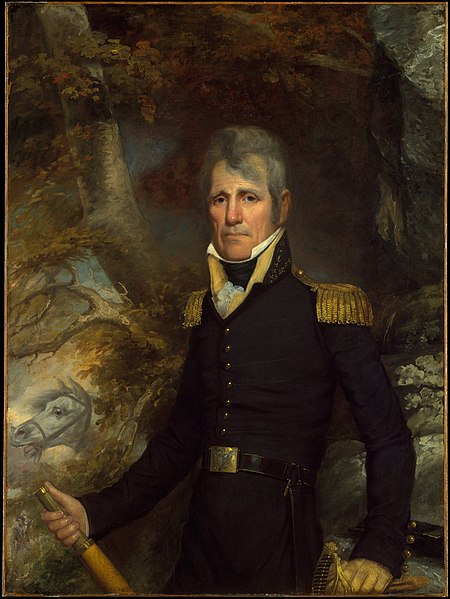
Sources

Lottie Deno and Mary Poindexter โ€“ POINDEXTERHISTORY

What do we know about Lottie Deno? – True West Magazine

lottie deno – Search (bing.com)

TSHA | Thurmond, Charlotte Tompkins [Lottie Deno] (tshaonline.org)

September Book Release: Frontier Circuit, A Story of the Creek War

A murderous gang and a band of fanatical Creek Indians threaten the lives and work of two circuit riders. When war breaks out the preachers and settlers flee into a stockade called Fort Mims. A girl named Annabelle falls in love with one of the preachers, but will they survive the Creeks’ massacre of the stockade’s inhabitants to see their destinies fulfilled? Due for release September 26. Stay tuned for updates.

Frontier Circuit

Ever since the fourth grade, when I first saw this picture in a textbook, it captured my imagination. Itโ€™s a romanticized (and inaccurate) depiction of the Fort Mims massacre that took place early in the Creek War (1813-1814) in lower Alabama. I was too young at the time to care about the inaccuracies, but throughout my life this image has stayed with me. Once I became a professional writer, I yearned to write a novel about this tragic event. What kept me from doing it after forty years of literary effort? I wasnโ€™t sure how to begin it.

Well, coming this fall, the book will finally be released by Ashland Park Books: Frontier Circuit, A Story of the Creek War.

Meanwhile, I am currently revising a novel set in a more modern era, the 1940s and 50s.

Lieutenant Spruce McKay Osborne (1784-1813)

Lieutenant Spruce McKay Osborne was born in Rowan County, North Carolina in 1784. Upon his graduation from college there, he moved to the Mississippi Territory to practice medicine. When the Creek War broke out in 1813, he joined the Mississippi Volunteers as its surgeon and served at Fort Mims.

He didn’t think he’d see any action there, so he wrote General Claiborne, commander of the territorial militia, a request for a transfer to a more active region. Six days later, Redstick Creeks attacked the fort and massacred its inhabitants. Lieutenant Osborne was killed near the end of the battle. His portrait is the only picture we have of any of the fort’s inhabitants. Hundreds were slaughtered. Although we know the names of some who perished, we do not know the names of everyone.

The lieutenant is buried in a mass grave with others who perished.

Sources

https://www.findagrave.com/memorial/9508351/spruce_mckay-osborne

Waselkov, Gregory A. A Conquering SpiritL Fort Mims and the Redstick War of 1813-1814. Tuscaloosa, AL.: The University of Alabama Press, 2006.

Called to be a Writer?

ย 

WritingThroughout my thirty-plus years of writing professionally, people have sometimes told me they want to become a writer. Well, thatโ€™s great.

Once I start explaining everything thatโ€™s involved in pursuing the craft, though, most of them, but not all, back away.

On some occasions when people tell me this, I just nod and smile unless they ask for advice. Why? Because Iโ€™m waiting to see how serious they are, to see whether or not God has truly called them.

Letโ€™s face it. Writing isnโ€™t for the faint-hearted. Like any ministry, if a person isnโ€™t called to write, then I donโ€™t recommend doing it. I wouldnโ€™t recommend myself to join a choir, either, since I sing like a coyote with a sore throat. ย 

How does someone know whether or not God has called him/her into the literary world? Here are a few things to consider.

1. Psalm 37:4 โ€œDelight thyself also in the LORD; and he shall give thee the desires of thine heart.โ€

This verse doesnโ€™t mean we can desire anything and the Lord will give it. It means that if we delight in Him and put Him first in our lives, Heโ€™ll put His desires in us. If we follow this pattern, Heโ€™ll give us a desire to become a writer. This desire will develop into a passion which will become so strong that weโ€™ll refuse to quit no matter who or what tries to hinder us.

2. John 10:10 โ€œThe thief cometh not, but for to steal, and to kill, and to destroy: I am come that they might have life, and that they might have it more abundantly.โ€

Our Lord and Savior has called us to an abundant life, one that overflows with joy and fulfillment. If weโ€™re called, weโ€™ll feel that joy while we write. If we miss a writing day, weโ€™ll feel let down. In my case, I am sometimes miserable.

3. I Samuel 17:36 โ€œThy servant slew both the lion and the bear: and this uncircumcised Philistine shall be as one of them, seeing he hath defied the armies of the living God.โ€

Before David accepted Goliathโ€™s challenge, God had prepared him by teaching him to fight lions and bears. Likewise, God prepares us for whatever Heโ€™s called us to do. Just as He enabled David to kill Goliath, so Heโ€™ll enable called writers to succeed. Not fame and fortune, necessarily. Few writers have this. But they will reach the skill level where they can sell their work. It may not happen overnight, and usually doesnโ€™t, but through hard work (preparation) and a little bit ofย  God-given talent the bylines will come.

Has God called you to be a writer? Don’t ever give up your dream. He will always bless it.ย 

ย 

Books

Active Voice versus Passive Voice

In this post, we’ll learn a few ways to use the passive voice in our prose.

In fiction writing, an active voice sentence is usually preferable to the passive because the active voice is stronger.

Active Voice

The kitten (subject=doer of the action) scooted (active voice) up the tree (tree = object, the receiver of the action).

Passive Voice

The girl (receiver of the action) was hit (passive voice) by a tennis ball (subject=doer of the action).

How to Identify the Passive Voice

  1. ย The object of the action sits in the spot where the sentenceโ€™s subject normally goes.
  2. A linking verb joins the past tense of an action verb.

When to Write in the Passive Voice

Some writers believe we should always write in the active voice. However, cases do exist where the passive works better. Here are a few examples of that.

1. TO WITHHOLD INFORMATION FROM THE READER OR THE DOER IS UNKNOWN.

John was insulted in class.

The diamonds were stolen yesterday.

2. TO ADD VARIETY TO OUR PROSE.

Manuscripts whose sentences are all active move quickly and make for a fast read. This is particularly good to use in thrillers.

3. TO EMPHASIZE THE DIRECT OBJECT (THE RECEIVER) OF THE ACTION.

The puppy was bitten by the cat. (The puppy is emphasized.)

John was defeated by his younger brother in a track meet. (John is emphasized.)

Donโ€™t discard the passive voice, but donโ€™t overdo its use either. Instead, use it judiciously. About ninety percent of our writing should be active. However, as we saw in the above-mentioned examples, the passive voice does have a place in our prose.

Traits of a Good Beta Reader

Over thirty years ago, when I first started my writing career, my literary passion drove me to learn everything I could about the craft as fast as possible. One of the many ways I learned was through beta readers. Even though I now have numerous bylines to my credit, and several books Iโ€™ve either written or contributed to, I still use them.ย  All writers do, including those who write bestsellers.

What is A Beta Reader?

A beta reader is someone who reads our manuscripts with an objective, yet critical eye. This person looks for such things as holes in our storyโ€™s plot, awkward phrasing, narrative inconsistencies, storylines that arenโ€™t believable, poor characterization and dialogue, and similar things.ย 

Beta readers are critical to our writing careers.  We get so caught up in our writing that we canโ€™t see our words objectively, whereas a good beta reader can. If we follow a good beta readerโ€™s advice, our finished product will be more polished which, of course, increases our chances of finding publishing success.

My One Big Rule for Beta Readers

Notice that I said good beta reader. Not all beta readers are the same.ย  From my earliest writing days, Iโ€™ve followed one rule: โ€œIf all a beta reader does is give me a pat on the back and say my work is good, I never let that person read another manuscript. If a beta reader gives little or no constructive inputโ€”again, I donโ€™t let them read another manuscript.โ€

Iโ€™ve always been strict about this. Pats on the back without useful input does not help us writers improve. No matter how advanced we are in this craft, we always have room to get better.

Fortunately, as time has passed on, Iโ€™ve developed friendships with good beta readers. Unlike my early years, I no longer need to โ€œtest-driveโ€ them or seek them out. Nowadays I rarely have to implement my rule.ย 

Photo by Ron Lach on Pexels.com

Five Traits of a Good Beta Reader

Honest Feedback. Good beta readers arenโ€™t afraid to tell writers what they honestly think about their manuscripts. If they donโ€™t like it, theyโ€™ll not only say they donโ€™t, but theyโ€™ll also say why. Theyโ€™ll word their opinion in such a way that it doesnโ€™t kill a writerโ€™s dream. Not only will they point out a manuscriptโ€™s weaknesses, they will also applaud its strengths. In other words, they offer a balanced opinion.

Encouragers. They share a writerโ€™s literary dream and want him/her to succeed. They will encourage, motivate, and congratulate authors when they get published. For me, my greatest joy comes when I see someone, whose work I have read and critiqued, get published. I appreciate that personโ€™s sacrifice and hard work to achieve their goal.

Knowledgeable. Most good beta readers are serious writers either knowledgeable about the craft or are in the process of learning it through hard study.

Readers. Iโ€™ve also benefited from serious readers, particularly those in my target audience.ย  A serious reader, by my definition, is someone who reads lots of books critically. They understand why they like certain books and why they donโ€™t, and they can give solid reasons for their opinions. I once heard a librarian call into a radio talk show to comment on a certain bestselling book. A few days earlier, Iโ€™d scanned some pages of this same book at a store. The librarian and I shared the same opinionโ€”bestseller or not, the authorโ€™s writing was amateurish. This librarian would make a great beta reader.

Understands Our Genre. Under the broad categories of non-fiction and fiction are different genres. Each genre has its own set of rules and characteristics. Beta readers who arenโ€™t familiar with our chosen genre may unintentionally offer bad advice. My genres are historical fiction, short stories, and certain genres of magazine articles. If someone asked me to critique a science fiction manuscript, Iโ€™d be able to offer basic advice on writing style and technique, but thatโ€™s all I could do. I havenโ€™t read much in that genre, thus I have little knowledge about the rules connected with it

    Three Beta Readers to Avoid

    Family. Family members are usually reluctant to give us honest input for fear of hurting our feelings or ruining a relationship. If we happen to have someone in our family who meets the five criteria I listed above, though, it is fine to use them. However, such family members are rare.

    Friends Who Arenโ€™t Writers. More than likely, these friends wonโ€™t meet the above-listed criteria, either.

    Token Critiquers. Token critiquers read a manuscript, or maybe just scan it, and then make only a comment or two per page or per manuscript. Writers need in-depth critiques, not the token variety.

      A Final Word

      If we can find more than one good beta reader, then our finished manuscript will be that much better. If two or more beta readers make the same comment about our work, this is a sure sign that weโ€™d better heed what they tell us and revise accordingly.

      Finally, always thank your beta readers. They made some sacrifices of their own time to help you, and a little gratitude goes a long way.