Quote the Bible, But Don’t Get in Trouble


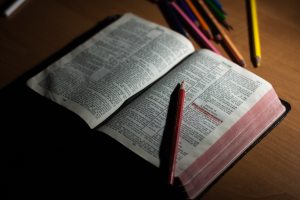
bible-book-business-272337Is it possible for Christian writers to get in legal trouble when they quote the Bible? Yes. This is especially true for indie authors. To quote any modern translation requires written permission from that translation’s publisher. If we don’t get permission, not only is it unethical, it also breaks copyright law.

Of course, the law also has a principle called Fair Use. Under this part of the law, an author may quote a certain amount of material from a copyrighted work without permission. How much may the author quote? Several factors are considered, which we’ll not discuss here. Because claiming Fair Use can be tricky at times, I like to play things safe. This is why I recommend using the Authorized King James Version if we’re citizens of the United States, because in America it’s in the public domain. This means we don’t need permission to quote it.

However, for those authors who live in the United Kingdom, they still need permission before they can use it. Here’s a link for United Kingdom authors:

https://www.cambridge.org/ad/bibles/about/rights-and-permissions

Traditional publishers typically have a contractual agreement with certain Bible publishers. They’ll tell us in their guidelines which translation they use. So, if we go the traditional route, we needn’t worry about obtaining permission since the publisher has already done that.

Of course, indie authors can use modern translations provided they obtain permission first. The best way to do this is to visit the Bible publisher’s website. Once there, go to the bottom of the page and click on “Terms of Use” or a similar link. This page discusses matters of copyright, how to obtain permission, and sometimes it’ll lead us to another page where we can fill out a request form to submit.

As an example, let’s look at B&H Publishing’s website. B & H publishes the Christian Standard Bible. Here are the steps:

Step 1: Visit the website at https://www.bhpublishinggroup.com/.

Step 2: Scroll down to bottom of home page to the “About Us.”

Step 3: Click on the last link, “Privacy Policy & Terms.”

Step 4: Read the “Privacy Policy & Terms” page.

Step 5: Click on “here” under the Licensing and Policy Requests section.

Step 6: Click on “To Use or Publish a B & H product.”

Step 7: Fill out the form and submit.

This is how to get permission from B & H Publishing. Other Bible publishers use a similar procedure.

Till next week, friends. Keep tapping away on those laptop keys!

Books

On My Retirement


fishing-pole-beach-ocean

As I approach retirement from what I often call my “tentmaking job,” because my real work is actually writing, some folks have asked me what I intend to do. Will I be playing golf every day? Will I go fishing? What about sitting in front of my television set watching old Westerns all day? Nope. None of these. Why? Because I’m going back into writing full-time, something I did for ten years when I was younger. And writing, my friends, though it is my passion…it’s also extremely hard work.

Particularly my genre, historical fiction. It’s easy to slip up on historical details. To my chagrin, I’ve done it. Even the best historical fiction authors have. We must consider so many minute details while weaving our tales! I cannot stress hard enough how important it is for our stories to be accurate. 

apple laptop office macbook
Photo by Skitterphoto on Pexels.co

In the interest of accuracy, I like doing on-site research whenever I can. This means such things as visiting old homes, museums, and other historical spots. One of the first things I plan to do upon my retirement is visit the setting of one of my  current Works-in-Progress (WIPs).  Sure, I can find photographs of it online, but there’s nothing like onsite research to get a real feel for my story’s setting.

So if your story’s setting is a real place, if possible, make time to visit it  Not only will it help make your descriptions more accurate and believable, it’ll  also help you write more confidently, knowing  that your setting is accurate.

Till next week, friends. Keep on writing.

Guest Blog: How to Write About Horses in Historical Fiction

I am currently working on a new fiction project centered around horse racing in the Antebellum South. Author, editor, and horse expert Tisha Martin offers excellent advice on portraying horses in fiction. With her permission, this post is shared from her website. For more advice on this and other literary subjects, visit it at http://www.tishamartin.com

How to Write about Horses in Historical Fiction
by Tisha Martin

blacktb

Horses have long since been an icon in American history, a loyal friend to the cowboy in the movies or in a novel. Often, too many historical writers don’t capitalize on the benefit of including the intelligence of the horses in their stories, and therefore, miss opportunities to add depth and personality to their stories and to shape the character arc. Horses are smart, despite what people may say. (And mules are even smarter! I’m thinking of Clarice from The Apple Dumpling Gang.)

Here are four ways authors can capitalize on the personality of the horse in their historical novels.

1. Use horses as secondary characters.

Perhaps that the idea of humanizing the horses in a story seems strange, but consider Little Brother, the mustang in Hidalgo, the western movie starring Viggo Mortensen. Little Brother acted as a secondary character in advancing the plot. When Frank T. Hopkins (Mortensen) went into the village to rescue Jazira, the horse worked with his human to make the rescue a success.

Including these types of minor details in a story adds depth to the plot and captures the essence of the character’s and horse’s relationship, further endearing both characters to the readers. That’s a pretty neat win-win, if you ask me.

2. Let horses help the human characters.

If you’re writing a western, consider this: horses will not run away from their owners. Many authors may think that horses are sneaky and always want to run off. In reality, horses are extremely loyal. I like to think they’re big dogs. For instance, if you leave a horse five miles down the trail so your main character has an easy getaway after the ambush, the horse will find its way back home without assistance. That’s called loyalty—and instinct.

3. Give horses an emotional personality.

Horses do show emotion if they are mistreated. If you have a nasty character in your story who mistreats the horse, you can show the horse’s emotional personality by describing the horse’s fear as it bucks, bites, or kicks. This adds suspense and propels the plot. Showing emotion in these scenes will deepen the care factor and enrich the story world.

But what if you want your character to have a positive relationship with the horse? Perhaps the character nurses the horse back to health, like Joe did in Black Beauty. You can use the horse’s gentle personality mixed with those moments of fear and mistrust (if the horse is coming from an abused situation or is now in a new environment) to liven up your scene. A horse that is treated with kindness and respect will respect its owner.

4. Consult the horse experts.

Nothing is more annoying to a horse lover than to read of inaccurate details in a story about horses. Some common inaccuracies include proper terms for horse tack, basic horse behavior, and horse anatomy. Often, these are misused because the writer googled what they did not know, found what appeared to be helpful information, and stuck it in their story.

Authors can avoid these glaring mistakes by bypassing the great internet and seeking out their local horse expert or local library for horse-related information. You can call a horse stable and ask questions, email the horse breed association, ask a friend who owns horses, or visit your local library and pull out a good horse resource book.

Remember, an animal is usually a reflection of its owner, especially if the animal has been loved for a long time. Now, a horse may not bring its owner the newspaper every morning (although stranger things have happened!), but the relationship between your character and their horse can be used to add a deeper layer to the story that feels and reads like a loyal friend.

Happy writing on the trail!

Anton Chekhov on “Show, Don’t Tell”


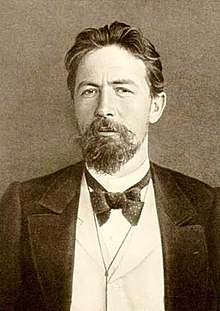
220px-anton_chekhov_with_bow-tie_sepia_imageEver since I took a class in Russian literature in college, I’ve always loved it. Here’s a great quote from one of Russia’s most  famous writers, Anton Chekhov: “Don’t tell me the moon is shining; show me the glint of light on broken glass.” 

When we’re writing a scene set at nighttime, we can show the moon without mentioning it by following Chekhov’s advice.


Next week, I’ll be featuring a special a post on writing about horses written by a horse expert and friend, Tisha Martin. Till next week, everyone. Keep on writing.


When to Stop Revising Your Novel

Author’s  Note: This is a revised post.


church portrait 6

What is the key to literary excellence? Revision, of course. However, the time comes when we must tell ourselves to stop. We can get so hooked on revision that we never submit our manuscripts to agents and publishers. I know, because I’ve had this problem. Like most writers, I love playing with words.

How do we know when to stop revising ? Here are a few tips.

1. When we’re tired of looking at/reading our manuscript after multiple revisions. This isn’t always a sign that we’re finished, but it might be. Put the work aside for a day or two, then return to it and look for any major problems we may have missed. See any? If so, we’re not done yet.

2. When all the major problems with our work have been corrected, such as openings, endings, scenes, characterization, plot, etc., our revision has reached its end.

3. When we’re just finding minor issues, such as punctuation errors and typos, after the major editing has finished. These minor errors must all be corrected, of course.

4. After we’ve let someone whose judgement we trust read our manuscript, who gives us honest feedback and advice for improving  our work. Be sure whoever gives the advice is qualified to give it, though. Don’t approach just any person for it.

5. When we’re confident that we’ve done our best work.


caution-guidance-halt-1806900

WARNING! WARNING! OVER-REVISION.

When we over-revise, our writing suffers. This is why it’s important to know when to stop. What once was a good story will become a bad one because we’ve either cut it too much, or added too much to it.

Suppose, after we see our work in print, we still find problems with it? One thing I’ve learned from hard experience is this: these things happen. We aren’t perfect, editors aren’t perfect, proofreaders aren’t perfect. Sometimes the simplest things, such as misplaced punctuation or typos, are easy to miss. If we’ve done a good job, though, and have a good editor and/or proofreader, there shouldn’t be too many of these.

Write, revise. Write, revise. Write, revise. Then submit.


Port Hudson, Last Rebel Bastion on the Mississippi

The Defence of Port Hudson, Louisiana

Squire, Tales of a Mascot, due out in September by Ashland Park Books, tells the story of a canine mascot during the siege of Port Hudson, Louisiana, a tiny village on the banks of the Mississippi River. Though Port Hudson no longer exists, it was an important Confederate bastion during America’s Civil War. Cut off by sea and land, the Rebels held out against a vastly superior Union army for 48 days, the longest genuine siege of that war. It was also the last Confederate bastion on that river to fall to Union forces, surrendering just a few days after Vicksburg fell. map_porthudson842x1052

Dr. Johnson’s Advice


Doctor Samuel Johnson ?1772 by Sir Joshua Reynolds 1723-1792Here’s a quick tip from one of eighteenth century England’s greatest writers, Samuel Johnson. A poet, essayist, literary critic, and editor, he compiled and organized  A Dictionary of the English Language, published in 1755. This dictionary was used for 150 years before the Oxford English Dictionary’s publication. He said: “The greatest part of a writer’s time is spent in reading, in order to write; a man will turn over half a library to make one book.

The Writer’s Warehouse


man riding on yellow forklift
Photo by ELEVATE on Pexels.com

When we look at our manuscript’s pages, imagine them as a verbal warehouse. A literal warehouse uses different machines for lifting different types of products. Neat warehouses, like neat writing, are well-organized. Some machines, such as forklifts, can lift heavier items than other machines, such as hand trucks.

The same is true in our English language. Some parts of speech are forklifts, others hand trucks. Our language also has “pasteboard” boxes, as we shall see.

The Forklifts: Nouns, Pronouns and Verbs

These parts of speech, if well-chosen, do the heaviest lifting in a sentence.
More often than not, hand trucks aren’t needed.

The Hand Trucks: Adjectives and Adverbs

Sometimes, though, these verbal hand trucks are needed. When? When concrete nouns and dynamic action verbs alone can’t create a precise image in readers’ minds.

Pasteboard Boxes: Prepositions and Conjunctions

Every warehouse I’ve ever been in has merchandise in boxes, usually pasteboard boxes. These keep the merchandise clean and well-organized. Similarly, verbal “boxes” are necessary to help our sentences flow smoothly and clearly by keeping them well-organized. But do they pack a lot of weight? Most often, they don’t. But we do need them, and when we use them with “forklifts” and “hand trucks,” they help make our sentences the strongest and clearest they can be. Use them carefully, though. Too many in a sentence can also cause clutter.

Examples

1. The horse ran very fast through the field.
2. The thoroughbred galloped through the cotton field.
3. The brown thoroughbred galloped through the cotton field.

Which of the three sentences is the strongest? The third one, because it creates the most visual image in the reader’s mind.

Sentence 1: 

“horse” and “field” – too general. We don’t know what kind of horse, nor do    we know what kind of field the horse ran through.

 “very fast” – also too general. How fast is “very fast”? More often than not,  “very” isn’t needed, so be on the lookout for this adverb.

“through” – this preposition, though lightweight, is needed for clarity. It shows us the direction the horse is running.   

Sentence 2:

“thoroughbred” – a strong concrete noun. Here, we see a specific breed of  horse.                      

“galloped”  — more specific. We can see how fast the horse is running.

 “cotton field” — more specific/concrete. We can also visualize the field.

Sentence 3:

“brown” – an adjective that’s needed. Because thoroughbreds come in several colors, “brown” helps readers visualize the horse even better.  

Coming next week, an interview with Jodie Wolfe. author of To Claim Her Heart, a novel set during the Oklahoma Land Rush. Be sure to visit the Interview page next week to read it.


Cicero’s Take on History and Historians


CiceroBust

The first law for the historian is that he shall never dare utter an untruth. The second is that he shall suppress nothing that is true. Moreover, there shall be no suspicion of partiality in his writing, or of malice.” Marcus Tullius Cicero (106-43 B.C.)

As a historian and historical fiction writer, I’ve always loved this great Roman statesman’s quote.  If we aren’t objective in our study of history, if we twist the facts or rewrite history to suit our own opinions about the past, we not only cheat ourselves–we also fail to learn our ancestors’ past lessons that we can apply to today’s events.

We historical fiction writers should strive for objectivity, which also means accuracy. While weaving our fictional characters’ stories into historical events, we should accurately depict these events and the historical figures involved in them.

Is it ever acceptable to engage in a bit of artistic license? Maybe twist a small fact? I believe it’s acceptable, but shouldn’t  be done often. Bernard Cornwell shows us how to do this in his novel, Redcoat, set during the American Revolution. In a historical note at the end of the book, he tells readers that he took “some liberties with the Revolution’s chronology,” and then he explains what these liberties were. So if we do engage in a bit of license, follow Cornwell’s example and let your readers know.

Cicero’s advice is sound, though. We historians and historical fiction writers do well to heed it.


Historical Novels: Their Importance


Louis_L'Amour

“Historical novels are, without question, the best way of teaching history, for they offer the human stories behind the events and leave the reader with a desire to know more.”

Louis L’Amour (2008). “Education of a Wandering Man”, p.15, Bantam

Mister L’Amour’s words have proven true in my life. My three favorite genres have always been history, historical fiction and biographies, even as a child.

The historical fiction books I read during my growing-up years, such as The Horse Soldiers (Harold Sinclair), The Black Arrow (Robert Louis Stevenson), and The Count of Monte Cristo (Alexandre Dumas) spurred my youthful hunger for more knowledge about these books’ eras. Getting lost in the past was, for me, sheer joy.

Sadly, many people today have little knowledge of the past. They learn their history from “historical” movies, most of which aren’t entirely accurate. It’s become easier to watch a film than it is to read.

So, we historical fiction writers have a challenge. Our writing must be at the “top of our game.” Not only must we write well, we must also keep our facts accurate. Our books may not win a Pulitzer Prize write like Michael Shaara’s The Killer Angels, about the Battle of Gettysburg, but if our historical novels get more folks interested in learning about the past, our time and labor is worth it. 

Research, write, and read! Till next time, friends. Have a great week.

Books