A Grandfather’s Sermon

My mother grew up in a small Alabama town called Brundidge. Many a time during our childhoods, my sister and I journeyed there with our parents. Sitting in our car’s backseat, we watched pastoral landscapes as we rumbled along narrow country roads. Corn and cotton carpeted numerous acres. Cattle grazed other fields. To alleviate our boredom and to keep us reasonably quiet, our parents invented a “counting cows” game. Whoever counted the most cows on their side of the car, till we reached Brundidge, won it.

I don’t know about my sister, but I enjoyed this game. And since I was born and reared in big-city Mobile, rural living fascinated me. No beeping cars, no sirens, no busy shopping centers as in my hometown. Just fresh air and peaceful neighbors. Also, my grandparents.

My grandfather’s gas station and Ford dealership stood on its main street. Oh, my mind forms wonderful images of my grandparents and this town! The memory that moves front and center, though? My grandfather’s walk with God. Little did he realize the impression he’d made on my young mind.

When we prepared for bed I always slept in my grandparents’ room. My bed stood against a wall opposite theirs. While snuggled under my sheets, my eyes followed my grandfather’s movements. He’d sit in his rocker near a floor lamp, its bulb shining through its opaque shade.

His Bible in his lap, he’d read God’s word. After a period of time, he closed the Book then knelt beside his bed. His mumbles drifted to my ears, and I knew he was talking with God.

Decades have passed; my grandfather’s influence remains. He inspired me to read my Bible and to know God. He never preached with his mouth. His life was a sermon. I’m sure he’d agree with the Apostle Paul, that I’m trying to imitate his walk of faith (1 Corinthians 4:15-16). Thanks to his example, he preserved his grandson from the pain of sin.

This and other devotionals are found in Reflections of a Southern Boy: Devotions from the Deep South which is available on Amazon.

Guilt-Free Writing

WRITER ON BREAK. WILL BE BACK LATER.

The American Civil War’s Bestselling Author

Augusta Jane Evans Wilson (1835-1909)

Augusta Jane Evans Wilson was born in Columbus, Georgia in 1835. A devout Christian, she became one of the 19th century’s most popular writers. Though many people today are unfamiliar with her and her work, certain colleges and universities in the United States are rediscovering her.

Her father, Matt Evans, was a businessman and planter. After he lost his fortune in the 1840s he moved his family to frontier Texas. During their journey, Miss Evans’s godly mother, Sarah, educated her and Augusta’s other siblings. Augusta possessed a keen intellect, a huge vocabulary, and a photographic memory. Except for her mother’s tutoring and having attended a formal school for a brief period, she was for the most part self-educated.  In Texas, at fifteen years of age, she wrote her first novel—Inez, a Tale of the Alamo.

Unable to cope with the rough and tumble frontier life, Matt brought his family back east and settled in Mobile, Alabama. Here he found a job with a mercantile firm. He and his family lived in a small cottage, called Georgia Cottage, which at the time was on the outskirts of the city. It remains a private residence even today.

After Inez was published in 1855 she wrote her second novel, Beulah. Published in 1859, Beulah became a bestseller.

Augusta was an ardent Confederate, and this devotion led her to write her third book—Macaria; or Altars of Sacrifice. Due to the Union blockade of the South, most of this book was written on wallpaper. After its publication in the South, it was smuggled north to New York and published there as well. It became a bestseller and was so persuasive in defending the South’s cause that George Thomas, a Union general, banned it from his army. An editor friend in New York held the book’s royalties in a trust for her. Thus, after the Civil War, she did not suffer financially like most Southerners at the time did. Macaria was the only bestselling novel written during the Civil War.

In 1868 Augusta married Lorenzo Wilson, a businessman and one of the few wealthy Southerners who also didn’t lose his fortune. He survived financially because he had the foresight to make investments out of the South.

Augusta died in 1909, a well-loved and well-respected citizen of Mobile.

Sources

Evans, Augusta Jane. Macaria; or Altars of Sacrifice, edited with an introduction by Drew Gilpin Faust. Baton Rouge and London: Louisiana University Press, 1992.

Wilson, Augusta Jane Evans. A Southern Woman of Letters: The Correspondence of Augusta Jane Evans Wilson, edited by Rebecca Grant Sexton, Columbia, SC: University of South Carolina, 2002.

Time of Renewal: The Green Corn Ceremony

George Catlin, Green Corn Dance – Minatarrees, American, 1796 – 1872, 1861, oil on card mounted on paperboard, Paul Mellon Collection

In early America’s southeastern frontier, its tribes held an important festival every year to thank the Maker of Breath for their most important food staple—corn. Called the Green Corn Ceremony, the English-speaking settlers referred to it as the Busk Ceremony for the Native American word, puskita, which means “to fast.”

Choctaw, Chickasaw, Cherokee, Creek, and Seminole celebrated it when their corn first became ripe. Though these tribes’ ceremonies had a few minor differences, it was a time of renewal for all of them. What I share below is a brief, general overview of this ceremony’s rituals and events.

In every village, a sacred fire constantly burned on its central square throughout the year, and members also had their own personal fires in their homes. They believed their sins contaminated these fires. Thus, to renew their lives, these fires were put out on the ceremony’s first day after an opening ritual. Also, for the first day or two, the tribes fasted.

After the fast men drank a liquid concoction the settlers called the Black Drink, for its color. A sort of tea that resembled coffee, it was a purgative and a symbol of purification made from boiled yaupon holly.

During this time, everyone worked hard to clean their village and homes and repair various structures. The square was swept to the point where it was immaculate, and it was kept that way throughout the festival. Old pots were broken. In the 18th century, they discarded or destroyed old clothes. In the 19th century, clothes and other things were repaired.

Another facet of the ceremony included lectures from the tribal elders about right living, forgiveness, and behaving morally. Except for murder, all crimes were forgiven and the village’s members made amends with each other for the offenses they’d committed.

On the ceremony’s final day, a new sacred fire would be lit, its flame then carried to relight the fires in individual dwellings. Afterward, the Indians feasted, danced, and played games.

The festive day would end, and a new day would dawn with everyone renewed for a fresh beginning.

Sources

Eric E. Browne, “Green Corn Ceremony,” Encyclopedia of Alabama, last updated March 27, 2023, Green Corn Ceremony – Encyclopedia of Alabama.

Justo, “Significance and Meanings Behind Traditional Seminole Celebrations,” Native Tribe Info, April 3, 2024, Significance and Meanings Behind Traditional Seminole Celebrations.

“The Green Corn Ceremony,” Native American Net Roots, May 5, 2011. The Green Corn Ceremony | Native American Netroots.

Benjamin Hawkins, Agent to the Southeast Tribes

Benjamin Hawkins, 1754-1816

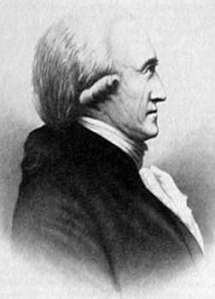
Born into a wealthy North Carolina family in 1754, Benjamin Hawkins later attended the College of New Jersey (modern-day Princeton) where he studied French. During the American Revolution, knowledge of this language served him well as George Washington’s translator until Lafayette arrived to perform that duty.

In 1778, he served in North Carolina’s House of Representatives. Between 1783-84, and in 1787, he was a delegate to the Continental Congress. In 1789, as one of 271 North Carolina delegates to the Fayetteville Convention, he voted to ratify the United States Constitution.

When he won an election to the United States Senate in 1789, he helped negotiate treaties with the Cherokees and Creeks, two of the Civilized Tribes in America’s southeastern region. President Washington appointed him General Superintendent of Indian Affairs, serving the tribes south of the Ohio River, in 1796.

To carry out his new responsibilities, Hawkins moved to Georgia and settled on the Flint River. For many years, he lived with a woman named Susan Lavina Downs and finally married her near the end of his life. Some historians believe she was Creek, though there is some disagreement on this. Together, they had seven children—six daughters and one son. During his time as an agent, he learned the Creeks’ language and became a respected member of their tribe.

When Hawkins received his appointment the deerskin economy of the Indians was coming to an end. He sought to “civilize” the Creeks by persuading them to turn to farming and cattle herding. However, these tribes were already farmers, so he encouraged them to learn how to use white men’s farming tools, such as plows, and white men’s methods of raising crops, including such commodities as cotton. He likewise wanted the women to learn how to use spinning wheels and do other things white women did. He was, in essence, trying to make them American in the hope that they’d eventually give up their culture and give their land to the white man.

THE CREEK WAR (1813-1814)

When the Creek War broke out he helped organize Creeks who supported the white settlers against those who did not (Red Sticks). He was also present at the signing of the Treaty of Fort Jackson in present-day Wetumpka, Alabama, which ended the conflict.

In 1816, Benjamin Hawkins died.

Sources

Ethridge, Robbie. “Benjamin Hawkins.” New Georgia Encyclopedia, last modified July 15, 2020. https://www.georgiaencyclopedia.org/articles/history-archaeology/benjamin-hawkins-1754-1816/

Foster, H. Thomas II.  “Benjamin Hawkins.” Encyclopedia of Alabama. Last modified, February 15, 2024. Hawkins, Benjamin – Encyclopedia of Alabama

“Benjamin Hawkins” Wikipedia. Benjamin Hawkins – Wikipedia

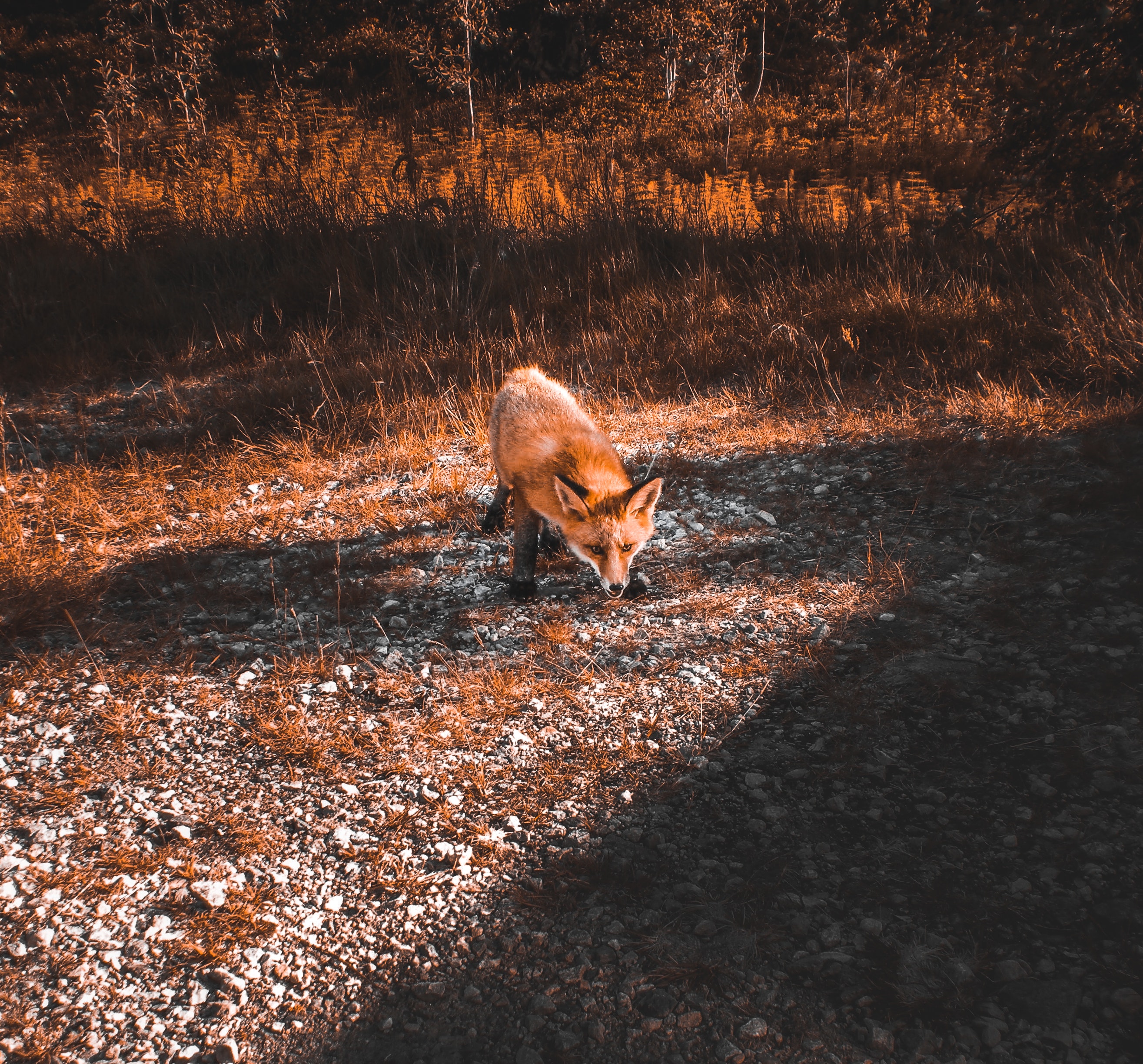
Beware the Little Foxes

Take us the foxes, the little foxes, that spoil the vines: for our vines [have] tender grapes—Song of Solomon 2:15, KJV

“Little foxes” are sly literary critters that often sneak in and spoil a well-written piece of prose. As writers, we must stay vigilant against them. Sometimes they’ll pop on our pages while we’re writing. Other times, we’re unaware of their presence.

Little literary foxes are words we overuse, such as so and that. Many times, we don’t need them.

Let’s look at the word that.

            1.         John thought that Billy played golf.

This “little fox” in bold weakens the sentence’s impact.

            2.         John thought Billy played golf..

This sentence, without the word that, reads smoother and stronger.

A good way to identify when this word is unnecessary is when it follows a verb. In such cases, that usually isn’t needed. TIP: Read your that sentences without using it. Is your writing still clear? If it is, delete that.

Let’s look at the word so.

            1.         So, John sees you can cook.

This word is acceptable in dialogue because people often talk this way. However, I wouldn’t use it in narrative exposition.

            2.         John sees Mary can cook.

This is much smoother and natural.

            3.         He lifted the bucket so he could dump out its contents.

This sentence is fine because so is used as a conjunction.

Let’s be careful not to overdue these words. If too many sneak into our work, they can spoil our writing.

Till next week, friends!

The Important Roles of Choctaw Women

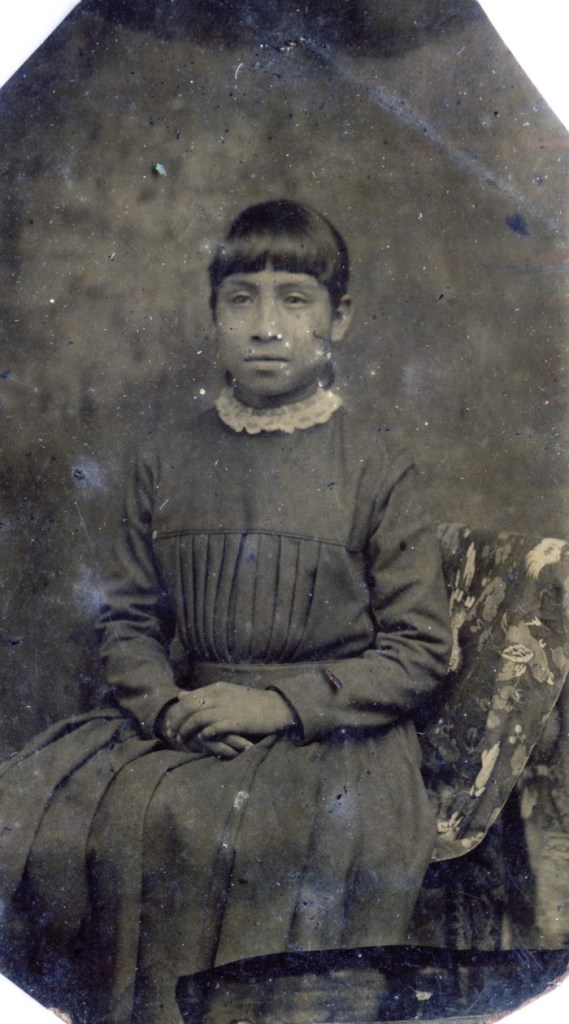
Unidentified Choctaw girl, on a tintype. Oklahoma Historical Society.

The Choctaws, like the Creeks, Cherokees, and Chickasaw tribes, are matrilineal in nature. This means that a child’s inheritance passes through the mother instead of the father. Before Andrew Jackson’s Indian Removal Act (1830) exiled Choctaws and other Alabama tribes to Oklahoma, the Choctaws lived in southeastern Mississippi and southwestern Alabama. Today, some Choctaws remain in Mississippi.

The men and women had separate, distinct roles in their culture, and the women were the heads of households.

Choctaw Women’s Roles

Childbirth

Pregnant Choctaw women were deeply honored in Choctaw society, for childbirth was their most important contribution to it. When they went into labor they would go to a secluded place where, without any assistance, their child would be born. Although husbands weren’t allowed to be present anywhere near her during this time lest harm befall him or the child, they did fast for their wives.

Farmed, Cooked, and Stored Food

If one visited a Choctaw village before the 18th century, he/she would see three types of farms.

First Type: A garden, planted in March, beside individual families’ houses.

Second Type: A communal farm. Here, crops were planted in May. Women worked together while tending its crops.

Third Type: Pumpkin and melon patches.

As the centuries rolled into the 1700s, the Choctaw started adopting the White man’s style of farming by learning to use plows and raising their crops as an individual family instead of as a community.

What sort of crops did they grow, cook, and store? Corn was a staple. Also squash, watermelons, and sunflowers, just to mention a few.

Made Clothing

Women tanned the hides of animals, such as deer, to make clothes for themselves and their family members. They also used fabric made from such things as buffalo wool and milkweed.

Before the White man came they wore wraparound dresses, skirts, and blouses made of these animal skins and fabrics. With the coming of the White man, they eventually moved away from this and wore cotton clothes.

Sources

“Traditional Agriculture,” Choctaw Nation Culture, May & June 2012, 2012.05-0 Agriculture.pdf (choctawnationculture.com)

“Traditional Dress,” Choctaw Nation of Oklahoma, Traditional Dress (choctawnation.com), 2024

“Women—the Givers and Supporters of Life,” Choctaw Nation Culture, 2011.05 women – the givers and supporters of life.pdf (choctawnationculture.com)

Creek Villages

Creeks
Creek villages
Creek Indian villages
Upper Creeks
Lower Creeks
Upper Creek Indians
Lower Creek Indians
Muscogee
Muscogee Creeks
Muscogee homes
Muscogee Creek Indian homes
Muscogee Creek Indian houses
Creek Indian houses

In the years before the Creek War (1813-1814) the Creek Confederacy’s towns (talwa) stood along rivers and creeks in east-central Alabama and southwestern Georgia. Divided into three districts, its people called themselves Muscogee. When the white man arrived, the white man called them Creeks for the many rivers and streams on which they lived. To further distinguish them geographically, settlers and traders referred to them as Upper and Lower Creeks.

CREEK DISTRICTS

Georgia: Lower Creeks

Ochese (Coweta): Chattahoochee River Basin and Flint River

Alabama: Upper Creeks

  • Tallapoosa: lower Tallapoosa River
  • Abeika: Upper Tallapoosa and Coosa Rivers

The Town

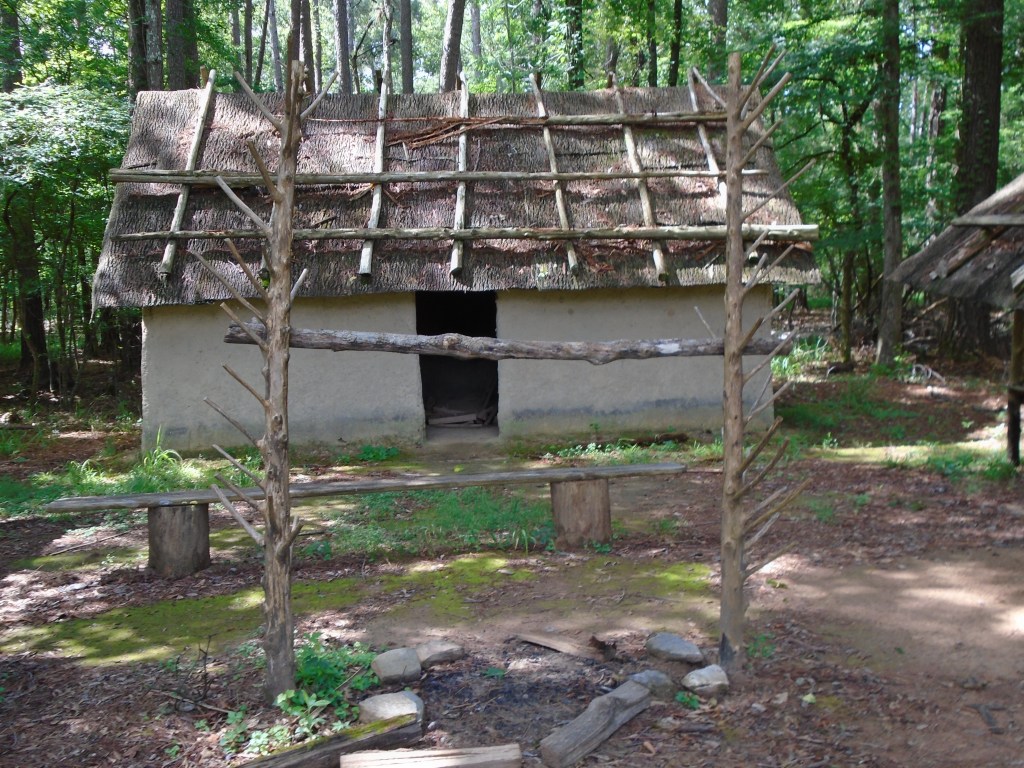
A Creek village consisted of summer and winter houses built around a rectangular field, like a plaza. Below are photos of reconstructed examples of both a winter and a summer Creek house, which I took during a visit to the Fort Toulouse-Fort Jackson Park in Wetumpka, Alabama. Wetumpka is the Creek word for “tumbling water”, named for a waterfall on the Coosa River.

This is a Creek winter house built on upright poles, its walls plastered with mud and its roof thatched. These roofs also had a hole in them for smoke to pass through.

This is a Creek summer house.

During the winter, councils met in a thatched round building called a rotunda. In warm seasons, they held councils beneath arbors.

These village also had a game field for playing chunkey, a game I described in a previous post.

Red Towns/White Towns

Before their homeland was colonized, the Creeks separated their towns into red and white. In the red towns, they held war ceremonies and in the white towns, peace ceremonies.

William Bartram’s Diagram

William Bartram (1739-1823) was a famous botanist who explored Alabama, recording his observations in a journal. He gave us a diagram of a Creek village, which I show below.

A. The rotunda

B. The town square

C. The chunkey field

Surrounding structures–Creek houses

Sources

“The Muscogee Creek—1600-1840,” National Park Service, Last updated May 24,2021. The Muscogee Creek – 1600 – 1840 – Little River Canyon National Preserve (U.S. National Park Service) (nps.gov).

Hahn, Stephen C. “Creeks in Alabama,” Encyclopedia of Alabama, March 8, 2007, Last updated February 22, 2024, Creeks in Alabama – Encyclopedia of Alabama.

“History,” Fort Toulouse-Fort Jackson, Friends of the Fort Foundation, Last Accessed March 14, 2024. History | Fort Toulouse – Fort Jackson | Wetumpka, AL (fttoulousejackson.org).

Lewis, J.D. “The Native Americans, Creek Indians,” Carolina, 2007. Carolina – The Native Americans – The Creek Indians (carolana.com).

Reverend Thomas Ken, Author of “The Doxology”

Thomas Ken (1637-1711). He was an Anglican minister and a hymn writer. God used him to write what we know today as “The Doxology.”

The Story Behind “The Doxology”

After his parents died, Thomas Ken was raised by his half-sister and attended Winchester College. Once he was ordained as an Anglican minister, he returned to Winchester where he served as its chaplain.

Here at this school, to encourage the students’ devotions (Winchester was an all-male college), he wrote three hymns. One hymn he wrote was to be sung in private when the student awakened, the second hymn at bedtime, and the third hymn at midnight. These hymns had as many as thirteen stanzas.

By 1680, Ken had become an Anglican bishop and chaplain to promiscuous King Charles II. An unpleasant time for him. When the king asked him to house one of his mistresses, Ken refused and rebuked the king: “Not for the king’s kingdom,” he said. Naturally, Charles got very angry, but Ken was a bold man who wouldn’t compromise his faith.

Later, during the reign of King James II, he suffered imprisonment in the Tower of London for his Protestant faith. After his release, he eventually retired and died on March 11, 1711.

The Doxology

When Ken was buried, his friends and family sang the last line of each of his three hymns. These stanzas became “The Doxology.” Many Protestant churches sing these words today. Its words are a praise to the Lord, expressing love and devotion and thanksgiving.

One Interesting Story

During America’s bloody Civil War, Union soldiers were being marched back to a Confederate prison. A Baptist minister, concerned about the prison’s horrible conditions and what these prisoners faced, began singing “The Doxology” as a way of encouraging them. The soldiers joined in and by the time they were back inside it, they had confidence that the Lord would take care of them.

Sources

Powell, Luke. “Praise God From Whom All Blessings Flow.” Story Behind the Hymn, Lyrics and Performance. https://www.youtube.com/watch?v=JtgJF0BBUxE

“Thomas Ken, The Doxology Hymn Story with Lyrics” https://www.youtube.com/watch?v=HxXMKYHMVC4

“Thomas Ken.” https://en.wikipedia.org/wiki/Thomas_Ken

Native American War Clubs

Native American gunstock club.

What is a War Club?

Native American tribes used war clubs in close-in, hand-to-hand
fighting. These could be fatal at close range.

Description of War Clubs

War clubs’ lengths varied, as well as their style and construction. Some had a spiked ball at the end, the spikes being made of metal, stone or bone. Others had sharp stone edges. Another style was made of a jawbone, either from a buffalo or a horse. And some clubs, such as a tomahawk, could be thrown.

In the early 1800s, the Southeastern Creek tribe made war clubs from white oak or hackleberry, usually between two and three feet long. Because they resembled the shape of a gun, they were called the “Gunstock Club.” A steel or iron blade was added where a gun’s lock would be. One hard whack on the head with this club could easily kill a man.

The Red War Club

During the Creek War (1813-1814) in Alabama, the Creek faction that opposed the settlers was called Red Sticks because their war clubs were painted red. To paint them this color, dyes were used from one of the following:

  • The pokeberry plant’s red juice
  • The puccoon plant’s root
  • A soft red stone found in Alabama

SOURCES

“Facts and Information about Native American War Clubs.” The American History.org  Last accessed February 29, 2023. A look at the Native American War Clubs Native Americans (theamericanhistory.org)

Halbert, Henry S. “The Creek Red Stick.” Alabama Historical Reporter 2, May 1884.

Moore, Ethan. “Cherokees of the Creek War (1813-1814).” National Park Service, Published August 2017. Cherokee of the Creek War (1813 – 1814) (U.S. National Park Service) (nps.gov)

“Red Sticks.” Wikipedia. Last accessed February 29, 2023. Red Sticks – Wikipedia

Waselkov, Gregory A. A Conquering Spirit. Tuscaloosa, AL: The University of Alabama Press, 2006

Yost, Russell.  “Creek Tribe Weapons.” The History Junkie. Published August 11, 2022. Last modified October 30, 2023. Accessed February 29, 2023, Creek Tribe Weapons – The History Junkie