After Lexington won the Great Post Stakes his owner, Richard Ten Broeck and Lecomte’s owner, Thomas Jefferson Wells, had a rematch. Instead of racing each other, however, they agreed that their horses would race against the clock for four miles.
Riding Lexington: a famous white jockey named Gilbert Kilpatrick
Race Date: April, 1855
Place: Metairie Race Course, New Orleans, Louisiana
Course conditions: dry
Grandstands: about 10,000 spectators
When the timekeepers nodded “ready,” the starter lowered his flag, and Lecomte and Lexington galloped down the track, their hoofs thundering amidst cheers.
Lecomte, sweating hard and breathing hard, surged ahead as Abe, fierce competitor that he was, urged him on. Wider and wider the distance between the horses stretched, Lecomte constantly in the lead till he defeated Lexington by six lengths and set a world record: seven minutes and twenty-five seconds.
Upon hearing this time announced, clapping and hurrahs rocked the grandstands. Everyone, it seemed, had gone wild.
All wasn’t lost for Lexington yet. He had one more heat. But Abe galloped Lecomte into racing history when he won it as well. Though jockeys who were slaves were seldom referred to by name, such wasn’t the case with Abe. Everyone involved in racing in this era now knew him. As for Lecomte, every January at the Fair Grounds Race Track in New Orleans a race is held in his memory—the Lecomte Stakes.
Lecomte and Lexington, half-brothers who shared the same sire, became the greatest Thoroughbreds of their era.
Sources
Mooney, Katherine. Race Horse Men: How Slavery and Freedom Were Made at the Racetrack, Harvard University Press: Cambridge, MA and London, England, 2014.
Weldon, Nick. “From slavery to sports stardom: Abe Hawkins’ rise from a Louisiana plantation to horse-racing fame,” The Historic New Orleans Collection, January 11, 2019, https://www.hnoc.org/publications/first-draft/slavery-sports-stardom-abe-hawkins%E2%80%99s-rise-louisiana-plantation-horse-racing.
I am pleased, and honored, to announce that my Civil War novel, Vengeance & Betrayal, is a finalist in the Notable Book Awards. The winner will be announced on Saturday, February 6, at the Southern Christian Writers Book Expo. This book, and many others, will be available for purchase on the Expo’s public Facebook site on that day.
April, 1854—a delightful spring day. Metairie Race Course conditions—dry. New Orleans’s St. Charles Hotel—thronging with guests. Some 20,000 people had arrived, eager to watch a special horse race, among them former U.S. president Millard Filmore. And why not? America’s two greatest Thoroughbreds, half-brothers, were scheduled to race each other in the Great Post Stakes.
Richard Ten Broeck, the course’s primary shareholder, conceived the idea. For an entry fee of $5,000, a state could send a Thoroughbred to represent it in the competition.
By race day, only four horses participated: Arrow (Louisiana), Highlander (Alabama), Lexington (Kentucky), and Lecomte (Mississippi). Because Louisiana had Arrow, Lecomte’s Louisiana owner, Thomas Wells, entered him to represent Mississippi. Ten Broeck’s horse Lexington, Lecomte’s half-brother, represented the state where he was foaled.
Because the standard Thoroughbred racing track is one mile, these horses would run four laps in two heats with a break for a rub down in between. Lexington won the first heat, clocking just over eight minutes, but Lecomte gave Lexington a run for his money in Heat Two. For three miles, Lecomte galloped ahead of Lexington. Kentuckians attending the race fretted. Their champion, losing! It couldn’t be!
And then, Lexington got “a new set of legs,” gained on Lecomte, passed him, and defeated him by four lengths. The grandstand’s spectators went wild! Roars of approval hit the clouds.
In 1855, LeComte and Lexington would again compete to determine which horse was the fastest.
Sources
Mooney, Katherine. Race Horse Men: How Slavery and Freedom Were Made at the Racetrack, Harvard University Press: Cambridge, MA and London, England, 2014
Perrault, Matthew Saul. “Jockeying for Position: Horse Racing in New Orleans,1865-1920,” LSU Digital Commons,Louisiana State University and Agricultural and Mechanical College, 2016. https://digitalcommons.lsu.edu/gradschool_theses/3455/
This jockey is not Abe Hawkins. I was unable to find a photograph of him.
In the antebellum world of Thoroughbred racing, one jockey’s name stands head and shoulders above all others—Abe Hawkins. Like most Southern horsemen in this era, Abe was a slave. Enslaved jockeys held a special status which included freedom of movement, unaccompanied, to other horse farms.
Usually, a jockey’s name wouldn’t be mentioned in racing publications. Abe, however, was the exception. Everyone involved in Thoroughbred racing knew his name and respected him. A determined competitor, he was driven to win races. And, he often did.
We don’t know much about his growing up years, nor his exact day of birth. We do know he once belonged to Adam Bingaman, a Louisiana planter.
In 1853, Duncan Kenner purchased him from Bingaman for over $2,000 and brought him to his Louisiana sugar plantation, Ashland.
In 1854, Abe rode Lecomte against Lexington at the Metairie Race Track in New Orleans. More on Abe’s role in this race in a future post.
During the Civil War, as the Union army bore down on Ashland in 1862, Duncan Kenner escaped capture but Abe fled north where he continued winning races, earning fame and fortune. After the war, afflicted by tuberculosis, he returned to Ashland and Kenner’s nursing care. He died in 1867, but his name and reputation on the turf lived on.
Sources
Katherine C. Mooney, Race Horse Men: How Slavery and Freedom Were Made at the Racetrack (Cambridge, MA and London, England: Harvard University Press, 2014).
Gideon followed Elvira and her mother through the rambunctious racing crowd, the ladies’ bell-shaped, poplin skirts parting a path through spectators and gamblers mobbing booths selling liquors. At other booths, proprietors hawked snacks and sandwiches, candies and cookies. Shouts and low conversation surrounded them, men making wagers with other men, black people and white people of all social classes in attendance. Horse racing broke down the city’s social divide, if only for a few hours.
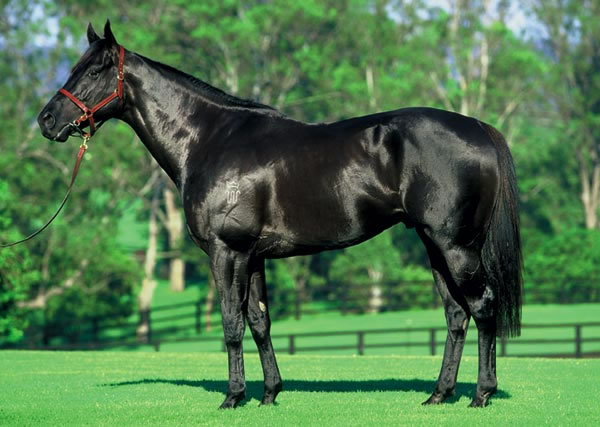
Lexington, painted by famous equine artist Edward Troye.
The above paragraph is taken from my work-in-progress, tentatively titled Thoroughbreds and the Prodigal. It shows what Thoroughbred racing in the antebellum South was about. For a brief moment in time, it broke down social barriers. Horse racing was the “football” of the antebellum South— its most popular sport.
In 1854, the era’s most famous horse race took place at New Orleans’ Metairie Race Course. Known as The Great Post Stakes, it pitted the era’s two greatest Thoroughbreds, Lexington and Lecomte, against each other. These horses were half-brothers who shared a famous sire named Boston.
Richard Ten Broeck, a majority shareholder in the course, owned Lexington. Three other prominent shareholders in the Metairie Course were Thomas J. Wells, William J. Minor, and Duncan Kenner.
Lexington’s original name was Darley, owned by Elisha Warfield and trained by Harry Lewis, a black man who some think may have been free when he trained the famous horse. Darley had already won races before Ten Broeck and three other turfmen pooled their resources and purchased him for $2,500. Ten Broeck renamed him Lexington, the place of Darley’s birth.
Although two other horses competed in the famous race, Lecomte was Lexington’s biggest rival. His dam, Reel, won seven races before Thomas J. Wells purchased her.
Like his mother, Lecomte enjoyed a stellar career. He’d won every race up until his showdown on the track against his half-brother. For those race fans who witnessed their competition, it would be a race for the ages, and one they’d never forget.
Bibliography
Hervey, John. Racing in America:P 1665-1865, vol. II, Private Print. The Jockey Club 1944. Auburn University Special Collections. Call #: folio SF 347.14
Mooney, Katherine. Race Horse Men: How Slavery and Freedom Were Made at the Racetrack, Harvard University Press: Cambridge, MA and London, England, 2014
Sometimes rules regarding capitalization are controversial and can be debated. For instance, take military terms. Should writers capitalize Navy, or should navy be lowercased? Should Army be capitalized, or should army be lowercased?
According to The Chicago Manual of Style, if we’re spelling out the full name of a particular army or navy, it’s capitalized. If the word army, navy, air force and so on stands alone, then those words are lowercased.
Example: Army of the Potomac, United States Army, United States Navy, the army, Union navy, etc.
Not every stylebook agrees with this, though they all agree these words should be capitalized when spelling out the full name of a specific branch of the armed services.
The Associated Press Stylebook takes a different view from The Chicago Manual of Style. It says to capitalize the abbreviated form of military branches: Navy, Army, Air Force, Coast Guard, Marines. So does the Government Printing Office (GPO).
Another case is how to spell marine. Is it capitalized, or is it not? I’ve seen it spelled both ways by well-respected historians, just as I’ve seen Confederate Navy and Confederate navy in excellent history books.
The New York Times used to spell marine in the lowercase so it’d be the same as soldier and sailor, as the newspaper explained. According to a recent report the paper has changed its style requirements to start spelling it in the uppercase, even when referring to an individual Marine. The Navy’s style manual agrees with this.
This debate will likely never end because style manuals differ. The one rule that doesn’t change is this: when referring to the full name of a national army, navy, air force, coast guard, marines—always capitalize. Whatever style manual we use in other cases, keep our style consistent throughout our work.
For a horse who suffered from fits, where he jerked his head and fell down but then got up again and seemed fine, the following remedy was offered in 1855:
“Give the animal two ounces of the tincture of asafoetida every morning for ten days. Tie the gum on his bit and wear it for six or eight days. He will never have a fit after the first dose.”
For a horse who suffered a chronic cough, it was recommended that the animal’s owner take:
“…powdered squills one ounce, ginger two ounces, cream of tartar one ounce, mix well, and give a spoonful every morning and evening in wet bran. This is good after hard riding or driving. It cures all coughs and colds, and will prevent the lungs from swelling.”
Source
The Horse. G.W. M’Coy’s catalogue of practical receipts, for curing the different diseases of the horse. Enered according to the Library of Congress, in the year of our Lord one thousand eight hundred and fifty-five by George W. McCoy…Indianapolis. Printed by Cameron & McNeely (1855). https://www.loc.gov/item/rbpe.019005ba/
While researching my current work-in-progress, a novel about Thoroughbred racing in the antebellum South, I learned a few interesting bits of trivia about these magnificient animals. Although I’m sure most horse people know these things, they were new to me. So, I thought I’d share them.
Thoroughbreds can run between 35 and 40 miles per hour.
The Thoroughbred’s average stride is twenty feet long.
Thorougbreds can reach up to 150 strides per minute.
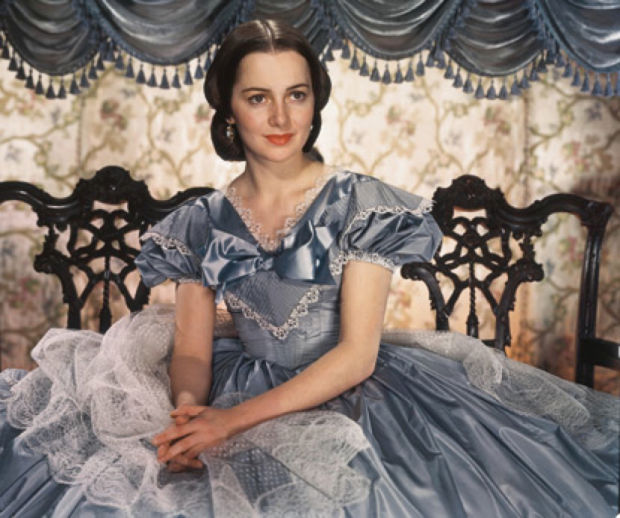
Olivia De Haviland (aka Melanie Hamilton Wilkes): Gone With the Wind. Photo is in the public domain. Can’t believe she’s 102 years old now!
In all my years of writing historical fiction, I’ve found one thing to be the most challenging, yet also fun. It’s writing a character’s biography.
We writers must write our characters’ biographies, at least all the major characters’ stories, in order to get to know them better. Oftentimes their personalities will surprise us, as well as their motivations, education, strengths, weaknesses, and so on. The more time we spend with them, the more they become our literary “friends.”
What is challenging, at least for me, is writing their backstory. Why? Because their backstory must be believable within its historical context as well as contribute to the character’s personality, motives, and so on.
Let me use my home state, for example. If I write a story set in 1850s Mobile, Alabama, and use a character’s backstory (or even a flashback) set in 1817 Alabama, I cannot have a significant event happening to him in Montgomery, Alabama in that year, nor could he reach Montgomery by train.
Why not? For two reasons: (1) Alabama didn’t have railroads in 1818. He’d have probably traveled on horseback, in a wagon or carriage, or maybe a stagecoach, a common mode of travel during this era. (2) Montgomery wasn’t a city in 1817. In fact, it consisted of several small settlements. My character could visit one of these settlements and have a few critical events happen in his life there, but not in Montgomery. However, he could visit Montgomery in 1819 after two of the settlements incorporated to form the town.
To sum up, research the history, inventions, modes of travel, and so forth that surrounded our characters’ pasts as thoroughly as we do their present events. Because if their pasts aren’t historically accurate and believable, we’ll certainly lose readers.
Clasping
his boat’s anchor, Luke Lowery waded through Mississippi Sound’s gentle surf,
dragging his long wooden boat behind him. His friend Henry Edwards sloshed
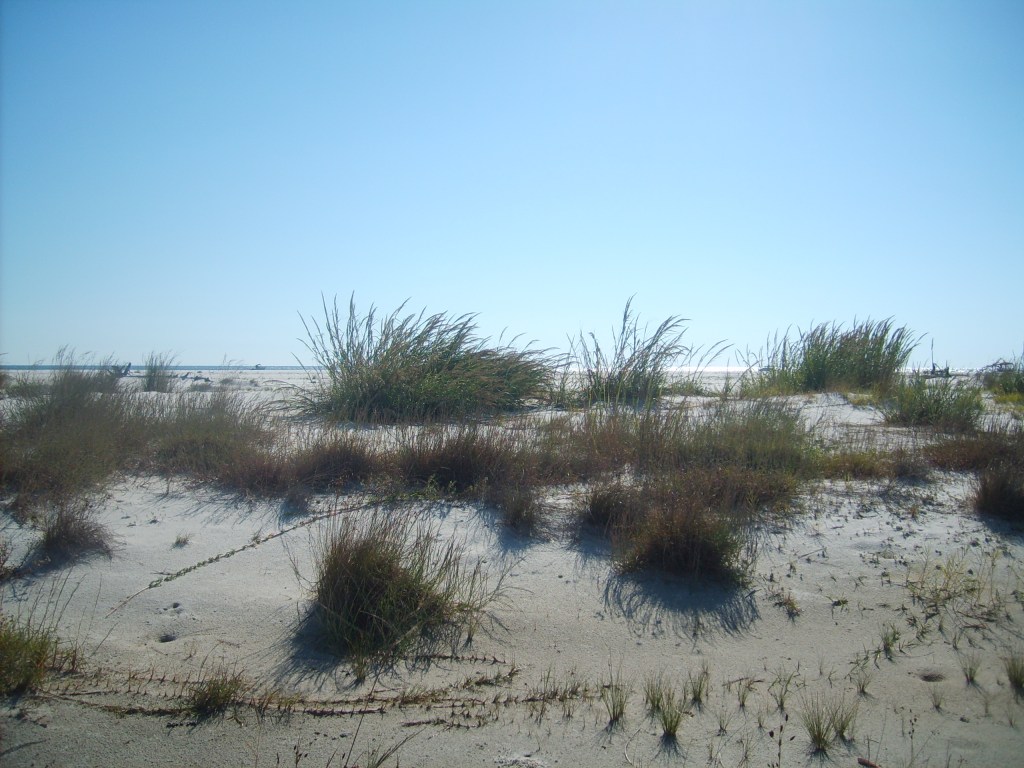
ahead, up onto Bugle Island’s sunbaked sand. Fiddler crabs scurried into their
holes; salty air flushed his sinuses. The cackle of gulls, the splashing of
leaping mullets and the waves washing ashore, nature’s aquatic symphony, nudged
his worries to the cold, dark recesses of his mind.
Anticipation
rolled through him. A weekend of camping, floundering, and fishing awaited, his
favorite summer activity during his rare weekends off. This sure beat getting kicked
around at work. Most important, though, it granted him the time he needed to consider
switching occupations. If he didn’t reach a decision by Monday, he’d lose the
opportunity for a pleasanter desk job.
Two days ago, his potential employer promised him the weekend to consider his new job offer. Was it worth the decent money he earned, though he got shoved around, or should he quit and accept this new job offer with its leaner paycheck? Desk jobs could be boring, but—
“Luke!” Henry yelled. “Toss it to me!”
Luke
tossed the anchor toward him underhanded and continued wading through the warm
surf to the beach.
Henry, a short, wiry man who sported a neat, waist-length red beard reminiscent of a Civil War soldier, jammed the anchor’s flukes into the sand. With his right foot, he pounded them in deeper.
Luke’s gaze followed an osprey circling a white cabin cruiser that rode at anchor some twenty yards east. A man whose bulging muscles practically burst apart his red tee shirt stood in its stern watching them through binoculars. He wore an out of the past haircut—a flattop.
“That guy dropped anchor a few minutes ago,” Henry said.
“I saw him.”
“You know the guy?”
Though the man looked familiar, Luke shook his head. “Don’t think so.” It couldn’t be him, not after all these years. Could it? He hoped not. High school memories. Bad memories. Growing up in Theodore, Alabama had been no easy task for him. “Let’s get our gear and make camp. Then we’ll do some fishing.”
Henry
followed him back to their boat.
Sitting cross-legged on a dune while rummaging through hooks and lures in his tackle box, Luke found his stringer for his catch.
Henry sauntered to water’s edge where the beach turned moist and dark due to the inbound waves. He made a practice cast as the surf receded from his ankles. “All set?” He reeled in his line.
“Ready.” Luke stood and stuffed his stringer into his jeans pocket. He picked up his rod, tackle box, and metal bait bucket full of shrimp they’d caught by trolling a net on their way here.
Before they turned to go, a deep voice boomed from a dune behind them. “What’d you think you’re doin’, Lukey baby?”
Luke’s heart drummed hard. So it was him on that cabin cruiser. “Fishing, Chuckey.”
“Hey, buddy. Look at me when I’m talking to you.”
Luke did so in no great panic. He slouched, trying to appear indifferent to Chuck Bates’s arrival. In reality, he wished the big ox hadn’t showed up. Now his trip was ruined.
Chuck’s beady black eyes flashed from his weathered face. “This is my fishin’ spot. Got that?” Chuck raised his ham fist, strode down the dune, and brushed it across Luke’s face. “You and your l’il pal get to the other side of the island.”
Luke blinked, his nemesis’s knuckles practically touching his nose. “Henry and I are going. We’re leaving our boat where it is if that’s all right with you.”
“Yeah, Lukey baby. Just so you ain’t fishin’ in my spot.”
“Now don’t you go worry your ugly little head about that none. We ain’t fishin’ in your spot.” Henry spoke sarcastically.
“Shut that smart mouth of yours, l’il man. I’m headin’ back to my boat for my fishin’ gear, and if I see either of you here when I get back—”
“Yeah, yeah. We’re going.” Luke waved him off.
“Reckon
you do know him, then.” Henry followed Luke over the dunes toward the island’s
Gulf side.
“Wasn’t
sure at first, but yeah, I know him.”
“Why’d
you take that business from him?”
Luke
kept his eyes straight ahead. He had his reasons. Nobody’s business why he took
it from him. “Maybe we’ll catch
more fish than Chuck.”
“You’re not going to answer my question?”
“No.”
Ten
minutes later, on the island’s opposite side, they baited their hooks, waded
into the Gulf thigh-deep, and cast their lines.
Luke
debated whether or not he should accept the job offer. His mind chugged through
and around every angle, the plusses and minuses of each job. But every time he
neared a decision, Chuck Bates’s image jumped onto his mental rails and smacked
his train of thought right off its tracks. Obviously, though they were both in
their forties, Chuck never outgrew the bully stage. Pity the people who made
him angry.
In
high school, Chuck called him worse names than Lukey. He’d accused him of stealing
his gym clothes, something he did not do, which resulted in Chuck failing
physical education. He became a laughing-stock for that “F.” Despite Luke’s
denials, Chuck cornered him against the lockers one day after school.
“Meet
me at the park,” Chuck said, his breath so foul Luke wondered if he’d brushed
his teeth.
At
the park, fists flying, they went at each other. Within minutes, Chuck almost pummeled
him senseless.
“Looka,
Luke! I got one!” Henry’s excited voice jerked Luke out of his musings.
Henry
reeled faster, till his catch dangled mid-air off his hook.
“He’ll
fit the frying pan,” Luke said.
“My
frying pan.” Henry lowered his rod and started working the fish off the hook.
Luke reeled in his line. “Whatever.”
Once
they caught their legal limit Luke and Henry, weaving over and between dunes,
pounded sand back to their boat. Luke dragged his stringer-load of fish behind
him. Atop one dune, amidst sea oats, their stride broke at events below them. They
gasped. Two men faced Chuck. A beanpole of a man aimed a pistol at him. A
short, muscular man’s filet knife pointed at Chuck’s stomach.
Chuck
waved his fists and shouted something unintelligible at them.
The
pistol man closed in, then slapped his face.
Luke
and Henry swapped glances.
“What’s
going on?” Henry asked.
Luke
dropped his stringer.
“Maybe
we should call the police.” Henry pulled his phone from his shirt pocket and
took it out of its waterproof case.
“Yeah.
Do that.” Luke assessed the situation. Despite having as much love for Chuck as
he did a rattlesnake, his sense of honor trumped his ill will toward his
childhood foe. “Stay here, Henry.”
“But—”
Henry tapped in the marine police’s number.
“Stay
here, I said. Come running if it looks like I need you.” Luke proceeded toward
Chuck, cupped his hands around his mouth, and yelled, “You fellers caught any
fish today?”
The
armed men swiveled toward him. Cruelty contorted their bronze countenances.
Luke
grinned at the man holding the pistol. “Hey, mister, what’s with your Nerf gun?”
“Shut
up, Lukey.” Chuck quivered, fear and rage rumbling through his husky voice.
Luke gestured at the shorter man’s knife. “I caught my limit today. May I borrow your knife to clean ’em?”
“You’d
better shut up.” Chuck’s voice was even-toned. “Mario ain’t playin’ no games.”
“Oh?
You’re Mario?” Thumb up and forefinger extended like a pistol, Luke aimed it at
the beanpole man. “Bang.”
“You’d
better listen to your friend.” Mario’s pistol targeted Luke’s chest.
Luke
eyed the gun. “Guess I’d better listen then, eh, Mario?” Then he leapt into the
air, his left foot slamming Mario’s ribcage before his gun discharged skyward.
Mario staggered backward; his pistol dropped from his hand. Luke’s
ninety-to-nothing follow-up punch crumpled him, unconscious, on the sand.
The
knife-man slashed at him. Luke dodged then planted another foot in his ribcage
followed by a one-two knockout punch for good measure.
Chuck’s
jaw went slack. “Where’d you learn to do that?”
“Took
up martial arts after that day you beat the daylights out of me. I kept it a
secret in case you tried something again. Go get a rope out of my boat. We’ll
tie ‘em up before they come to.”
By
this time, Henry joined them. He slid his phone back inside his shirt pocket.
“The police are on their way.”
Chuck’s
expression softened. “I’m indebted to you, Luke.”
Luke
kicked a piece of driftwood. “No big deal. Who are these guys?”
“They
claimed they were runnin’ from the cops when their boat broke down on the
island’s west end. They wanted my keys so they could swipe mine.” Chuck
sauntered to Luke’s boat and returned with two thin white ropes, which he and
Luke used to tie the criminals’ hands behind their backs.
“Guess it appears I’ll keep my current job.” Luke studied the unconscious criminals sprawled face down. “In times like these, it pays to get kicked around.”
Chuck
scratched his head. “Kicked around? What’d you talkin’ about?”
“A
karate school in Bay Minette. I’m an assistant teacher there, and I’m also a
blackbelt. Was going to change jobs, but kids need to know how to defend
themselves. You taught me that after you scrambled my brains. Got tired of
letting those kids kick and punch me during practice, but well, I guess what
happened today proves it’s worth it.”
Chuck
laughed, as did Luke and Henry.
Roaring
motors caught their attention. The marine police must’ve been looking for the
bad guys in the area because their two patrol boats approached the beach at top
speed.
Luke
extended his hand. “If it weren’t for what you did years ago, I never would’ve
learned how to fight.” Grips firm, he and Chuck shook hands.
The End
Copyright 2019 by John “Jack” M. Cunningham, Jr. All Rights Reserved








 The Author's Cove: John "Jack" Cunningham on Writing & History