Marjorie Holmes was a beloved Christian author. Early in my Christian walk, I became familiar with her when my sister brought home from college one of her books, now a classic, Two From Galilee. It’s a love story about Mary and Joseph and became a bestseller.
One thing about this book most may not realize is that she spent nine years working on it. For three years, she researched it. For six years, she marketed it, trying to find a publisher. Publishers told her Mary and Joseph acted too much like real people, so that’s why she had trouble finding a suitable place for it. Finally, Bantam agreed to publish it, and it’s never been out of print.
If we want to succeed as a writer, follow Marjorie Holmes’s example. Persevere!
In his excellent bestselling book, Sea Stories, Admiral William H. McRaven used fiction techniques to write this work of nonfiction. Such writing is called creative nonfiction, Readers love it! I highly recommend Admiral McRaven’s book.
Thirty-plus years ago, when I started writing seriously, I sought to learn everything I could about fiction and nonfiction techniques. And what did I discover? Fiction techniques used in nonfiction heighten reader interest. Let’s look at four ways nonfiction writers benefit from reading/studying fiction.
Nonfiction: Benefits of Fiction Techniques
Benefit Number One
Fiction: I’ve often had to cut out unnecessary scenes, change character POVs, add new scenes, etc. And, I’ve had to add new chapters and scenes to make my story fuller.
Nonfiction: I’ve also had to cut and add things, such as chapters, paragraphs, words, and illustrations.
Benefit: Fiction teaches us things to look for, what to add and what to cut, and the right balance between the two. This can carry over into nonfiction.
Benefit Number Two
Fiction: In well-written fiction, writers use fiction techniques that bring their stories to life.
Nonfiction: Creative nonfiction is based on true events but uses fiction techniques. A recent example is the bestselling book, Sea Stories, by Admiral William H. McRaven. Admiral McRaven shares stories from his life in the Navy SEALS. Although it’s nonfiction, he wrote it like fiction, filled with heart-stopping action, conflict, dialogue, and other techniques.
Benefit: Reading and studying fiction teaches writers how to write creative nonfiction.
Benefit Number Three
Fiction: Details. Details bring a story to life and make it visual. Concrete (visual) nouns, strong action verbs, apt figures of speech.
Nonfiction: Details. Let’s do a Bible study based on Acts 16:22-40, using details to prompt reader interest while explaining the passage about Paul’s and Silas’s arrests in Philippi. To do this may require some research.
Details to Consider
Paul and Silas’ jail. What did it look like? Include a brief description in the Bible study.
Paul and Silas were beaten. How were they beaten? With rods or with a whip? What did they look like after they were beaten? Research and try to find out, then share it with readers. It will add interest to the study.
Paul and Silas were released because Paul tells the magistrate he was a Roman citizen. Though Luke doesn’t mention it, Paul may have had to prove his citizenship. How? With a passport, just like foreign travelers do today. In Paul’s day, passports were wooden tablets with their owners’ names on them. We know this from archaeologists who’ve discovered lots of them in their excavations of ancient sites. Hey, I learned this from a nonfiction book mentioned in my bibliography, and it might be of interest to readers. It interested me when I learned this.
Benefit: Fiction teaches nonfiction writers how to look for, and find, details that enhance their work.
Benefit Number Four
Fiction: It teaches writers how to establish mood and tone.
Nonfiction: Good nonfiction has certain moods and tones. Is it an angry tone, a comical tone, or a cheerful tone? Or, perhaps, a different tone. Readers gauge nonfiction authors’ attitudes by their writing’s tone and mood.
Benefit: Fiction teaches nonfiction writers how to establish the tone and mood they wish to convey in their work.
Benefit Number Five
Fiction: Fiction writers use action, conflict, and dialogue.
Nonfiction: We’ve already discussed creative nonfiction, but these techniques apply to anecdotes too. An anecdote is a brief story, usually true, that illustrates points shared in a work of nonfiction. For some examples, check out Reader’s Digest’s columns titled “Life in These United States” and “Humor in Uniform.”
Anecdotes are useful in various nonfiction genres— essays, Bible studies, newspaper articles … the list can go on. They’re an excellent way to grab reader interest as an opening for articles or chapters in nonfiction books.
Benefit: Learning how to write fiction enables writers to write better anecdotes in their nonfiction.
Some Final Thoughts
Fiction sometimes gets a bad rap from those who consider reading and writing it a waste of time. Trust me—it’s not. The broader we read in every form and genre— fiction, nonfiction, poetry, plays, and even screenplays— the more our writing will improve.
God has given writers a wonderful literary gift He wants His children to use for His glory and kingdom. If writing creatively wasn’t important, He would not have given such a gift to us. After all, He is, Himself, a God of majestic creativity!
Till next week, friends.
Bibliography
Ferguson, Everett. Backgrounds of Early Christianity. 2nd ed. Grand Rapids, Michigan: Wm. B. Eerdmans Publishing Co., 1993.
“I only read nonfiction.” Great! I, too, enjoy nonfiction. However, I also read (and write) fiction. So,why do I write stories? For many reasons. Read on, to find out what they are.
Eight Reasons for Writing Fiction
Thousands of people enjoy good stories. Thousands will read a novel before they’ll read nonfiction. This gives fiction writers a great opportunity to reach an audience in ways nonfiction writers can’t.
Fiction enables novelists to share their message without sounding preachy. About his Narnia series, C.S Lewis wrote: “At first there wasn’t anything Christian about them (Narnia’s characters); that element pushed itself in of its own accord. It was part of the ‘bubbling.'” In other words, since Lewis was a Christian, he wrote Narnia from a Christian perspective. The Christian symbolism in these books “just happened.”
Like Lewis, our points of view slip into our work because what we write is part of who we are and how we view the world. Narnia, with all of its symbolism, doesn’t preach, but Lewis’s faith is evident. So it will be with us. When we write, we share a part of ourselves and our message with the story-loving world.
To educate people in a fun way. In Education of a Wandering Man (Bantam, 2008), Louis L’Amour wrote: “Historical novels are, without question, the best way of teaching history, for they offer the human stories behind the events and leave the reader with a desire to know more.”
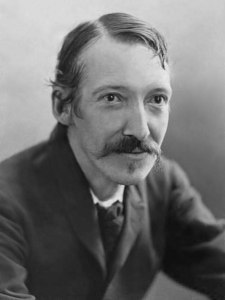
Robert Louis Stevenson, 1850-1894
As a writer of historical fiction, I absolutely agree. I credit Robert Louis Steveson and Alexandre Dumas as two of the sparks that got me interested in history when I was in my early teens. The third spark was a nonfiction book written by Pulitzer Prize winner, Bruce Catton, which I also read in my early teenage years.
Jesus told His disciples, in Matthew 5:13, that they are the “salt of the earth.” Salt is a preservative. Christian writers and artists can be salt in our current culture. Through fiction, we participate in producing literature that helps restrain the onslaught of society’s ungodliness.
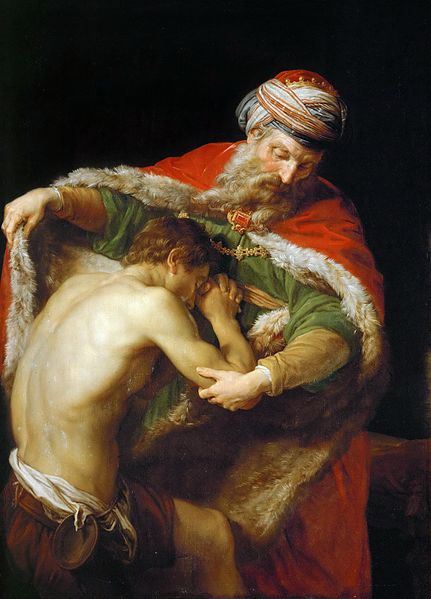
The Return of the Prodigal by Pompeo Batoni (1708-1787)
Jesus believed in and taught by example the importance of a story. His stories, called parables, are loaded with truth. His listeners could relate to the parables’ characters: the farmer who sowed the seed, the son who left his father and went into a far country, the good Samaritan, and so on
Not every work of fiction carries a message. Some novels simply entertain. And to that, I say: what’s wrong with some relaxing entertainment? Everyone needs a break from life’s busyness. People attend movies or watch television or go fishing or do other things to “get away from it all.” Reading a good novel is no different.
God gave some people creative minds—gifts in music, gifts in painting landscapes and portraits and sculpture, and gifts in other artistic endeavors. One endeavor is writing, which He expects His literary children to use to further His kingdom, either through fiction, nonfiction, and/or other literary genres. If God didn’t think these gifts were important, He’d have never given them.
God is creative. Just look around you and marvel at all the beautiful things He created: birds, fish, mammals, the stars, and the solar system. He isn’t against any form of creativity, so long as that creativity honors Him.
Creativity and writing fiction are gifts, just as other callings and skills are gifts. To despise fiction because one sees it as useless is despising this gift God had given certain authors. Fiction isn’t useless. As I hope we’ve seen, it plays an important role in our society and culture.
Having said that, it’s perfectly fine to just read nonfiction. Everyone has their own preference in literature. I prefer reading and writing both. Though I don’t write poetry, I don’t see it as useless either. God uses every gift He’s given His children if they allow Him. Let’s respect all the gifts people use for His glory.
Next Week: How Fiction Techniques Improve Nonfiction
Bibliography
Ryken, Leland, editor. The Christian Imagination, “Creating Narnia,” by C.S. Lewis, Of Other Worlds, New York: Harcourt Brace Jovanovich, 1996. Ryken, 2002
I’ve often heard well-meaning people say they don’t read fiction. They believe stories and novels serve no good purpose except to entertain, and that nothing can be learned from them. As one who writes both fiction and nonfiction, I disagree. Perhaps these folks aren’t aware of the numerous novels that have changed society … and the world.
A Few Novels That Changed Society and the World
The Jungle, by Upton Sinclair
In the early 1900s, Chicago’s unsanitary stockyards posed a serious health risk to meatpackers. Sinclair, after going undercover in its meatpacking plants for several weeks to research the situation, wrote his famous novel to draw attention to these workers’ plight. Because of The Jungle, President Theodore Roosevelt launched an investigation which led to the Pure Food and Drug Act and the Meat Inspection Act (1906).
Black Beauty, by Anna Sewell
Anna Sewell loved horses and wanted England’s upper classes to quit using “bearing reins.” These reins, designed to keep the horse’s head close to its chest, abused the animal. They made it hard for the horse to breathe. Such abuse led Sewell to write her novel from the horse’s, Black Beauty’s, point of view. When people read this book, many quit using these reins. This one work of fiction, Sewell’s only book, changed a feature of nineteenth-century British society, ending this abusive practice.
A Christmas Carol, by Charles Dickens
Christmas was never the same after Dickens wrote this novella. Prior to its publication, many Protestant Christians didn’t celebrate this holiday because it was too Catholic and rowdy. However, thanks to Tiny Tim and other characters in Dickens’s story, Christmas became more family-oriented. So, do you enjoy a wholesome Christmas with your family? Well, we can all thank Mr. Dickens for it.
To Kill a Mockingbird, by Harper Lee
This novel gave lawyers a good name in its protagonist, Atticus Finch, who defended a Black man unjustly accused in twentieth-century rural Alabama. It inspired many thousands of young men and women to pursue a legal career and become as good and honest a lawyer as Atticus.
A Final Thought
Those listed above are but a few of many novels that have impacted society in one way or another. Many others, such as Beloved (Toni Morrison), Uncle Tom’s Cabin (Harriet Beecher Stowe), The Grapes of Wrath (John Steinbeck) … Well, I’d best end here, because the list is long. Even in this technological society, fiction writers can influence their culture and, perhaps, change the world. Who knows, that next great, influential novelist may be you.
When David, his men and their families fled King Saul, they escaped to the Philistine city of Gath for protection. Here, they joined forces with Gath’s King Achish.
After establishing a base at Ziklag, David raided the Amalekites, Geshurites, and Girzites. Then, to gain Achish’s confidence, he lied and told the king he’d raided Judah.
One day, during a march against King Saul, none of the Philistine commanders, except Achish, trusted him. Soon, they forced David to leave their army.
Three days later, David and his men arrived in Ziklag. Horror and anger shot through their veins. The Amalekites had burned it and kidnapped everyone in it, including two of David’s wives and the wives of his men.
Consequently, his men turned against him. To quote one of my favorite Old Testament passages: And David was greatly distressed; for the people spake of stoning him, because the soul of all the people were grieved, every man for his sons and for his daughters: but David encouraged himself in the LORD his God (1 Samuel 30:6, KJV).
Not only did David feel alone, he also felt distressed. His men who’d been with him throughout his ordeals now wanted to kill him. Have you ever been in a place where all your friends suddenly turn on you, or where it feels that the whole world has turned against you? I know I have. Feeling lonely is not fun.
Unfortunately, in this “all about me” society we’re living in, encouragers are rare these days. That’s why I like this verse. David shows us what to do when no one gives us comfort or encouragement during difficult times when we need it most. He encouraged himself in the Lord.
Next time you feel isolated or alone, try it. Sing songs of praise, quote scripture and pray. Tell yourself God loves you and is for you, because He does love us and He is for us!
NOTE: This blog is based on 1 Samuel 27, 29, and 30.
If your computer has a voice recorder or if you have some other type of recorder, try reading your manuscript into it. Reading aloud helps writers spot mistakes they missed through silent reading. By playing back their words and listening closely, writers hear their prose’s rhythm and pace, spot poorly written dialogue, wordiness, and numerous other stylistic errors.
Many years ago, in the early 1980s, I began taking my writing seriously after having a small article published in The Upper Room, a United Methodist publication. One of the earliest lessons I learned then was this: many folks shrugged at my desire to become a writer. Others considered me lazy when I decided to launch out on my own and try my hand at it full time. Fortunately, some of my early writing teachers taught me to expect these reactions. Had it not been for their warnings, I might have quit. As most of us know, writing at a professional level is hard work and often lonely.
On the other hand, it became such a passion that I gave up certain activities so I could pursue it. The biggest thing I gave up was my Saturday golf outings with my friends. They didn’t understand. Not many people did. But that’s all right, because the Lord has enabled me through these thirty-plus years to “roll with the punches.”
I think one reason why the average person doesn’t understand writing (or writers) is because they don’t understand the hard work that goes into writing prose and other literary works. They don’t understand that the easier a piece is to read, the harder an author worked to make it look easy.
Don’t let naysayers discourage you from your calling. Our God is good, and He will bring your literary dreams to pass if you continue to follow and obey Him, and persist toward your goal of publication.
Why did Paul’s partner-in-ministry, Dr. Luke, do this? And to a fellow Gentile believer, of all things. Why didn’t he include Titus in his book of Acts? Well, I have no idea.Titus was involved in Paul’s ministry almost from the start. After all, Paul might have led him to Christ (Titus 1:4).
In Galatians, Paul writes that he and Barnabas took Titus to Jerusalem (Galatians 2:1). Perhaps Titus accompanied them when they brought relief for a famine that struck the city (Acts 11:28-30), or maybe he was present at Council of Jerusalem (Acts 15) when Paul and Barnabas defended the Gentiles coming to faith in Christ.
During Paul’s third missionary tour, Titus was most active. Though Paul refers to him often in 2 Corinthians, he’s also mentioned in 2 Timothy and, of course, Galatians. Paul wrote a letter to him that bears his name, either in 64 or 66 A.D. Its date depends on whether Paul had one or two Roman imprisonments.
On his third missionary tour, Paul spent lots of time in Ephesus (Acts 20). Upon leaving that city, he sent some coworkers ahead and then traveled to Troas, on the coast of Asia Minor (modern Turkey) to meet Titus. Titus, however, never showed up (2 Corinthians 2:12-13).
So, Paul continued to Macedonia where he finally rejoined Titus, who’d been in Achaia (Greece) working on Paul’s behalf (2 Corinthians 7:5-7). The church at Corinth had a myriad of problems Titus was trying to deal with. We know this because he brought Paul a report about them (2 Corinthians 7:5-6, 13-15). This prompted Paul to write 2 Corinthians, which Titus probably carried back to thatchurch.
If Paul had two Roman imprisonments, the second one not recorded in Acts, then Titus accompanied him to Crete. And Crete’s mission field was just as difficult as Corinth’s. What was Titus’s mission there? To establish and oversee its church (Titus 1:5).Paul described the Cretans as “liars, evil beasts, slow bellies “(Titus 1:12, KJV). Slow bellies is sometimes translated gluttons.
Church tradition says Titus became the first bishop of Crete. Like the Apostle John, he lived a long life. It is said he passed away peacefully at age 97, into the presence of Jesus.
Among today’s reading pubic, most readers prefer lots of white space on the page. That is–short paragraphs.
Although I enjoy such literary classics as Ivanhoe and The Man in the Iron Mask, with their long paragraphs, I try not to write many lengthy paragraphs in my articles and stories.
Note that I said: not many. Why? Because an occasional long paragraph is acceptable. However, long paragraphs should be the exception, not the rule, because stories abounding with long paragraphs are hard to read. And face it, thanks to movies and television, today’s reading public have short attention spans.
What are the rules for an average paragraph length? There are none. Ideas are a paragraph’s central focus, not sentences. Here I share some of my thoughts on the subject.
A Few Thoughts
Avoid long descriptive paragraphs. Instead, work the description into the story’s action and give just enough to establish setting and/or a character.
Vary the length of paragraphs to establish rhythm. Just as music has rhythms and beats, so should our writing. Variety helps writers establish their “music on the page.” Want a relaxed rhythm for a while? Use long paragraphs. Want a fast rhythm? Use short paragraphs.
Use long paragraphs to give readers a break. If we use constant tension and short paragraphs, we exhaust readers. This may cause them to stop reading our book. Hey, everyone needs a break!
Use long paragraphs to give readers a “false sense of security.” That way, you can surprise them with something unexpected, such as an event or crisis.
Use frequent short paragraphing to create tension.
Use snippets of dialogue between the characters to strengthen conflict.
An Example
In Book Two of my Civil War naval series, Southern Sons-Dixie Daughters, one of my protagonists is Danny Yates, an escaped slave who’s found service aboard a Union warship in Admiral David Farragut’s West Gulf Squadron. In this brief scene, Danny gets in trouble with the ship’s steward, named Bridges, as well as his captain, Charles Vincent. The dialogue snippets are in bold type.
“Quit dragging your feet,” Bridges snapped.
“Don’t rush me,” Danny snapped back.
“Belay that back talk!”
“Belay yourself.”
“Yates.”
Danny halted at the wardroom hatch. Captain Charles Vincent called his name, his voice an iron fist in a velvet glove.
His scowl deepening, Danny looked at the captain.
“Did Bridges tell you not to talk back to him?” Vincent said.
“Yes, sir.”
“Then why do you keep doing it?”
“Because I wanted to. I ain’t nobody’s slave no more. I ain’t in the mood.”
“You aren’t a slave on this ship.”
“I feel like one.”
…
Hopefully, you get the idea.
Use one-sentence paragraphs for emphasis. One warning is in order, though. Do not use this technique often because it will lose its effectiveness
An Example
This example comes from a work-in-progress, tentatively titled, Circuit Rider: A Novel of the Creek War. I wrote this one-sentence paragraph to emphasize Barnaby’s pending mischief because it was central to what happened in the scene.
Barnaby reached into his bulging coat pocket and gripped one.
At the same time, Reverend Phineas Able Steward strummed his violin and sang a hymn, pausing periodically with an enthusiastic gesture for his small audience to join in. Two raccoons trotted past him, and two coyotes from somewhere in the woods gave earsplitting howls.
Rigid as statues, the town’s citizens stared straight ahead at the lanky, hollow-cheeked preacher, the tension tauter than a banjo string.
I didn’t reveal what Barnaby had in his pocket here because I wanted to create some suspense and urge my readers to keep reading.
BIBLIOGRAPHY
Browne, Renni, and Dave King. Self-Editing for Fiction Writers. 2nd ed. New York: William Morrow, 2004.
Cheney, Theodore A. Rees. Getting the Words Right: How to Revise, Edit & Rewrite. 3rd printing. Cincinnati: Writer’s Digest Books, 1985.
Madden, David. Revising Fiction: A Handbook for Writers. New York and Scarborough, Ontario: New American Library, 1988.