Before the world had Dr. Seuss and Charles Schulz, and their characters’ spinoff products, the world had Beatrix Potter and Peter Rabbit. Although she wrote her children’s classic, The Tale of Peter Rabbit, in 1900, it didn’t find a publisher until 1902 when she was 36 years old. That publisher was Frederick Warne & Company. Even though they published it, they didn’t think it’d be much of a success.
The youngest brother in this company, Norman Warne, was given the book as his first project. He recommended to her that her drawings be in color; she recommended that, when published, the book would be small enough to fit in a child’s hands.
Well, we all know what happened. The book became a hit, and she followed this up with a Peter Rabbit doll in 1903. Such spinoffs made her a wealthy lady, indeed.
So, we’ll never knows what will happen with our books if we don’t try. Therefore, don’t listen to naysayers. Pursue your dream…and write, write, write.
“Miss Potter,” starring Renee Zelwinger. and Ewan McGregor, is an excellent movie about her writing career and her relationship with Mister Warne. I highly recommend it.
“Historical novels are, without question, the best way of teaching history, for they offer the human stories behind the events and leave the reader with a desire to know more.” Louis L’Amour, Education of a Wandering Man, Bantam, December 1, 1990.
In medias res—in the middle of things. Must all stories open this way? In my opinion, it’s the best way. But, as one reads short stories and novels, it’s obvious not every story begins this way. In the pen of a skilled writer, other options exist. The one thing all good openings possess, though, is this—they hook readers. Writers have a few seconds to do this—one sentence, one paragraph, or in the case of a novel the first page. Between 200 and 250 words, at the most.
Effective opening lines hook readers when they immediately draw those readers into the story. Writers should spend lots of thought on these because they can make or break a short story or book. When pondering an opening line, think about your reader. Is your reader watching an old rerun he finds boring, or perhaps he’s in a bad mood. What opening line can you come up with that will liven his day and get his interest in what you’ve written?
To see what I mean., let’s look at the opening paragraphs of Louis L’Amour’s novel, Sackett’s Land. The line below is the first line in the book.
It was my devil’s own temper that brought me to grief, my temper and a skill with weapons born of my father’s teaching.
What makes this opening line work? Let’s look closer.
Analysis of the First Line of Sackett’s Land
It introduces the main character, which every opening should do, and by the third line we learn that his name is Barnabas Sackett.
Readers learn a few things about Barnabas, all relevant to his story, and these are: (1) he has a temper, (2) he’s skilled with weapons, and (3) his father taught him how to use the weapons.
The Hook: Barnabas has come to grief. So, readers want to know what happened and continue reading to find out.
What keeps readers reading? Barnabas Sackett and his first line. He’s such an interesting character, readers want to follow him, even though the book’s first several pages have no dialogue and little serious conflict
Other Famous Opening Lines
“It was a pleasure to burn.” Ray Bradbury, Fahrenheit 451
“All happy families are alike; each unhappy family is unhappy in its own way.” Leo Tolstoy, Anna Karenina
“It was a bright, cold day in April, and the clocks were striking thirteen.” George Orwell, 1984
“This is my favorite book in all the world, though I have never read it.” William Goldman, The Princess Bride
“All children, except one, grow up.” J.M. Barrie, Peter Pan
So, spend time working on and writing a knockout first line, one that’ll hook readers in seconds.
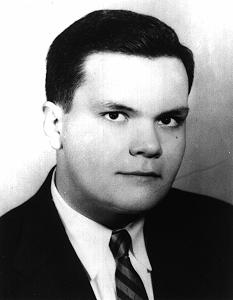
John Kennedy Toole, born in New Orleans, Louisiana, taught college English at Hunter College, the University of Southwestern Louisiana, and Domincan College. The Chicago Sun Times called his character, Ignatius J. Reilly, “…a Don Quixote of the French Quarter.”
As one reads short stories and novels, it’s obvious they don’t all begin en medias res. In the pen of a skilled writer, other options exist. The thing all well written openings have in common, though, is this: they hook readers.
The opening we’ll look at today is rarely used because it’s so difficult to pull off successfully. However, as we shall see, it has been done well. What opening am I talking about? The character opening.
In the character opening, readers are introduced to a character so interesting that readers want to keep reading and learning more about him or her. One of the main drawbacks of this opening is that it doesn’t immediately thrust readers into the plot.
Having said that, let me introduce you to a Pulitzer Prize winning book that used it, written by the late New Orleans author John Kennedy Toole. The book: A Confederacy of Dunces. This is a humorous novel featuring a comical character named Ignatius J. Reilly. He’s so unique and interesting readers want to follow him.
The first line of Chapter One reads thus: A green hunting cap squeezed the top of the fleshy balloon of a head…
Then Toole spends several paragraphs continuing his description in a comical vein.
As those of us from Mobile, Alabama claim Forrest Gump as one of our literary heroes, those from New Orleans claim Ignatius. I know this, because I lived in New Orleans for twenty-five years. Winston Groom, Forrest’s creator, was from Mobile.
A Tragic Ending
Because Mister Toole died at a young age, he never saw his novel win the Pulitzer Prize. It was rejected twice, first by Simon & Schuster and then by famed Louisiana journalist Hodding Carter, Jr. Suffering from depression, he took his own life in Biloxi, Mississippi. His mother believed in the novel and let novelist Walter Percy read it. With his help, it finally found publication. In 1981, Mister Toole’s novel was awarded the Pulitzer Prize posthumously.
A Gentle Request
Depression is a serious illness and should always be taken seriously. As one who has suffered from it, I am speaking from experience. Please, never tell a depressed person to “snap out of it.” People suffering from depression cannot just snap out of it. Instead, pray for them and try to get them help as quickly as possible. It saddens me that Mister Toole never found the help he desperately needed.
Don’t let depression rob you of your dream, your life. If you are going through this dark tunnel, get help from those who understand, who are willing to listen, and who will guide you toward your healing.
Bibliography
Toole, John Kennedy. A Confederacy of Dunces, New York: Grove Press Edition, 1980 by Thelma D. Toole.
If you had to choose which part of Aristotle’s three-part story structure is the most important, which part would it be? Well, if you said Act One, you’d be correct. Of course, the middle and end are important too, but if our novel’s opening sentence or paragraph doesn’t grab readers, they’ll likely put down our book and look elsewhere for entertainment.
One common mistake beginning writers make is throat-clearing. In literary terms, this means “coughing up” words before getting into the story. Writers who do this load lots of information, details, and wordiness in the opening page before anything actually happens. Doing this in the first draft is fine, but during the revision process writers should work to get rid of it.
When writing an opening, think about a favorite movie. What was its opening scene? How did it hook us? I mention movies because it’s one of the main forms of entertainment we writers compete with. Consider books too. Study their opening lines and paragraphs. Do they hook us? Sometimes when I visit a bookstore, if I’m not familiar with a certain book’s author, I’ll read its first page. If the first paragraph or so doesn’t grab me, I don’t buy it.
Although there are many ways to begin a story, the best way is the action opening. This opening begins in medias res. That is, in the middle of the action. It can begin with something spectacular, such as an earthquake, or something seemingly innocent like a knock on the door. It can also include dialogue, though this isn’t a requirement. We must either see a character in action or hint at something that’s about to happen. Also, be sure to mention your character’s name as soon as possible.
In my novel, Squire, A Mascot’s Tale, a dog story set during the Civil War, I didn’t clear my throat by writing long stretches of preamble before the story begins. I began in medias res instead. Let’s look at the book’s two opening paragraphs.
Excerpt from Squire, A Mascot’s Tale
“Well, I’d sure as sand say he is going with us.” Jesse Webb sauntered down the wooden steps of his father-in-law’s brick furniture store.
His wife folded her arms, her emerald green hoopskirt spanning its slatted walkway. “Oh, no, he’s not. Besides, how could you take the most popular dog in Coughlin? He might get killed.”
Analysis of Squire, A Mascot’s Tale
Main characters introduced: Jesse, Jesse’s wife, and the dog. By the sixth paragraph, we learn the dog’s name (Squire) as well as the name of Jesse’s wife (Rachel).
Setting introduced: the town of Coughlin.
Conflict introduced: Jesse and Rachel arguing over Squire.
Danger introduced: I hinted at danger for Jesse and Squire when Rachel says, “What if he gets killed?” Later, we’ll learn what the danger is—Jesse is taking Squire to war as his regiment’s mascot. Because mascots were common among soldiers on both sides of the Civil War, this storyline is believable.
We’ll look further at openings in the next post.
For anyone interested in purchasing Squire, A Mascot’s Tale, it’s available for purchase on The Author’s Cove Bookstore.
Our uncle’s gone mouse hunting again, so we’ll listen to your prattle. I hope the three of us aren’t crowding your space.
Three characters don’t crowd a story’s scene, not even four. But I’d be careful not to have too many in one scene because it can make it harder for readers to follow.
So, what happens when a third character enters into a dialogue scene? He/She can deepen the scene’s conflict and/or spin the story’s plot a different direction.
Dialogue– The Third Character
Bill sighed. “Now where are you going, Alice?”
“Back to the grocery store.” Alice snatched her purse off a chair in the den.
“Again? Today?”
“A woman’s got a right to shop.”
“Not as much as you do.”
“Well, humph! I forgot to buy eggs.”
“That’s just an excuse. The eggs can wait.” Bill settled back on the couch and grabbed the remote. He flicked on the television to the sound of cheers—a football game. “Where else do you plan on shopping?”
Alice jerked open the front door; she gaped at the visitor, George Taylor. Smiling, she let him enter.
“Hey, Alice! Your knight in shining armor has arrived.” George spread wide his arms as though he wanted a hug.
“I asked that woman a question,” Bill said.
George slid his arm around Alice’s shoulders and they embraced. “Your sister happens to be my little lady.” He winked at her. “Hey, what’s happening on the idiot box, Bill, my man?”
“Cowboys and Giants. First quarter.”
“Aw, Georgie-pie. My little brother here watches ESPN too much.”
“I already told you, Alice. I’ll quit watching sports when you quit shopping all the time.”
“That’ll be the day!” With a hearty laugh, George steered Alice outside to her car.
Stupid George. Bill upped the volume on his television in time to watch the Cowboys score a touchdown. He couldn’t let those two get married.
Observations on Third Character Dialogue
Conflict. I used lighter conflict, but the issue of Alice’s shopping remains the central focus.
Surprise. While some readers may have thought Alice and Bill were married in the previous dialogue, the arrival of George reveals that Alice and Bill are siblings. Thus, I used an element of surprise here. Readers enjoy getting surprised.
George. I showed his personality through dialogue. Instead of taglines to reveal when he’s speaking, I used beats. Taglines are fine, but don’t overdo them. The same goes for beats, for too many beats can become a distraction. If dialogue is well written, readers should be able to know who is speaking without having to rely on such literary devices. So, use them carefully, and strategically, throughout the dialogue scene.
Bill. In the last paragraph, I italicized Bill’s direct thoughts. We’ll discuss direct thoughts later in a future post.
Are we finished yet? I couldn’t find a mouse.
Yes, this wraps up my series on dialogue, at least for now. Hope everyone found something useful in it.
“Will this be the last time you’ll go today?” Bill sat on the couch and flicked on the television with his remote control.
“Yes.” Alice grabbed her purse.
“Well, goodbye then.”
Goodbye.” Alice walked out of the den.
BORING!
Oh, wow! What’s happenin’ in this dialogue? I mean, what’s goin’ on? Man, is this boring or what?
Yes, it’s boring. Why? Because it has no conflict or significant action, and we get no sense of who Alice and Bill are as people. We must work on these things in this next revision step, and continue working on them no matter how many revisions it takes. If we’ve written their biographies and have come to know them well, this will make writing their dialogue a little easier.
My Revision
“Now where do you think you’re going?” Bill said.
Alice snatched her purse from off a chair in the den. “Back to the grocery store.”
“Again? Today?”
“A woman’s got a right to shop.”
“Not as much as you do.”
“Well, I forgot to buy eggs.”
“Oh, that’s another one of your stupid excuses. The eggs can wait. The hens’ll lay more of them tomorrow.” Bill plopped on the couch and seized the remote. He flicked on the television to the sound of cheers—a football game. “Where else do you plan on wasting my money?”
Alice jerked open the front door.
“I asked you a question, woman.”
“I’ll answer it when you quit watching ESPN all the time.”
“I’ll quit watching sports when you quit shopping so much.”
“A woman’s got a right to shop.”
“Yeah. I’ll be shredding your credit cards tomorrow, woman. A man’s got a right to watch sports.”
Observations on Revision
Conflict: Conflict doesn’t always have to be physical or verbal, but in my revision I decided to have Alice and Bill argue.
Characterization: We learn something about Alice and Bill. Based on this excerpt, Alice may be a shopaholic because Bill complains about her “wasting my money,” but we aren’t sure yet so we need to keep reading. Bill, too, may have a problem. He may be a sports addict because he watches ESPN all the time. Again, we’ll have to keep reading to find out.
Three questions advance this story: (a) After Alice leaves the house, Bill threatens to shred her credit cards. Will he follow through with this threat? (b) If Bill does follow through with it, how will Alice react? (c) Do Alice and Bill have addictions that cause problems between them? If so, how will they resolve their issues?
Their conversation, then, sounds natural but it also advances the plot and reveals something about the characters, which is what dialogue is supposed to do.
Now that revision was pretty good, Cunningham. But haven’t you forgotten something?
Yes, I did forget to mention something–beats!
Beats
Definition: A beat is an action a character does that adds to a dialogue’s impact and tells us something about the character. Beats should be carefully considered for each character in the story, not just thrown in to take up space.
Example: If a character is insecure, beats should reveal that insecurity. How would an insecure person behave in different settings and situations? Some insecure people hide their insecurities by bragging, whereas others may be shy. How would a braggart behave at a party, for instance, if the braggart is insecure? How would a shy, insecure person behave in a party? Not all shy people are insecure. Some folks just have a quiet nature and don’t talk a lot—it’s part of who they are. Perhaps the same could be said about braggarts as well.
My Beats
Sighing. Bill is either worn out physically or emotionally. Or, he may just be frustrated. Or both. We’ll need to read further to find out.
Alice snatched her purse. Alice is either angry or in a hurry, depending on the story’s context. When she slammed the door we see that she’s probably more angry at Bill than she is in a hurry.
Bill plopped on the couch and seized the remote. Bill’s pretty upset with Alice, too.
See how these beats are put in the right place and how they work? Also notice they can be used to replace taglines. One of the literary trends these days is to avoid taglines and only use beats, but for what it’s worth, I disagree with this. Just like taglines, though, be careful not to overdo them, inserting them after every piece of dialogue a character utters because it gets distracting.
If the dialogue is well written, with every character having his/her own unique speech rhythm, pet words and expressions, etc., we won’t need to use too many of either. When we do use taglines and beats, however, use them in strategic places on the page.
All right. Enough already. What about three or more characters in a story?
Well, cat, we’ll get in that in my final post. Now go catch a mouse !
While you revise that boring dialogue you wrote last week, I’ll go hunting for mice. It better be more interesting this time. Now, where did that mouse go?
After such poorly written dialogue in the previous post, let’s revise it step by step. Today, we’ll look at taglines, those little words that identify the speaker.
Bad Example
“Where are you going?” Bill inquired.
“To the grocery store,” Alice answered.
“Why are you going again?’ Bill remarked.
“I forgot to buy eggs.”
“Will this be the last time you’ll go today?” Bill sat on the couch and flicked on the television with his remote control.
“Yes,” Alice said with conviction in her voice.
“Well, goodbye then.”
Goodbye.” Alice walked out of the den.
Observations on Bad Example
When I read such dialogue, as shown above, the first mistakes I see are its taglines. Although we read them in books and even in bestsellers, these taglines are wrong. Why? They aren’t simple one-syllable taglines, and because of this, they draw attention to themselves. They cause readers to pause by saying, “Hey, look at me.” They jerk readers out of our story world.
A tagline serves one purpose: identify the speaker. Fancy, multisyllable taglines aren’t needed. We can even make taglines “disappear.”
How? By using simple ones. The best taglines are he said/she said, or in the case of a question he asked/she asked. When someone reads a story, they almost disappear because readers tend to gloss over them, and this is what we want.
Can you find another mistake in the example? Look at the third to last sentence: with conviction. Never use emotional with phrases or -ly adverbs to tell readers what a character feels. Instead, show the character’s emotion through what the character says.
The one exception to what I’ve said above concerns a character’s volume of speech. Since it’s impossible to show how loud a character speaks through dialogue, we have to tell it. We can use an exclamation point, of course, but it’s best if we don’t use this punctuation mark often. Instead, use simple taglines such as yell, whisper, said softly, etc.
Once we establish who’s saying what, don’t keep using taglines unless, of course, we have more than two characters in a scene. I’ll discuss this later.
Mouse got away from me. So go ahead. I’m listening. Your revision betterbe good.
Revision of Taglines
“Where are you going?” Bill asked.
“To the grocery store,” Alice said.
“Why are you going again?’
“I forgot to buy eggs.”
“Will this be the last time you’ll go today?” Bill sat on the couch and flicked on the television with his remote control.
“Yes.” Alice grabbed her purse.
“Well, goodbye then.”
Goodbye.” Alice walked out of the den.
That sounded a little better. I think it still needs lots of work, though. Hey, did a mouse just run under your chair?
My feline friend is right. More work remains, so we’ll continue our revision tomorrow.
Does an author’s dialogue look like it’s easy to write? It does? Good, because that means the author worked hard on it. In this series, I’ll share some basics of writing good dialogue.
Most professional writers are familiar with the expression “Show, Don’t Tell.” This comes from the great Russian writer, Anton Chekhov, who said: “Don’t tell me the moon is shining; show me the glint of light on broken glass.”
One of the ways we “show, don’t tell” is through dialogue.
The Purpose of Dialogue
It should sound like real conversation.
It should reveal something about the character.
It should have conflict, either major or minor.
It should be interesting.
Poorly Written Dialogue
“Where are you going?” Bill inquired.
“To the grocery store,” Alice answered.
“Why are you going again?’ Bill remarked.
“I forgot to buy eggs.”
“Will this be the last time you’ll go today?” Bill sat on the couch and flicked on the television with his remote control.
“Yes,” Alice said with conviction in her voice.
“Well, goodbye then.”
“Goodbye.” Alice walked out of the den.
Hey, man. That was boring! Now where’s my milk?
In future posts, I’ll critique and revise my “ho-hum” example. For now, let’s look at some basic principles.
The Basics
Direct dialogue is when a character speaks. This goes inside double-quotation marks.
Punctuation that ends a character’s dialogue goes inside the closing quotation marks.
Each time a character, a new paragraph begins.
When the speaker is identified, such as “Bill inquired” or “Alice answered,” these identifiers are called taglines or speaker attributions.
When a character performs a physical action(s) in addition to dialogue, these action(s) are called beats.
I committed several dialogue mistakes in my example. Can you spot them? We’ll discuss them in more detail tomorrow.
One thing guarantees that an agent or editor will reject a manuscript: the writer failed to research the market. Rather than finding out what the publisher needs, the writer just submitted his/her work with a hope and a prayer. Professional writers can’t afford to do this.
Fortunately, numerous resources are available to help us. Two of them are: Writer’s Market and The Christian Writer’s Market Guide. Also, such magazines as Writer’s Digest and The Writer.
I recommend subscribing to one of the magazines I mentioned. Not only do they offer great writing instruction, they also publish interviews with agents, editors and authors, provide contest information and deadlines, publicize conferences, and similar things.
Also purchase one of the aforementioned current market guides. They provide contact information, publisher website information, the types of things they publish, and how much they pay (if they do). Study the guide, find a publisher you’d like to write for, then visit its website. From the website, download its writer/author guidelines.
Print the guidelines and follow them perfectly. Some magazines will want a query letter first whereas others will want the entire manuscript. Each magazine has its own format for authors to follow.
Regarding magazines, purchase a copy or else ask the editor to send you a sample. Sometimes they’ll send you one for free while other times, an author may have to buy a copy. Once you get it, study it.
Tips for Studying a Magazine
Content. What kind of articles does it publish? Humor? Pet? Lifestyle? Or perhaps it publishes other kinds of articles. It’d be unwise to submit an article on “Four Ways to Catch Rainbow Trout” to a fashion magazine, for instance.
Read. Read the articles and short stories (if it publishes short stories).
How are the articles organized?
What kind of openings and endings do the articles use?
Do the articles have subheads?
Are the articles straightforward and simply written, or do they use long sentences and long, multisyllabic words?
Are its short stories literary fiction or commercial fiction?
What fiction genres does it publish?
Study. Study its advertisements. These reveal a lot about a magazine’s target audience. If most advertisements cater to women, then it will feature items of interest to them. The brands advertised tell us about the audience’s income level, tastes, etc. This helps us know what types of articles to write and submit.
Spend time doing market research. In the long-run, it’s worth the time, money, and effort.
Professional writers not only write—they study the craft. No matter how long we’ve been at it, we writers know that good writing takes a long time to master, so the more we study and learn, the quicker we’ll master it. Yet, once we think we’ve mastered it, we’ll discover how little we know. And this is also a professional, and mature, attitude—a willingness to learn more.
Study Tips
Subscribe to and read writing magazines. I recommend either The Writer or Writer’s Digest.
Read books on writing. Two classics I recommend are On Writing Well, by William Zinsser, and Elements of Style, by E.B. White. Writer’s Digest also publishes excellent writing books, so check them out also.
Attend writing conferences. At these events, you’ll take writing classes, meet other serious writers and successful authors, develop lifelong friendships, and can even have face-to-face time with agents and editors.
Join a good critique group. Two great groups for Christian writers are American Christian Fiction Writers and Word Weavers International. I am a member of both groups.





 The Author's Cove: John "Jack" Cunningham on Writing & History