

“I only read nonfiction.” Great! I, too, enjoy nonfiction. However, I also read (and write) fiction. So, why do I write stories? For many reasons. Read on, to find out what they are.
Eight Reasons for Writing Fiction
- Thousands of people enjoy good stories. Thousands will read a novel before they’ll read nonfiction. This gives fiction writers a great opportunity to reach an audience in ways nonfiction writers can’t.
- Fiction enables novelists to share their message without sounding preachy. About his Narnia series, C.S Lewis wrote: “At first there wasn’t anything Christian about them (Narnia’s characters); that element pushed itself in of its own accord. It was part of the ‘bubbling.'” In other words, since Lewis was a Christian, he wrote Narnia from a Christian perspective. The Christian symbolism in these books “just happened.”
Like Lewis, our points of view slip into our work because what we write is part of who we are and how we view the world. Narnia, with all of its symbolism, doesn’t preach, but Lewis’s faith is evident. So it will be with us. When we write, we share a part of ourselves and our message with the story-loving world.
- To educate people in a fun way. In Education of a Wandering Man (Bantam, 2008), Louis L’Amour wrote: “Historical novels are, without question, the best way of teaching history, for they offer the human stories behind the events and leave the reader with a desire to know more.”
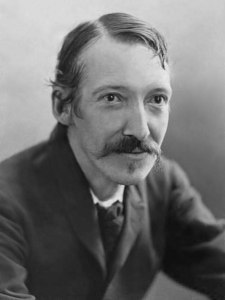
As a writer of historical fiction, I absolutely agree. I credit Robert Louis Steveson and Alexandre Dumas as two of the sparks that got me interested in history when I was in my early teens. The third spark was a nonfiction book written by Pulitzer Prize winner, Bruce Catton, which I also read in my early teenage years.
- Jesus told His disciples, in Matthew 5:13, that they are the “salt of the earth.” Salt is a preservative. Christian writers and artists can be salt in our current culture. Through fiction, we participate in producing literature that helps restrain the onslaught of society’s ungodliness.
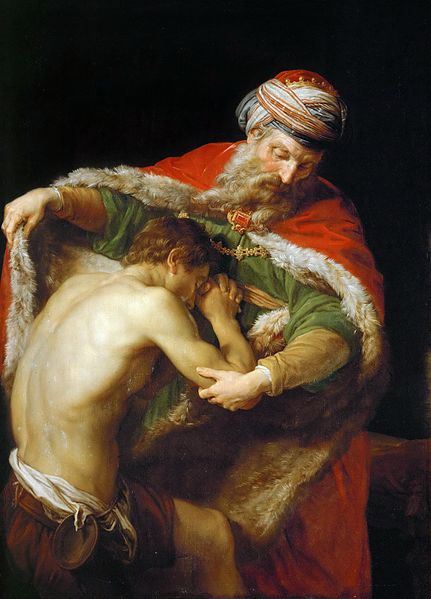
- Jesus believed in and taught by example the importance of a story. His stories, called parables, are loaded with truth. His listeners could relate to the parables’ characters: the farmer who sowed the seed, the son who left his father and went into a far country, the good Samaritan, and so on
- Not every work of fiction carries a message. Some novels simply entertain. And to that, I say: what’s wrong with some relaxing entertainment? Everyone needs a break from life’s busyness. People attend movies or watch television or go fishing or do other things to “get away from it all.” Reading a good novel is no different.
- God gave some people creative minds—gifts in music, gifts in painting landscapes and portraits and sculpture, and gifts in other artistic endeavors. One endeavor is writing, which He expects His literary children to use to further His kingdom, either through fiction, nonfiction, and/or other literary genres. If God didn’t think these gifts were important, He’d have never given them.
- God is creative. Just look around you and marvel at all the beautiful things He created: birds, fish, mammals, the stars, and the solar system. He isn’t against any form of creativity, so long as that creativity honors Him.
Creativity and writing fiction are gifts, just as other callings and skills are gifts. To despise fiction because one sees it as useless is despising this gift God had given certain authors. Fiction isn’t useless. As I hope we’ve seen, it plays an important role in our society and culture.
Having said that, it’s perfectly fine to just read nonfiction. Everyone has their own preference in literature. I prefer reading and writing both. Though I don’t write poetry, I don’t see it as useless either. God uses every gift He’s given His children if they allow Him. Let’s respect all the gifts people use for His glory.
Next Week: How Fiction Techniques Improve Nonfiction
Bibliography
Ryken, Leland, editor. The Christian Imagination, “Creating Narnia,” by C.S. Lewis, Of Other Worlds, New York: Harcourt Brace Jovanovich, 1996. Ryken, 2002

 The Author's Cove: John "Jack" Cunningham on Writing & History