
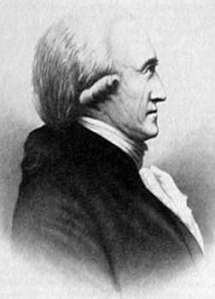
Benjamin Hawkins, 1754-1816
Born into a wealthy North Carolina family in 1754, Benjamin Hawkins later attended the College of New Jersey (modern-day Princeton) where he studied French. During the American Revolution, knowledge of this language served him well as George Washington’s translator until Lafayette arrived to perform that duty.
In 1778, he served in North Carolina’s House of Representatives. Between 1783-84, and in 1787, he was a delegate to the Continental Congress. In 1789, as one of 271 North Carolina delegates to the Fayetteville Convention, he voted to ratify the United States Constitution.
When he won an election to the United States Senate in 1789, he helped negotiate treaties with the Cherokees and Creeks, two of the Civilized Tribes in America’s southeastern region. President Washington appointed him General Superintendent of Indian Affairs, serving the tribes south of the Ohio River, in 1796.
To carry out his new responsibilities, Hawkins moved to Georgia and settled on the Flint River. For many years, he lived with a woman named Susan Lavina Downs and finally married her near the end of his life. Some historians believe she was Creek, though there is some disagreement on this. Together, they had seven children—six daughters and one son. During his time as an agent, he learned the Creeks’ language and became a respected member of their tribe.
When Hawkins received his appointment the deerskin economy of the Indians was coming to an end. He sought to “civilize” the Creeks by persuading them to turn to farming and cattle herding. However, these tribes were already farmers, so he encouraged them to learn how to use white men’s farming tools, such as plows, and white men’s methods of raising crops, including such commodities as cotton. He likewise wanted the women to learn how to use spinning wheels and do other things white women did. He was, in essence, trying to make them American in the hope that they’d eventually give up their culture and give their land to the white man.
THE CREEK WAR (1813-1814)
When the Creek War broke out he helped organize Creeks who supported the white settlers against those who did not (Red Sticks). He was also present at the signing of the Treaty of Fort Jackson in present-day Wetumpka, Alabama, which ended the conflict.
In 1816, Benjamin Hawkins died.
Sources
Ethridge, Robbie. “Benjamin Hawkins.” New Georgia Encyclopedia, last modified July 15, 2020. https://www.georgiaencyclopedia.org/articles/history-archaeology/benjamin-hawkins-1754-1816/
Foster, H. Thomas II. “Benjamin Hawkins.” Encyclopedia of Alabama. Last modified, February 15, 2024. Hawkins, Benjamin – Encyclopedia of Alabama
“Benjamin Hawkins” Wikipedia. Benjamin Hawkins – Wikipedia

 The Author's Cove: John "Jack" Cunningham on Writing & History