Making the Goals

Photo by rawpixel.com on Pexels.com

During my high school years, I ran cross-country. It took me several weeks of hard work before I could run several miles without stopping. I’d arise before sunup with my teammates, and each day I’d set a personal goal. First, I ran to a certain telephone pole, stop for a breather, then resume my run toward the next goal. For a couple or three days, I did this, then I’d set a more challenging goal, pushing myself hard till I reached it. Of course, I’d stop for breathers. Before long, I reached the point where I could run several miles at a stretch.

To be a successful (and productive) writer, we need goals, too.

First, a writer needs short-range goals. Such goals should be reasonable and achievable. If the goals are too high, and we don’t achieve them, it makes room for discouragement to settle in. These short-term goals should be daily goals. For example: “I’ll write three pages a day,” “I’ll write five hundred words a day,” or something similar.

Photo by Ashley Williams on Pexels.com

Mid-range goals are weekly and monthly goals. Short-term goals should target mid-range goals. If we’re working on a 2,000 word short story, for instance, make an achievable goal of writing five hundred words a day and by week’s end, the story will be written. In the case of my novel writing, I tend to write in scenes. I have a goal of writing at least one scene a week. I write my first draft in a manner most writers don’t—I revise while I write. However, writing books and writing teachers generally discourage this. Since this method works for me, though…hey, I do it!

Which brings me to long-range goals. These are goals writers hope to achieve within a few months or a year. They set short-term and mid-range goals toward achieving their ultimate objective. Want to write a book? Take small steps toward that goal. Determine to write at least one page every day, and by the end of the year a book will be written.

What happens if short-term and mid-rage goals aren’t met? Professional writers understand that things happen. On days when they don’t reach their goals, they plow ahead the next day. They refuse to let discouragement get the better of them.

Photo by Pixabay on Pexels.com

Finally, writers use a daily planner and write down their writing goals for each week, or if not this, they use other scheduling methods such as bulletin boards, white boards, or planners on their computers. This helps them track their goal-making progress.

So set some writing goals today, and move forward with your craft!
Metaphors, Part 2, Types of Metaphors

A freshly phrased metaphor used in the correct spot in our narrative can not only touch our readers’ emotions and add depth to our story, it can also paint a more vivid description. In this post, I’ll touch on three types of metaphors, though many more types are out there in the literary world.

The Absolute Metaphor.

Definition: The tenor (subject of the metaphor) has no connection  with the subject’s vehicle (image used in the metaphor).

Example: John is a ticking time bomb.

There is no connection between John and a time bomb. He won’t literally explode. John’s metaphorical explosion, however, might be building to a fit of rage. So there is the connection–an explosion of rage and a bomb’s explosion.

The Mixed Metaphor

Avoid using this one.

Definition: A mixed metaphor combines two or more metaphors that have no logical connection to each other.

Example: Don’t count your chickens before they hatch and swim away.

Chickens hatch, but they don’t swim. Thus, I mixed two images, chickens and fish. We see no logical connection between them.

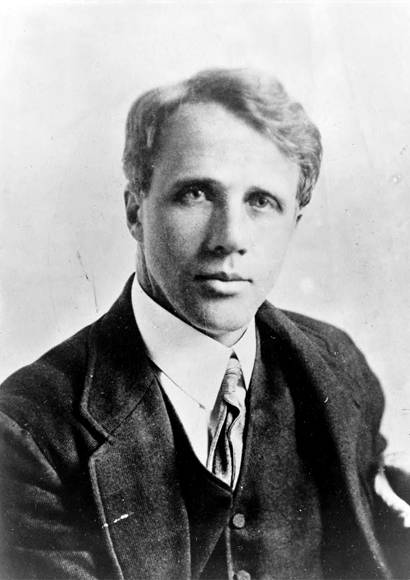
Robert Frost, circa 1910

The Extended Metaphor

Definition: These metaphors extend for longer periods in a sentence, paragraph, or page by using two or more parallels between two unlike things. They’re often found in poetry.

Example: Robert Frost’s poem, “The Runaway.”

Frost uses a horse experiencing his first snow and the fear that he experiences to  represent a fearful child who has run away from home with no one to  comfort him.

To read this poem and hear it read, visit this link: https://www.poemhunter.com/poem/the-runaway-11/

I hope this little series on metaphors has been helpful. Thanks for visiting!

Metaphors, Part One, Anatomy of a Metaphor

Figures of speech add spice to our writing. And they’re fun to write. What is a figure of speech? It’s wording something in such a way that it shouldn’t be taken literally. For example:

John is a ticking time bomb.

John isn’t literally a ticking time bomb, but metaphorically he is if he’s about to “explode with rage.”  

Metaphors are the strongest of all figures of speech, and they come in many types. If they’re written well, they’ll draw us deeper into our story because they’ll touch our emotions.


What is a metaphor? A metaphor compares two different things, saying one thing (or person or place) is something else.

Using our above example, let’s analyze a metaphor. It consists of two parts, the tenor and the vehicle. These terms were coined by famous English poet and rhetorician, I.A. Richards (1893-1979), in his work The Philosophy of Rhetoric.

John is a ticking time bomb.

Here, John is the tenor: the subject of the metaphor. And he’s compared to the vehicle, time bomb: the metaphor’s image.

We’ll delve deeper into metaphors next week.

On Writing: Ernest Hemingway

Hemingway Writing For Whom the Bell Tolls

“All good books are alike in that they are truer than if they had really happened and after you are finished reading one you will feel that all that happened to you and afterwards it all belongs to you: the good and the bad, the ecstasy, the remorse and sorrow, the people and the places and how the weather was. If you can get so that you can give that to people, then you are a writer.” Taken from “Old Newsman Writes,” Esquire, December 1934.

A Literary Shock

The other day, I did something I’ve never done before. I took a book back to a bookstore for a refund. Usually, when I buy a book and end up not liking it, I toss it in the trash. But this book was an expensive hardback. Knowing how much money I’d wasted, I couldn’t relax till I got it back.

This book’s poor formatting and editing shocked me, but what shocked me even more was its high Amazon ranking and its claim to have won an award. It held loads of five-star reviews. In fact, most of its numerous reviews were five-stars. One three-star review stood out, though,  because I agreed with the reviewer. The book needed some serious editing.

What was wrong with the formatting? The pages looked like someone just printed them off their computer’s printer—no justified right margins, no professional-looking fonts.

What was wrong with the writing? Here are a few issues I found:

  1. Some sentences ended with double punctuation marks, such as “?!”
  2. Other sentences were cut off, leaving only a phrase or a  clause
  3. Characters “smirked” way too often.
  4. Some sections of dialogue were too long, and much of it was poorly  written.
  5. Too many adjectives were strung together to modify one noun.
  6. The characters were flat.

There may even be more things wrong, but I couldn’t get past the second chapter. Some reviewers said the second half of the book got better, so perhaps I’m not being fair. I just know that when I saw all these basic editing oversights and the poor formatting, my interest quickly waned.

Two positives about the book:

  1. The prelude was excellent, which is why the chapters  which followed were such a disappointment.
  2. The taglines were well-done. The author often used the  simple words “said” and “asked.”

Will we ever write a perfect book, free of all grammar, punctuation and spelling mistakes? No. We’re human, after all. I know I have a few mistakes in some of my published work. However, if mistakes riddle our pages they becomes a serious issue.

However, my experience should teach all of us indie authors to work hard to make our work as professional as possible lest someone like me asks for a refund on our book.

Procrastination: One Writer’s Thoughts

“I’ll do it tomorrow.”

How many times have we heard that statement, or a similar one? I’ve said it before, so I plead guilty. However, if we expect to succeed as a professional writer, we can’t afford “to do it tomorrow.” We must write. And we must do it today, not tomorrow, because when tomorrow comes we’ll likely repeat that same mantra. Hard study and work, these are the keys to making it as a writer.

In fact, so important is hard work that the Bible’s Book of Wisdom (aka Proverbs) repeats the need for diligence twice:“[Yet] a little sleep, a little slumber, a little folding of the hands to sleep: So shall thy poverty come as one that travelleth, and thy want as an armed man” (Proverbs 6:10-11, KJV). In Proverbs 24:33-34, we read these exact same words.

As writers, then, let’s not be lazy. Let’s not procrastinate. The only way we’ll sell our articles and stories and books is to write them, then submit them to agents and publishers. Here are a few of my thoughts on the subject.

DON’T BE INTIMIDATED BY FAILURE.  See it as something positive. Often the  best way to learn and grow is through failure, for it is through failure that we discover mistakes and learn how  to correct them. These lessons learned can then be applied to our manuscripts. Failure is not failure unless we allow it to be. Use it as a learning experience

HAVE PASSION. Without passion, nothing ever gets done, or if it does, it’s not done well. I see three ways to address this issue. (a) Start writing anyway, and see if passion   begins driving us. Sometimes it will. (b) Ask the Lord to put a passion within us if writing is His will. (3) Quit writing. If passion never comes, there’s no sense in trying to write professionally.   Writing requires lots of time, lots of sacrifice, and lots of mental  “elbow grease.” Those without passion are those who procrastinate.

NEVER SAY “I’M NOT GOOD ENOUGH.” Only literary geniuses write  professionally “overnight.” For most of us, learning to write professionally takes a long  time. The only way we’ll get good enough is to write every day. Once we  understand  this, we’ll be less likely to procrastinate

DON’T GET INTIMIDATED. If a big writing project looks overwhelming, don’t get  intimidated. Tackle it! How? A little at a time. Write a certain amount each day – a  certain number of words, a certain number of pages, a certain number of chapters – whatever works. Eventually, the project will reach its end. If a deadline is involved, figure out how much can be done each day to reach the deadline, then write accordingly.

Don’t put things off, friends. Tap those laptop keys. Till next week!

Beats, Part 2: Character Enhancement

Last week, I discussed the dangers of overusing beats. Though we must use them, we must also be careful to place them at the right spots in our narrative’s dialogue.

Another “beat issue” we need to avoid is this: writing trite. Trite words and phrases and figures of speech are easy to spot. They’re the first things that come to our mind while we write. Why? Because we’ve heard them so much and read them so often, they’re stored in our subconscious and usually pop out on the page during our writing process. Using them in our first draft is fine, but we do well to change them during our revision.

Photo by Skitterphoto on Pexels.com

What are some trite beats? A few examples: he smiled, she shrugged, he laughed, she giggled, he clenched his fists, she sighed, he frowned, etc.

Personally, I think using such beats occasionally is fine, but they shouldn’t be prevalent in our story.

Good beats enhance our characters. They are fresh, original. Through well written beats, readers gain a better understanding of our story’s actors, which is why we need to know them intimately ourselves. Readers will observe their personalities, quirks, character traits, likes and dislikes, etc.

Here are a few examples:

John spooned the whipped cream off his strawberry shortcake and disposed of it in a sandwich bag. He wrung his hands. “Ah, now I can enjoy my dessert.”

Here, instead of telling readers in a straightforward manner that John doesn’t like whipped cream, they first see this by his beat and then by implication through his dialogue.

“I’ll be back.” Jane crept over to a corner in the library, pulled out her cell phone and punched in the number. The sign at the library’s entrance said “no cell phones.” Well, she wouldn’t get caught.

Here, we learn that Jane doesn’t abide by the rules. The library she’s in does not allow cell phones, but what is she doing? She’s using one! Without our telling readers she doesn’t care about rules, they observe this trait through her actions.  

One more “beat issue” to avoid: do not use them after a tagline(speaker attribution), such as in the following example:

Wrong: “I’ll be back,” Jane said. She walked down the hall to answer the doorbell.

Correct: “I’ll be back.” Jane walked down the hall to answer the doorbell.

Use beats, by all means! But use them carefully and wisely, and write them in a fresh manner.

Till next week, everyone.

Beats, Part 1: Don’t Beat Me Too Much!

Many years ago, I visited a theme park. Though I can’t remember which one, I do remember this – a child constantly banging on a toy drum. I don’t know what his parents who accompanied him were thinking, but I know what I thought. Annoying!

Likewise, if we use too many beats in our writing, they can annoy our readers. Then again, if we don’t use beats, our characterization suffers. Just as a professional drummer in an orchestra or band knows when to hit his/her drum and when not to, we professional writers should learn when to “beat” and when not to. We must be careful to avoid “beating too much.”

What is a beat? It’s a character’s action/body language sprinkled in amidst his/her dialogue. Here are two examples. The beats are italicized.

Betty frowned. “I don’t like what I’m seeing, Carl.”

Betty bit her nails and paced back and forth. “Carl, I’m…I’m not sure we can get married.”

If beats come before or after every line of dialogue, though, they get irritating.

Look at this example:

Betty bit her nails and paced back and forth. “Carl, I’m…I’m not sure we can get married.”

“Why not?” Carl opened his refrigerator and got a bottle of water.

“Because I’m not sure I love you.” Betty stopped pacing and lowered her hands.

“What!” Carl slammed his refrigerator door. “I love you, Betty. You know I do.” He set his water on his kitchen counter.

“Well, I…er…” Betty stared at the cabinets behind him, her face twitching.

Carl stepped closer to her. “Are you seeing someone else?”

Betty let go a gut-wrenching sob. “No-o-o!”

As Betty’s and Carl’s dialogue continues with added beats, even though there is conflict, it gets tiresome to read.

Now then, let’s read this same dialogue without the beats.

“Carl, I’m…I’m not sure we can get married.”

“Why not?”

“Because I’m not sure I love you.”.

“What! I love you, Betty. You know I do.”

“Well, I…er…”

“Are you seeing someone else?”

“No-o-o!”

No beats– the dialogue is thin and just lingers in the air. A beat or two would deepen it. A third example demonstrates this.

Becky bit her nails and paced back and forth. “Carl, I’m…I’m not sure we can get married.”

“Why not?”

“Because I’m not sure I love you.”.

“What! I love you, Betty.” Carl grasped Betty’s hands, his blue eyes pleading.  “You know I do.”

“Well, I…er…”

“Are you seeing someone else?”

“No-o-o!”

Learning when to use beats takes practice and also a sense of timing. Do use them in your writing, but don’t pound readers with them like banging away like on a toy drum.

Tag, You’re It! Some Rules Regarding Taglines

Taglines, also known as speaker attributions, have one literary function. They identify which character is speaking. That’s all. Here are a few rules regarding their use.

1.       Don’t use multisyllable taglines. A simple “he said/she said” is usually all that’s needed.

          Reason: Multisyllable taglines, such as “he remarked” or “she  insisted,” will jerk readers out of our story because they  draw attention to themselves. When we use simple taglines, such as  “said” and “asked,” readers tend to gloss over them. Thus, they   “disappear.”

2.       Don’t use adverbial modifiers, such as “John said angrily” or “Sue said happily.”

          Reason: Well-written dialogue doesn’t need them. If John is angry,   show that in his dialogue or if Sue is happy, show that in her dialogue. Dialogue, after all, is one of those ways we follow that old literary maxim “show, don’t tell.”

3.       Sometimes we’ll need to use volume taglines such as “he shouted/she shouted” or “he whispered/she whispered.” When we use volume taglines, keep them simple.

          Reason: Because dialogue is showing, not telling, it’s impossible to show a character’s speech volume. Thus, volume must be told.

4.       Don’t use taglines with every line of dialogue.

          Reason: This gets tedious to readers after a while.

5.       Spend a lot of time getting to know your characters: what makes them tick, education, hobbies,  personality, how they speak, etc. Writing their biographies is a good way to accomplish this.

          Reason: If each character has his/her own unique speech patterns, pet words and  phrases, and so on, this will help avoid overusing taglines. Why? Because readers will immediately know which character is speaking

A Final Thought: Do use taglines. Readers need to know which character is speaking. Just be careful when using them, and don’t overdo it.

Story Openings, Part 2, More Opening Techniques

In last week’s post, I stated that the action opening is the best opening because it begins in the middle of things, that is, in the middle of events happening to a character.

However, not every novel must open this way. The one rule about a good opening is this: it must always hook the reader and cause him/her to want to read more.

Here are two more types of openings:

1.         Opening lines. If written well, they can draw us in immediately. One of my favorite opening lines comes from Louis L’Amour’s novel, Sackett’s Land. Here’s what Mister  L’Amour wrote:

It was my devil’s own temper that brought me to grief, my temper and a skill with  weapons born of my father’s teaching.

            What makes this opening work? It not only hooks us, it also packs lots of important information into one concise sentence.

            a.         We’re introduced to the main character, and by the third paragraph we learn his   name is Barnabas Sackett. Since Barnabas is telling us the story, it’s written from his point of view.

            b.         The Hook. Barnabas has come to grief, but we must read on to find out what kind of trouble he’s in and how he got into it. We have a hint of danger, that something  is about to happen.

            c.         We learn three things about Barnabas, all relevant to his story. We learn (1) that  he has a temper, (2) he’s skilled with weapons, and (3) his father taught him how  to use them. L’Amour sets the stage for future events.

            d.         L’Amour’s narrative style continues for several pages before dialogue begins. Though Barnabas is writing about past events, he’s not writing backstory. Why not? Because backstory interrupts a story’s progress. Barnabas’s story doesn’t do that. He’s writing from another setting, looking back on past events, and these   past events are the story. The hook is that Barnabas will tell us some exciting  things that happened to him. Also, we see lots of action in the opening scene.

2.         Description. I’m not contradicting my previous post. Throat-clearing happens when we write numerous pages and paragraphs of static description before we get into our story. Static description is description without movement, like looking at a statue and listing its features. However, if we write our opening description  correctly, we can use it. A good descriptive opening has three features: a feeling of  action or movement, introduces at least one character, and it must be brief. Here’s how I started Book 2 in my Southern Sons-Dixie Daughters series, River Ruckus, Bloody Bay:

As the British steamer Bahama rounded forested Hog Island, she entered Nassau’s harbor and Master Alexander Jessup, Confederate States Navy, widened his eyes.  Side-wheelers and sailing sloops, screw steamers of every length and tonnage, hundreds it looked like, crowded it. British, Yankee. And blockade-runners, easily recognized by their long, low profile, squat masts, and bluish-white or lead color meant to blend in with the dawn’s light. Designed for speed, Alex had seen some of them under construction in Scotland during his recent stay in London.  

     Sails furled, they gently rocked on its clear as glass swells. Several ships steamed out, their funnels streaming smoke. Nassau caught his eye. The warm tropical sunrays bathed an array of buildings painted various colors and swaying palms; ladies twirling parasols, their escorts alongside, strolled its nearby beach. No longer was it that sleepy little Bahamian village he’d remembered from before the war.

     A half hour later he and Stribling worked their way up a curbed, people-packed walkway beneath royal poinciana trees’ brilliant red-orange canopies and past colorful limestone buildings. The whole island of New Providence, Alex recalled, was mostly limestone. Buggies jostled and maneuvered up a macadamized road. Some passersby curiously eyed the cast net draping Alex’s sea chest. A train of wagons carrying boxes stacked atop boxes marked “C.S.A.” headed for the wharves.

     “I imagine they’ll be loading those crates on one of our runners,” Stribling said. “They’re certainly not trying to hide whose side they’re on.”

And so the dialogue continues between my characters, Alex and Stribling, as we move into the story. The Hook: an exotic location that plays a key role in America’s Civil War.

Till next week, friends, thanks for visiting my blog!