Stickball, A Native American Sport

In this excerpt from my work-in-progress, tentatively titled Ruffians, Redsticks and Circuit Riders, I describe a popular game played by two Choctaw villages. Stickball was also called “little war.” The Southeastern tribes in the early 1800s and earlier played it to settle disputes with other villages in a peaceful manner. These tribes still play it today. Lacrosse traces its origin to this sport.

Unlike our modern times, though, early stickball games had few rules—players could tackle each other, whack each other with their two-feet long hickory sticks, and similar things. Hundreds, even thousands, of men on both sides participated in the contest.

The players would fashion a rawhide cup at the end of their hickory sticks. The ball, also made of hide, was stuffed with deer hair. Sometimes, even, a rock. This game was so rough, players got injured. The object of the game was to fling the ball against a goal, such as shown in my excerpt. If the ball struck it, a point was scored.

During the 19th century, the United States government tried to ban the game. Today, it thrives among these tribes from the American Southeast: Chickasaw, Cherokee, Choctaw, Creek, and Seminole. They even have tournaments, notably the World Series of Stickball, held in Mississippi.

Recently, as part of my research, I visited the Poarch Creek reservation in Poarch, Alabama and spoke with the Creek curator of its museum. She told me her people, at least those living in Alabama, play stickball just for fun and the women are allowed to play with the men.  However, they do have a rule, she said—the male players are not allowed to hit the women players. The game remains rough even today.

Here’s a video of a recent World Series of Stickball Tournament held in Mississippi.

Sources

“Choctaw Nation Sends Three Teams to Stickball World Series,” Choctaw Nation of Oklahoma, July 12, 2022, accessed 10/24/2023 Choctaw Nation Sends Three Teams to Stickball World Series

Browne, Eric E. “Games of the Southeastern Indians,” Encyclopedia of Alabama. Last updated March 27, 2023, Alabama Humanities Alliance 2023.

Griffin, Benjamin W. McIntosh and Weatherford, Creek Leaders, Tuscaloosa and London: The University of Alabama Press, 1988.

Critics, Insulters, and Naysayers

“Are you working, or are you still writing?” came the patronizing voice over the telephone in the early 1990s.

“Still writing,” I told the businessman. While we discussed a business matter, my insides simmered. Oh, I really wanted to tell him a few things! However, I didn’t. What I wanted to spout off wouldn’t have been nice.

Ah! But those were the man’s exact words, engraved in my memory. I was much younger then, and my writing career was young. It was in those “good ole typewriter days.” Now, I look back on this experience and laugh. Had he understood how hard it is to write at a professional level, and how hard I worked, he never would’ve said it. Obviously, he knew nothing about the craft, yet he insulted me for something he didn’t understand. He may not have meant it as an insult, but that’s how I took it.

Photo Credit: Alan Light

I once heard the great singer, Mel Tormè, tell a story on a television show. He mentioned unnamed people who offered him unsolicited advice regarding his singing. Mr. Tormè’s response? He told them that if they were Duke Ellington, Nat King Cole, Dean Martin, or another musician or singer, he’d listen to them. In other words, he only heeded the advice of those who knew their craft. He was right. We, like Mel Tormè can ignore them because chances are, they know little or nothing about writing.

As writers, expect some people to criticize us. And yes, even insult us. It comes with the territory.

Doesn’t such criticism and naysaying hurt? Of course, it does. It still hurts me from time to time. But one thing I know for certain—by God’s grace, He’s called me into a literary ministry. I’ve never doubted this, not even in my early struggling years. Because I never doubted it, I never quit, and I thank the Lord for this. When we worry about what others think or say about us, the critics and naysayers, we become their slave. A slave to their opinions, a slave to their negative comments. Personally, I’m more concerned with what the Lord thinks about me—how I live my life and my writing.

Has the Lord given you a dream to be a writer? He has? Then don’t pay attention to those who criticize you, insult you, and try to kill your dream. I’ve been writing professionally for over thirty years. The Lord has brought my dream to pass. So always trust Him. He’ll bring your dream to pass too.

Myths and Misconceptions About Writers and Writing

Myth # 1: Writing is Easy. Anybody Can Do it.

Many years ago, when I first began studying the literary craft, I heard someone tell a mutual friend: “Jack’s not doing anything. All he does is sit at his desk all day..”

Photo by Dziana Hasanbekava on Pexels.com

Well, when our mutual friend told me this, I just sighed and rolled my eyes. He, and untold thousands of others, have no idea about the of level of work and commitment that’s involved—that is, if one wants to write at a professional level.

Writing is not easy. In fact, I once read an article where someone compared writing professionally to paving a mile of highway by yourself. Writing at a professional level requires study, practice and discipline.

Myth #2: Writers Are Lazy

No, professional writers are not lazy. If they were, they wouldn’t write much of anything worth publishing. Most folks understand work as physical labor (and it is). However, writing requires intense concentration and mental labor.

Outsiders can’t observe the gears grinding in the writer’s head, their innumerable frustrations, the nights of insomnia when their brains can’t let go of a work-in-progress, and the painful/disappointing rejections by agents and editors.

Lazy folks aren’t self-motivated, whereas successful writers are. No one stands over them saying, “Write! Write!”  

Myth # 3: Good Writing Requires Complexity and Adornment

Some people believe excellent prose must flow with long, complicated sentences adorned with multisyllable words and many figures of speech. Not true.

Every writer has his/her own literary style and voice. To communicate with today’s reading public (a general audience), simple is always best. The best writers know how to communicate in effective, yet simple, language.

Myth # 4: Writers Are Rich

Photo by Pixabay on Pexels.com

Rich? Ah, if only that were true! Someone once told me that his wife said she was “going to write a book and get rich.” Since I didn’t know his wife, I don’t know if she was serious. However, many have the misconception that all writers are wealthy. The truth is, though a few are wealthy, most aren’t. Most writers have another job that supports them while they pursue their craft.

Myth # 5: Writers Are Expert Grammarians and Spellers

Think so? Tell that to William Faulkner. He had a “special gift” for misspelling words that his editors had to constantly correct.

Although we writers should seek excellence in grammar and spelling, we’re still human and so, we make mistakes. Among other things, we often consult reference books, such as stylebooks (The Chicago Manual of Style, The AP Stylebook, and the MLA Handbook), grammar books, dictionaries, and thesauruses.

A Final Word

I hope those who seek to write professionally will take these above-mentioned things to heart. Writing is neither easy nor a path to great riches. Well, maybe I’m wrong. Those who desire to write, who are called to write, do possess great wealth. Not in a monetary sense, but in a sense of joy and fulfillment. Why? Because we writers are doing what we were born to do on this earth.  We write, because that’s who we are and what we do. .

Speaking Event

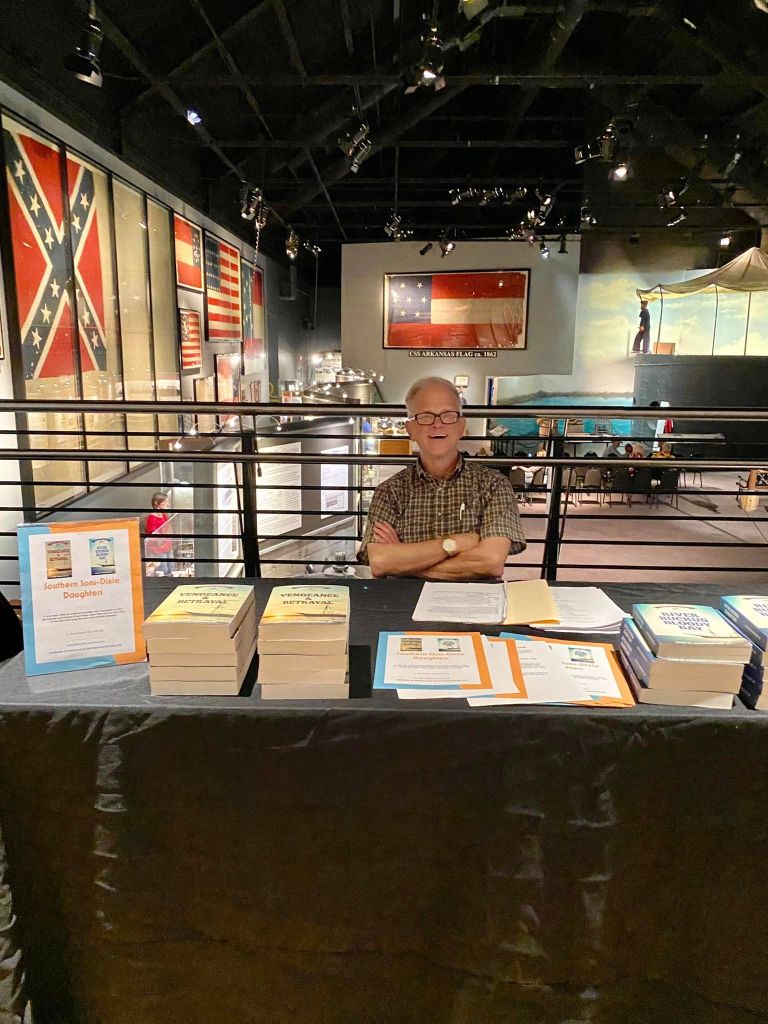
This past Saturday, I had the privilege of giving a lecture and doing a book signing at the National Civil War Naval Museum, located at Port Columbus, Georgia. It is a fantastic museum, and I highly recommend it to all Civil War buffs., especially those interested in the conflict’s naval history. I spoke on the battle of Mobile Bay. All photo credits belong to Terri Miller. Thank you, Terri.

Behind us is the USS Hartford, the flagship of Admiral David G. Farragut. You can walk inside it and see how the various compartments were arranged and how they were furnished.

If you’re ever in Columbus, Georgia, this museum is well worth a visit and very easy to find — just off Highway 280.

Watch Out! I See Mary Jane!

Photo by Vanessa Georgiou on Pexels.com

During your writing, have you ever stumbled upon Mary Jane? Who is she? Why, she’s an absolutely beautiful character (forgive the unnecessary adverb). Everything about her is flawless – her hair, her makeup, her clothes. She’s so smart, she never makes a mistake. Because she’s the epitome of perfection, she always gets along with other characters. Why, she has the answers for every situation.  I suggest we all watch out for her. Why’s that? It’s simply this. Mary Janes are so perfect, readers cannot identify with them and, worst of all, they’re boring.

A Few Tips on How to Avoid Mary Janes

Give Characters Weaknesses/Flaws/Fears

One of my favorite authors is C.S. Forrester. In his series about the fictional Napoleonic War naval hero, Horatio Hornblower, Hornblower sometimes gets seasick. This adds to his humanity. One wouldn’t expect a naval hero to get seasick, but Captain Hornblower does. Although I’ve never been seasick because I grew up on the Gulf Coast and did lots of saltwater fishing in my younger years, my friends who do get seasick can identify with him.

Let Our Characters Make Mistakes

If they’re our story’s protagonist, mistakes go a long way toward gaining reader sympathy for him/her. If they’re the villain, readers will rejoice at the villain’s error.

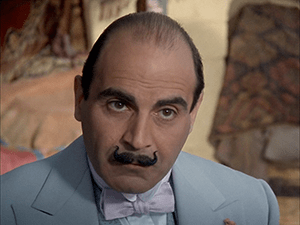
Hercule Poirot may be one of the mystery genre’s greatest detectives. Want to know how he died in Agatha Christie’s last Poirot novel, Curtain? He made a mistake many people, unfortunately, make. He died of a heart attack because he didn’t take his heart medicine

Give Our Character a Unique Physical Appearance

Photo by Sixyfifty on Pexels.com

A character may walk with a limp due to an old injury. Or, perhaps, he’s missing a finger from a chainsaw accident.

Mary Janes may wear petite size dresses and always promenade in designer clothes. However, although a more believable female character may wear a size petite dress in our story, she might also wear lots of frumpy clothes and battered tennis shoes.

A Final Word

It’s important to spend quality time thinking about our characters. Make an outline of their strengths and weaknesses and portray them as original, and believable, as we can.

Photo by Vanessa Georgiou on Pexels.com

And hey, watch out for Mary Jane! She lurks everywhere within manuscripts and in the pages of certain books.

The Creek War (1813-1814), Part 14, Horseshoe Bend

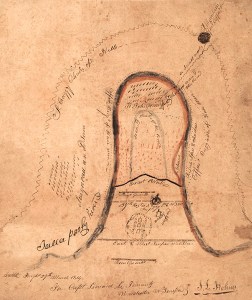
Tohopeka, a Creek village consisting of three hundred hastily built cabins, sat on the toe of a sharp bend in the Tallapoosa River that resembled a horseshoe. The village was temporary, meant to protect Red Stick women and children. Some one-thousand warriors guarded it under the leadership of a fearless chief, Menawa.

Across this peninsula’s four-hundred-yard-wide neck, the Red Sticks had erected a log barricade five to eight feet high with loopholes for muskets. It was built in such a way that their guns could catch the Americans in a cross-fire if, and when, they attacked. These warriors were the Red Sticks’ best, the last great hope for victory over General Jackson.

With his army now reinforced with regular soldiers—the Thirty-ninth Infantry, Tennessee militia, friendly Cherokees and Creeks (under the command of William McIntosh) and two small cannon–Jackson left his base on the Coosa River on March 21, 1814. To get to Horseshoe Bend, his men cut a road over fifty miles long across ridges. His force consisted of 2,000 infantry, 700 cavalry, and 600 Indians. Lieutenant Sam Houston, later of Texas Revolution fame, was an officer in the Thirty-ninth. Also Major Lemuel P. Montgomery, for whom Alabama’s Montgomery County would be named.

By March 26, Jackson’s army camped within six miles of the Bend. On March 27, he gave his orders and his men prepared for their attack.

Jackson’s Battle Order

  1. Coffee’s Cavalry and Indians: positioned three miles below Tohopeka, surrounding it to cut off the Red Sticks’ retreat.
  2. Jackson’s artillery: positioned on a hill to pound the breastworks. 
  3. Jackson’s infantry: make a frontal assault after the artillery’s bombardment.

The Battle of Horseshoe Bend

By 10:30 A.M. Jackson arrived at the Horseshoe. Soon after, Coffee’s troopers and Indians positioned themselves across the Tallapoosa.

Some Cherokees under the command of Colonel Gideon Morgan swam across the river without orders and stole the enemy’s canoes. To compensate for this, Coffee shifted part of his force to the tip of the Bend and kept other men in reserve.

Using the stolen canoes, the Cherokees and friendly Creeks began crossing the Tallapoosa in increasing numbers. Three hundred men, including some Indians, attacked Tohopeka during Jackson’s artillery barrage. Fierce fighting ensued. Tohopeka was burned.

Meanwhile, for two hours, Jackson’s cannons kept roaring and pounding the barricade to no effect. Then he ordered a frontal assault. The Thirty-ninth Infantry led the attack, Lemuel P. Montgomery and Sam Houston running toward the barricade ahead of everyone else. Montgomery scaled the barricade and was shot down. Houston scaled it next. An arrow flew into his thigh, two rifle balls smashed his shoulder later.

Although the Thirty-ninth did most of the fighting, the Tennessee militia supported it. It was a brutal battle—hand to hand, musket to musket.

At last, Jackson gained control of the situation and headed toward the Bend. After five hours of conflict, with darkness settling over the battlefield, the fighting ended.

Coffee’s men shot those who’d tried to escape across the river.

Aftermath

Chief Menawa, though wounded seven times in the battle, survived by playing dead till nightfall. He then crawled to the river and made his escape in a canoe. During Jackson’s presidency, he was sent to Oklahoma on the infamous Trail of Tears.

To get a proper casualty count after the battle, Jackson ordered his men to cut off the tips of the dead Red Sticks’ noses after the battle.

After the battle, during his march to the hostile Hickory Ground where the Coosa and Tallapoosa Rivers merge, Jackson laid waste to Creek villages and destroyed their food supplies. On April 17, when he arrived at the site of the old French fort, Fort Toulouse, he built Fort Jackson. Starving Red Sticks poured into this camp and surrendered, among them was William Weatherford. We don’t know for certain all the things that transpired between Weatherford and Jackson. Lots of conflicting accounts. What we do know for certain, though, is that Jackson was so impressed by Weatherford’s courage and dignity that he let him go. Weatherford helped persuade other Creeks to follow his example and surrender.

The Creek War vaulted Andrew Jackson to national prominence and was the first step on his road to the Presidency of the United States.

Bibliography

Bunn, Mike and Clay Williams. Battle for the Southern Frontier: The Creek War and the War of 1812. Charleston: History Press, 2008.

Holland, James W. Victory at the Horseshoe: Andrew Jackson and the Creek War. Eastern National with the cooperation of the University of Alabama Press and Horseshoe Bend National Military Park, 2004

Waselkov, Gregory A. A Conquering Spirit: Fort Mims and the Redstick War of 1813-14. Tuscaloosa: University of Alabama Press, 2006.

The Discipline of Writing

The trade of authorship is a violent, and indestructible obsession– George Sand, penname of Amantine Aurore Lucile Dupin (1804-1876), French novelist.

When I was a youngster my sister, who is five years older than me, wanted to learn how to play the piano. So, my parents bought her an upright. At around the age of nine, she began taking lessons. Me? I got tired of hearing her practice her scales and songs. She did this most every weekday. All the way through her senior year in high school, she continued playing and practicing.  Because of her discipline and hard work, she became an excellent pianist.

Likewise, we writers require self-discipline if we want to improve. This is true in every art form.

Sadly, I’ve known talented people who’ve lacked the discipline to do much, if anything, with their literary gifts. After all, we don’t have a boss leaning over our shoulder screaming, “Write! Write!” Self-discipline is a must if we want to get better. If we don’t have the “really want to” we don’t have the “really must do” in order to succeed.

Five Marks of a Self-disciplined Writer

  1. Self-disciplined writers approach their craft like a regular job –because it is. They “clock in and clock out” on a regular schedule, even on days when they don’t feel like writing. Ever worked a regular nine-to-five job when you didn’t want to but had to? That’s what self-disciplined writers do, even if for an hour or two a day.
  2. Self-disciplined writers persevere despite disappointments, such as when an editor rejects a manuscript.
  3. Self-disciplined writers cut out distractions. Some write well in noisy environments while others, such as me, don’t. Whatever environment a self-disciplined writer chooses, he/she focuses totally on their work.
  4. Self-disciplined writers live a balanced life. They know when to say no to certain activities without feeling guilty and when to say yes. I’ve learned from experience that not everyone will understand when I say no, but I’ve also learned to accept that fact. Most non-writers don’t understand serious writers, anyway.
  5. Self-disciplined writers are driven. They don’t just want to write, they have to write. True writers write because they have no choice.

To quote the Roman poet Juvenal (c. 70-c. 150): Writing is the incurable itch that possess many.

The Creek War (1813-1814), Part Thirteen, Jackson Struggles

After his November victories, Andrew Jackson fought a battle–to keep his army intact. Many of his men’s enlistments had either expired or were about to expire, so they wanted to return home. He pleaded with them, threatened them, and assured them they’d get the needed supplies.

Albert J. Pickett writes: Since the battle of Talladega, Jackson had encountered innumerable difficulties and mortifications, owing to the failure of contractors and the mutiny of his troops, who were finally reduced to one hundred men by the expiration of their times of service.

Finally, he headed his army north, toward another supply base that was situated on the Tennessee River. Coming south, however, on the same road, were the supply wagons they’d been waiting for. After they met, Jackson returned to Fort Strother, warning his men that he’d shoot any, and all, deserters.

Upon the arrival of eight hundred reinforcements in early January, and upon hearing a rumor about a British plan to land troops in Spanish West Florida, Jackson set out again. Before he could defeat the British, he needed to eliminate the Red Sticks. And, he was determined to do just that.

Albert J. Pickett writes: Well understanding the character of minute men like these, who must constantly be employed, Jackson immediately marched them across the Coosa to the late battleground of Talladega, where he was joined by two hundred Cherokees and Creeks, who evinced great alarm at the weakness which the command presented.

Battle of Emukfau Creek

On January 16, Jackson camped at a Hillabee village. The next day, his army followed trails that indicated a large force ahead of him, toward the Tallapoosa River and the hostile village of Tohopeka. He halted on the twenty-first, on Emukfau Creek, to reconnoiter.

Albert J. Pickett writes: Before dark his (Jackson’s) encampment was formed, his army thrown into a hollow square, his pickets and spies sent out, his sentinels doubled, and fires lighted some distance outside of the lines … at the hour of eleven the spies reported a large encampment three miles distant, where the savages were whooping and dancing, and, being apprised of the approach of the Americans, were sending off their women and children.

The next day, close to sunrise, one thousand Red Sticks commanded by Peter McQueen attacked Jackson’s camp. For a half hour, they fought, General Coffee and his troopers leading the charge, chasing them for two miles. Although Coffee intended to burn the Red Sticks’ camp, he found it too strongly fortified, so he retreated to bring up the artillery–a six-pounder cannon.

Suddenly, McQueen launched another attack from all sides. More fierce fighting ensued, the hostiles withdrew and despite McQueen’s pleas, they refused to attack a third time.

Albert J. Pickett writes: The brave Creeks had now been repulsed in every attempt, but they exhibited a ferocity and courage which commanded the serious consideration of Jackson, whose force was weaker than he desired …..

The next day, Jackson buried his dead then marched back toward Fort Strother, his wounded carried on litters made of deer hide.

Fight at Enitachopca Creek

During his march back to Fort Strother, Jackson engaged in another battle on January 24 when he tried to cross Enitachopca Creek. His wounded and soldiers in the advance guard made it across safely, but then, the Red Sticks attacked. Jackson’s rear guard panicked before the painted warriors. A fierce struggle for Jackson’s artillery ensued.

Albert J. Pickett writes: Discovering that, in separating the gun from the limbers, the rammer and pricker had been left tied to the latter … while Indian bullets rattled like hail around them, Constantine Perkins and Craven Jackson, two of the gunners, supplied the deficiency. Perkins took off his bayonet and rammed the cartridge home with his musket, and Jackson, drawing his ramrod, employed it as a pricker, priming with a musket cartridge. The six-pounder was thus twice charged, pouring grape among the savages, then only a few yards distant … after the second fire, the little artillery company furiously charged on the assailants, who became more cautious in their approaches ….

Finally repelling the enemy and saving the cannon, Jackson’s men, at last, reached Fort Strother. The general allowed the sixty volunteers who’d participated to go back to Huntsville, in north Alabama, for an honorable discharge.

Jackson would soon receive reinforcements from the commander of the Sixth Military District, Major General Thomas Pinckney, and Tennessee’s governor, Blount. Among these men was Sam Houston, who’d later become famous in the Texas Revolution. With these men, Jackson prepared to fight his final and most decisive battle at Horseshoe Bend.

Sources

Bunn, Mike and Clay Williams. Battle for the Southern Frontier: The Creek War and the War of 1812. Fourth Printing. Charleston, SC: The History Press, 2013.

Pickett, Albert J. The History of Alabama. Republished by Birmingham Book & Magazine Co. of Birmingham, Alabama, 1962. Copyright 1878 by Mrs. Sarah S. Pickett.

Contented as a Dog

One day this past summer, I watched my dog lay beneath my fig tree. She rested her gold-colored head between her forepaws and shut her eyes. I laughed to myself, thinking how easy she had it. I fed her every day, gave her water, took her on walks, played with her–essentially, I provided for her every need, and she was contented.

We who know God have it made, too, if we would just learn to be content. But it’s hard to be content with the world hawking its luxuries. Every time we visit a shopping mall or turn on the TV, we’re bombarded with temptations to buy things we don’t need. Don’t misunderstand me. Nothing’s wrong with owning a few luxuries, so long as we’re not discontented with God’s provision. It’s the grasping hand God frowns upon, the compulsion to want more. “And if we have food and covering, with these we shall be content,” Paul said in 1 Timothy 6:8 (NAS). If this is true of animals like my dog, how much more should it be true of us.

Copyright Jack Cunningham. Originally published in Evangel, August 9, 1999. Free Methodist Church, Light and Life Communications.