Wishing everyone a Merry Christmas and a Happy New Year from the Deep South.
Wishing everyone a Merry Christmas and a Happy New Year from the Deep South.

The Author's Cove: John "Jack" Cunningham on Writing & History
Writing Tips and Historical Tidbits

Wishing everyone a Merry Christmas and a Happy New Year from the Deep South.
Wishing everyone a Merry Christmas and a Happy New Year from the Deep South.
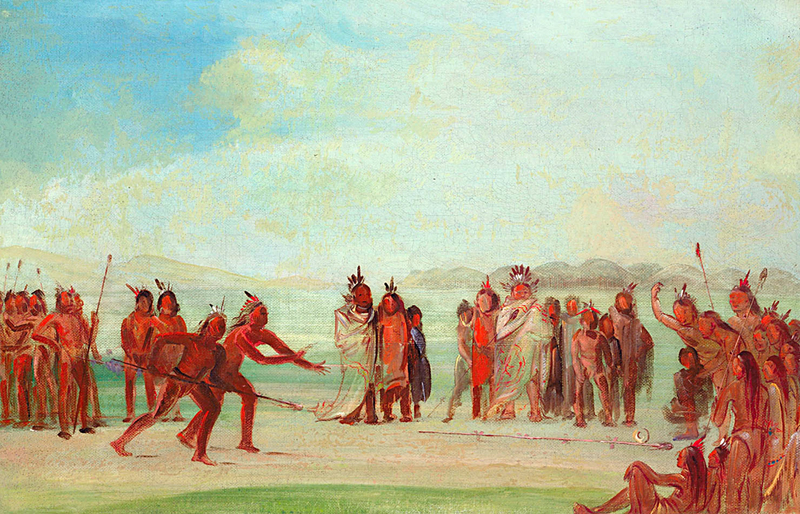
Painting by George Caitlin. Mandans playing Chunkey
Chunkey, an ancient Native American sport, is enjoyable for everyone. Also, it’s easy to play. The game goes back at least as far as the 7th century A.D.
Much like stickball, Native American tribes, particularly those in America’s Southeast, played this game to settle disputes. They took this game seriously and even played it to gamble. Quite a few players lost everything in their wagers, sometimes with even more tragic consequences such as suicides. Today, it’s usually played for fun.
Below is a basic overview of the game. The Native Americans then and now play different variations of the game and have different methods of scoring.
Famous American painter and artistic chronicler of the West witnessed this game, as seen in his painting at the beginning of this post, He recorded what he saw in writing as well.

The game of Tchung-kee [is] a beautiful athletic exercise, which the Mandan seem to be almost unceasingly practicing whilst the weather is fair, and they have nothing else of moment to demand their attention. This game is decidedly their favourite amusement, and is played near to the village on a pavement of clay, which has been used for that purpose until it has become as smooth and hard as a floor. … The play commences with two (one from each party), who start off upon a trot, abreast of each other, and one of them rolls in advance of them, on the pavement, a little ring of two or three inches in diameter, cut out of a stone; and each one follows it up with his ‘tchung-kee’ (a stick of six feet in length, with little bits of leather projecting from its sides of an inch or more in length), which he throws before him as he runs, sliding it along upon the ground after the ring, endeavouring to place it in such a position when it stops, that the ring may fall upon it, and receive one of the little projections of leather through it.
— George Catlin, 1832
Lindsey Bark, “Chunkey: A Game of Stones,” Cherokee Phoenix, August 27, 2020, Chunkey: A Game of Stones | Culture | cherokeephoenix.org
Anne Gregory, Chunkey, Cahokia, and Indigenous Conflict Resolution (Thesis), Scholar’s Bank, University of Oregon, September 25, 2020, Chunkey, Cahokia, and Indigenous Conflict Resolution (uoregon.edu)
E. Metcalf, “Chunkey: More Than Just a Game,” Real Archaeology(blog),November 5, 2023, Chunkey: More Then Just a Game | Real Archaeology (vassar.edu)
 The Author's Cove: John "Jack" Cunningham on Writing & History